TML Learns Houthis Ordered Medical Staff To Sign War Readiness Pledges Weeks Before Escalation
Health workers in Sanaa say authorities required binding commitments that could reassign them from hospitals to field support roles as the regional war intensified
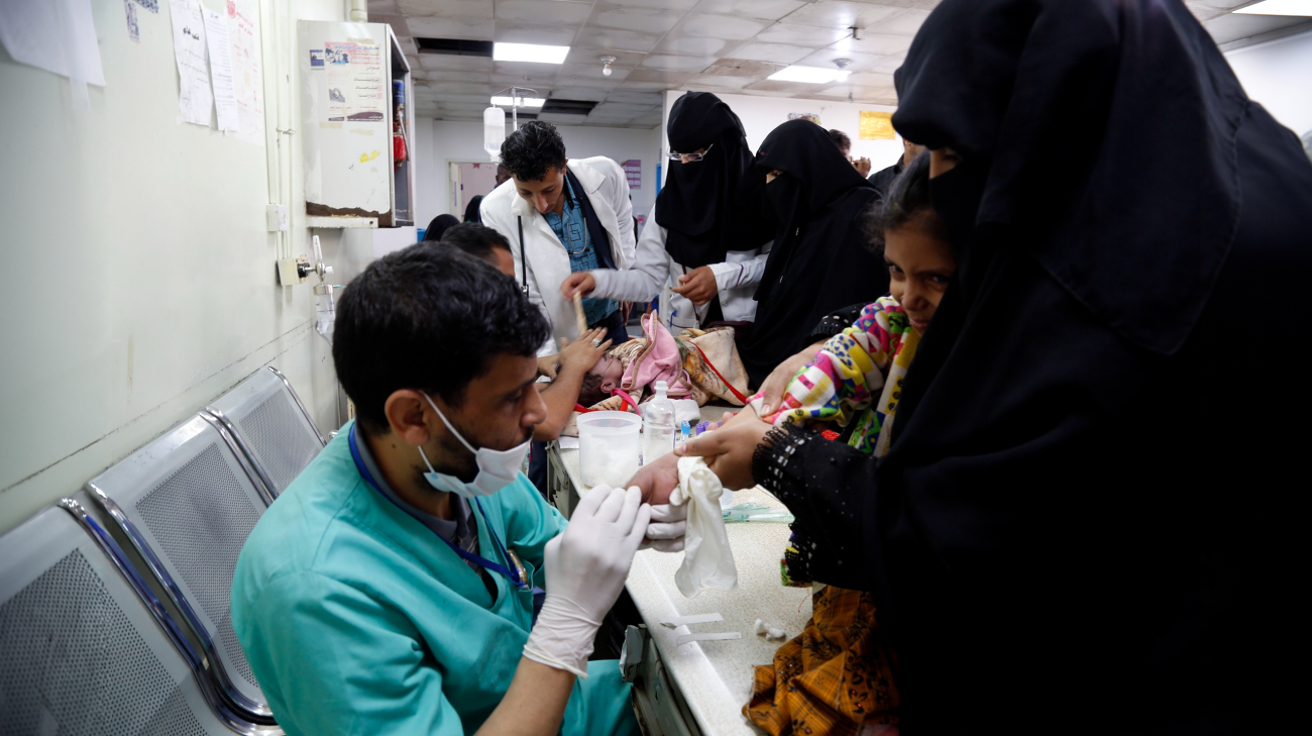
[SANAA] In Sanaa, the Houthis’ war posture isn’t just playing out in speeches and street rallies; it’s showing up on hospital paperwork. Weeks before the latest regional escalation, medical staff say they were ordered to sign binding “readiness pledges”—legal commitments that can pull them from wards and put them on immediate call for field support.
We were asked to sign legal commitments placing us on direct call at any time and under any circumstances
Rami, an emergency medicine doctor at a public hospital in Sanaa, said the measures began well before the latest regional escalation to allow time for compiling lists and field classification. “We were asked to sign legal commitments placing us on direct call at any time and under any circumstances. We were explicitly told the country was heading toward an exceptional situation that could require us to leave hospitals and work in field support units,” he said.
The new requirements for medical staff come as the war between Iran and the US-Israel alliance intensifies, and as the Houthis declare a maximum state of alert in areas under their control. Field developments suggest the mobilization is not merely a reactive measure, but the culmination of a broader “general mobilization” campaign that began weeks before the latest escalation. According to observers, it points to prior operational coordination aimed at turning Yemeni territory into a platform for confrontation in support of Iran, including through threats to international shipping in the Red Sea and potential strikes on Israeli targets.
Behind their political messaging, the Houthis have, in recent weeks, implemented what appears to be a systematic plan to adapt civilian infrastructure for potential combat use, including a broad restructuring of the health and civil defense sectors.
Preparatory steps have also reportedly extended to the education sector, with directives to prepare schools and government facilities as shelters in anticipation of potential international airstrikes. Rescue teams and first aid graduates have undergone intensive training programs with a combat-oriented component aimed at strengthening civil defense capabilities in areas of direct confrontation.
Give the gift of hope
We practice what we preach:
accurate, fearless journalism. But we can't do it alone.
- On the ground in Gaza, Syria, Israel, Egypt, Pakistan, and more
- Our program trained more than 100 journalists
- Calling out fake news and reporting real facts
- On the ground in Gaza, Syria, Israel, Egypt, Pakistan, and more
- Our program trained more than 100 journalists
- Calling out fake news and reporting real facts
Join us.
Support The Media Line. Save democracy.
Amid American and Israeli strikes targeting strategic sites in Tehran, the Houthi leadership in Sanaa signaled its readiness to engage in the conflict. That stance was reflected in a speech by the group’s leader, Abdul-Malik al-Houthi, and in a large gathering at the capital’s Al-Sabeen Square, which participants described as granting popular authorization for potential large-scale military operations. Thousands gathered there on Sunday in response to a call issued by al-Houthi the previous evening, declaring support for the leadership to take military action in solidarity with what the Houthis refer to as the “Axis of Resistance.”
In his speech, al-Houthi reaffirmed the group’s full solidarity with Iran and its readiness for any developments in the ongoing military operations, urging mass demonstrations to show preparedness. The rally’s closing statement asserted what was described as “Iran’s right to self-defense” and stressed confronting “enemies” with determination.
We call on the leader to strike Israel, America, and any of their vessels. We want revenge for Gaza, Iran, and the martyrs of the nation’s leaders.
“We call on the leader to strike Israel, America, and any of their vessels. We want revenge for Gaza, Iran, and the martyrs of the nation’s leaders,” said Yemeni political commentator Anwar al-Hamdani, who took part in the rally.
Yemeni journalist and political analyst Saddam Mohammed told The Media Line that the mobilization reflects a “multitrack” strategy. He argued that it seeks to support Tehran by dispersing international military focus, securing the domestic front against any attack by unified government forces, and pressuring Riyadh to extract concessions on public sector salary payments and maritime restrictions.
The group is currently under pressure to complete the peace file with Saudi Arabia, and from public frustration driven by the economic crisis
“The group is currently under pressure to complete the peace file with Saudi Arabia, and from public frustration driven by the economic crisis. It is attempting to escape these pressures by aligning more closely with the Axis of Resistance and supporting Iran,” he said.
Abdulsalam Mohammed, head of the Abaad Center for Studies and Research, offered a more critical assessment, saying renewed maritime attacks confirm that the Houthis have become what he described as Iran’s “last arm” in the region. He noted that the group has tied its fate closely to the Iranian system, raising two possible outcomes: collapse in parallel with any downfall in Tehran, or use as a bargaining chip should Iran be forced to make significant concessions in a broader international settlement.
The emergency measures and preparations of public facilities such as medical and shelter sites suggest the group has moved from political mobilization to operational readiness.
The developments follow the Red Sea shipping crisis that began in November 2023, when the Houthis targeted commercial vessels in response to the war in Gaza, prompting the formation of an international coalition and reciprocal strikes.
Amid the current war in the Middle East, the Houthis appear to have chosen direct engagement—while simultaneously putting in place the staffing and deployment mechanics, particularly in hospitals and emergency medicine, that would be needed if Yemen becomes a direct theater of escalation.
