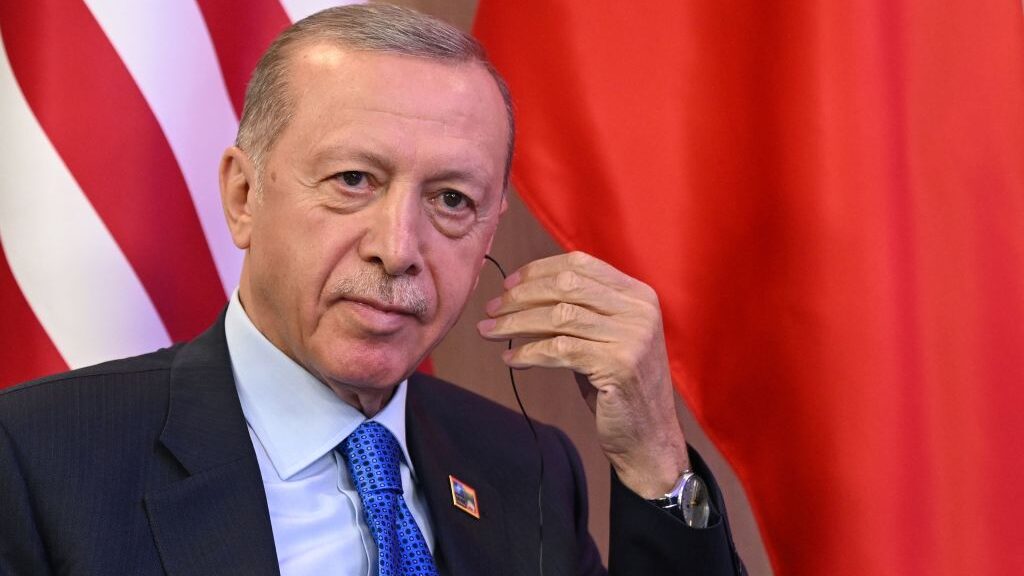
‘Turkey Is Shutting the Doors, and That Is a Huge Blow for Bilateral Trade,’ Says Israeli Expert as Lawmakers Warn of Rising Costs
Ankara’s maritime sanctions and partial airspace restrictions mark a new stage in Turkey–Israel tensions, threatening construction costs and consumer prices, and exposing what critics call a lack of government preparedness
Israel is facing another layer of strain in its regional ties as Ankara moves to block maritime traffic and partially restrict airspace, a decision that carries both symbolic and practical consequences. While Turkish officials tried to soften their statements after initial headlines, the sense in Jerusalem is that this rupture will not vanish quickly, and its cost may soon be felt in Israeli markets and construction sites.
When there is no trade, when there is no tourism, when there is no dialogue between the two nations, unfortunately, deterioration can happen anytime
“Turkey is shutting the doors, and that is a huge blow for bilateral trade between the two nations,” Dr. Hay Eytan Cohen Yanarocak, a Turkish politics expert at Tel Aviv University’s Moshe Dayan Center, told The Media Line. He explained that Turkish ships not only supplied Israel but were also used to deliver goods to the Palestinian Authority, a channel that Ankara’s latest move has now closed. “When there is no trade, when there is no tourism, when there is no dialogue between the two nations, unfortunately, deterioration can happen anytime.”
The maritime sanctions follow months of tensions, during which Ankara has already blocked dozens of Israeli export categories. For Israeli consumers, the immediate effects are harder to predict, but the warning signs are there. “Pasta’s shelf life is very long,” Yanarocak noted when asked about cheap Turkish staples filling Israeli supermarket shelves. “Maybe now they will be dispatched via land from Syria to Jordan, or maybe by flight to Jordan and then to the Palestinian Authority, which obviously will increase the price of the goods. So time will tell if we will continue to see the Turkish product in the Israeli market.”
Even if in a fragile nature, the bilateral relations survive
At the same time, Turkish officials have walked back some of the harsher rhetoric about aviation. What was initially presented as a total closure of airspace was later clarified to apply only to Israeli government and military aircraft. “Even if in a fragile nature, the bilateral relations survive,” Yanarocak explained, describing the policy shift as a U-turn that saved both countries from what could have been “a real earthquake.”
But that does not mean the crisis is minor. “Only a week ago, Turkey also imposed naval sanctions against Israel,” Yanarocak emphasized. “Now Turkish ships can no longer visit Israeli ports, and they are not allowed to anchor there. It is also applicable to the Israeli ships, that they cannot visit Turkish ports anymore. Of course, that’s very important.”
The boycott last year already reduced billions in trade volume. If the products we still receive from Turkey stop coming, there will be damage.
Inside the Knesset, opposition lawmaker Vladimir Beliak from Yesh Atid, head of the Israel–Azerbaijan parliamentary friendship group and a member of the Finance Committee, said the scale of the economic disruption should not be underestimated. “Turkey was for many years one of Israel’s three most significant exporters, mainly construction materials like cement,” he said. “The boycott last year already reduced billions in trade volume. If the products we still receive from Turkey stop coming, there will be damage, especially to construction costs, which are already skyrocketing.”
Give the gift of hope
We practice what we preach:
accurate, fearless journalism. But we can't do it alone.
- On the ground in Gaza, Syria, Israel, Egypt, Pakistan, and more
- Our program trained more than 100 journalists
- Calling out fake news and reporting real facts
- On the ground in Gaza, Syria, Israel, Egypt, Pakistan, and more
- Our program trained more than 100 journalists
- Calling out fake news and reporting real facts
Join us.
Support The Media Line. Save democracy.
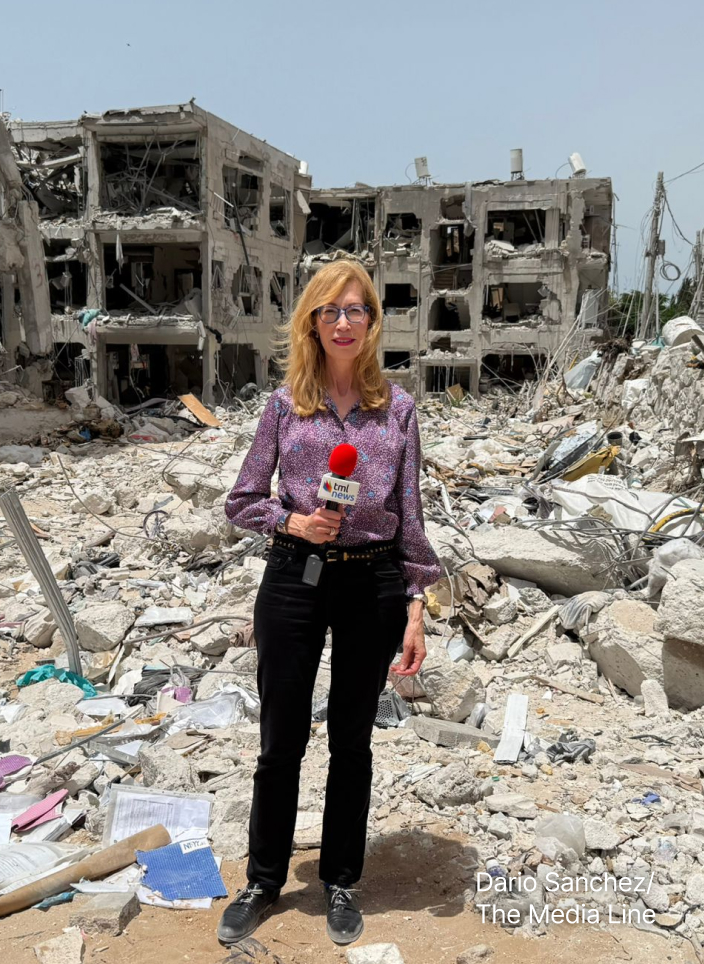
Beliak also pointed to the risks of flight restrictions, even if the government insists they only apply to official aircraft. “If Turkish airspace is closed, flights to Moscow, Georgia, Azerbaijan will take much longer. Instead of three hours, it may take five. Moscow, instead of four or five hours, may take seven or eight. It will also affect cargo, it will raise prices, and when one segment of flights becomes more expensive, it influences others, because that is how the aviation market works.”
The financial implications are not abstract. In a country already battling inflation and a housing crisis, higher cement costs could ripple into every new apartment and infrastructure project. Rising flight prices would touch both tourism and business travel in a region where direct access through Turkey has long been vital.
For Beliak, the greatest failure is not Ankara’s hostility but Jerusalem’s lack of planning. “If you assume there could be a problem with such an important country as Turkey, then the Finance Ministry, the Economy Ministry, the Prime Minister’s Office—someone should be coordinating this event. I tell you they are not. Smotrich has not dealt with this, Barkat has not dealt with this, I doubt Tzachi Hanegbi has dealt with this. That is the problem. If the government is dysfunctional, then it is dysfunctional here as well.”
Someone should be preparing. I do not see any system in place in this government.
His frustration reflects a broader sense that the coalition has been consumed by political battles while ignoring looming economic risks. “If there are alternative products, if we are going to face an additional aviation crisis, someone should be preparing. I do not see any system in place in this government,” he said.
Yanarocak sees Ankara’s moves as consistent with its ideological alignment. “Only last Friday in their parliamentary session, they declared that Israel should be isolated in every international platform,” he noted. “On one side, we have the Abraham Accords access countries, and on the other hand we see a Turkey-Qatar-Hamas access of the Muslim Brotherhood. I really do not think other countries will be affected by the Turkish stance vis-à-vis Israel.”
Still, both experts warn that the damage could grow if Ankara enforces its measures strictly. Smuggling goods through Jordan or the Palestinian Authority, as has been done in the past, may cushion the blow but also inflate prices. “Maybe the Turkish products will continue to arrive through third countries,” Beliak admitted, “but that depends on how determined Erdogan is to enforce the boycott. It is a lot of politics and declarations for domestic purposes. We must do what is good for us, and if it is good for us to continue receiving Turkish products through other legal options, we should do it, regardless of Turkish policy.”
If we are members of the WTO, and there are rules and a state violates them, then yes, there is room to complain and to raise the flag
The legal dimension is another arena where Israel could act. Both interviewees were asked about the World Trade Organization, of which Turkey and Israel are members. Yanarocak was skeptical, pointing out that states often violate international frameworks when there is no real enforcement. Beliak, however, was clear: “If we are members of the WTO, and there are rules and a state violates them, then yes, there is room to complain and to raise the flag. I do not see this as deepening the crisis; I see it as our basic right as a member. This is a legitimate tool, and we should use it.”
The comparison with Israel’s fight against BDS is not lost on him. “Precisely here I do not see it as a dangerous escalation; I see it as a legitimate tool. We should use it,” he said.
We will still need Turkey, and even in this situation, we should not break all the tools. We need to behave wisely.
At the same time, Beliak stressed that Turkey remains a significant regional player that Israel cannot afford to ignore. “We will still need Turkey, and even in this situation, we should not break all the tools. We need to behave wisely.” His words emphasized the balance between recognizing Turkey’s importance and refusing to remain dependent on it.
Alternatives exist, but they require political will. “There are alternatives, and in construction they already found them in other countries at reasonable prices. But Israel’s market is very monopolistic, very closed,” Beliak said. “We are still dependent on a very limited number of suppliers who dictate prices. If the alternative is harmed, it necessarily harms competition. With the right economic policy, open and liberal, alternatives can be found. I am not sure this government is dealing with it.”
Dependence on a single actor, especially a controversial one, is dangerous for Israel. If there is an opportunity, it should be seized
For Yanarocak, too, money finds its way. “No sanction can stop this trade,” he said. But for Beliak, the crisis is also an opportunity. “Like in every crisis, there is an opportunity to look for new markets,” he explained, suggesting that Israel could reduce its dependence on Erdogan’s Turkey by diversifying toward Europe, India, or other partners. “Dependence on a single actor, especially a controversial one, is dangerous for Israel. If there is an opportunity, it should be seized.”
As Israel braces for higher costs in construction and aviation, and as Ankara deepens its alliance with Qatar and Hamas, the question is whether Jerusalem will remain reactive or finally chart a proactive economic strategy. For now, Yanarocak warns that “even if in a fragile nature, the bilateral relations survive,” while Beliak insists that without serious preparation, Israel is exposed. Between the warnings of the academic and the criticism of the parliamentarian, the message is clear: Turkey may be closing doors, but Israel still has choices to make.
