‘We Are Prepared To Move From Defense to Offense’: Israel Signals Harder Line in Gaza
Military leaders warn that failure to disarm Hamas could trigger renewed operations even as diplomacy moves forward
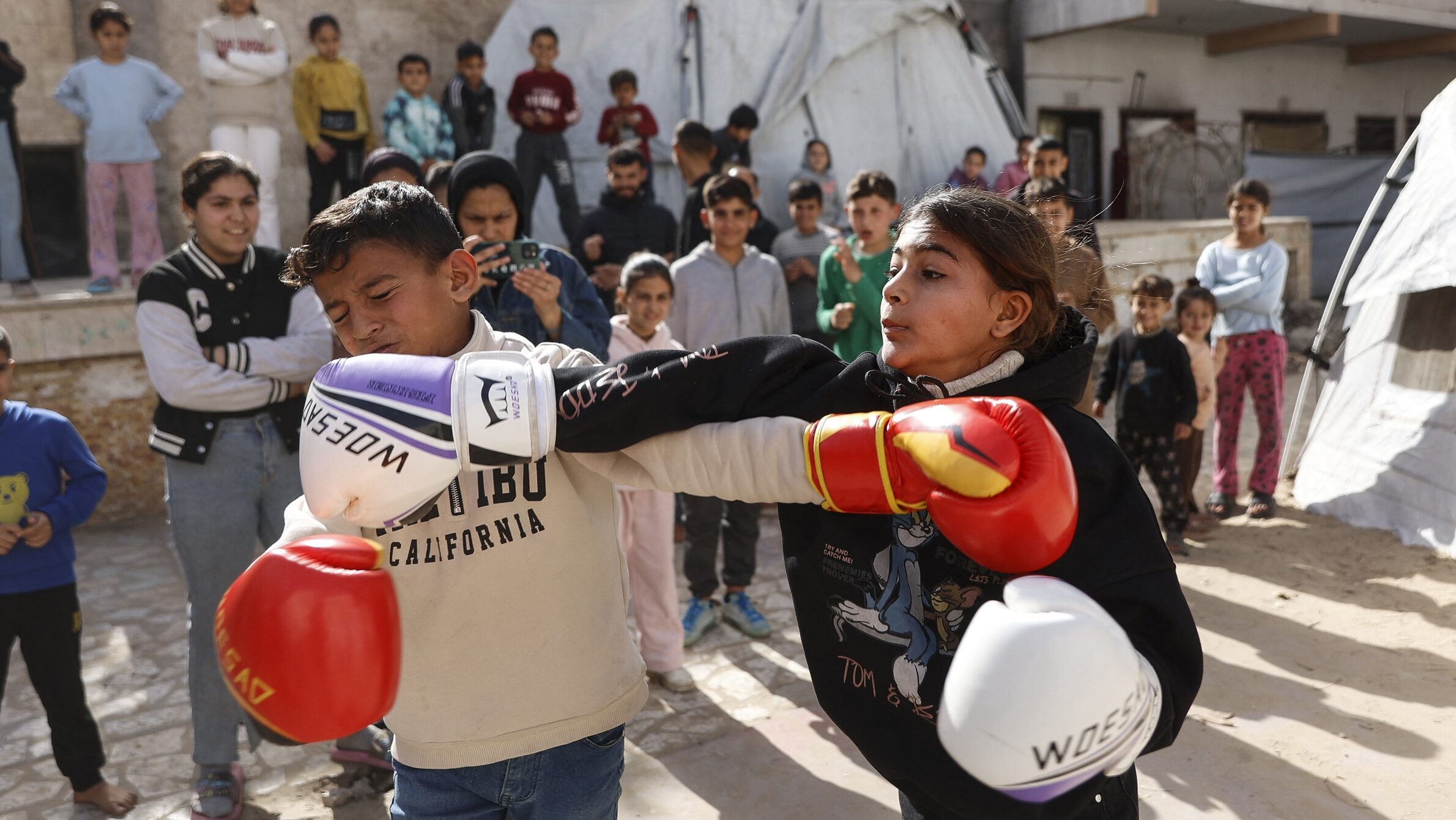
Israel and Hamas continued to exchange fire over the weekend, despite a fragile ceasefire still in place in Gaza.
Health officials from the Hamas-run Gaza Health Ministry said eight Palestinians were killed by Israeli forces overnight between Saturday and Sunday. The Israel Defense Forces have yet to comment, though recent days have shown an uptick in clashes.
Hamas says nearly 600 Palestinians have been killed by Israeli forces since a ceasefire took effect in October 2025, after two years of war. Four Israeli soldiers have been killed since.
Things are moving in Gaza
“Things are moving in Gaza,” Dr. Nimrod Goren, president of Mitvim – the Israeli Institute for Regional Foreign Policies, and an executive board member at Diplomeds – The Council for Mediterranean Diplomacy, told The Media Line. “Even if the plan appears questionable in terms of its sequencing and its end game on the ground, the reality on the ground in recent months has improved, and the process is continuing, contrary to expectations. There is a very limited momentum of progress, and if you look at the plan with adjusted expectations, there is room for some satisfaction.”
After completion of the first phase of the deal—which included the release of Israeli hostages held by Hamas, a partial withdrawal of Israeli forces, and a halt in large-scale fighting—President Donald Trump is trying to kickstart the second phase. That phase is expected to include Hamas’ complete disarmament, a full Israeli withdrawal, and the establishment of a technocratic government to administer the territory, removing Hamas as Gaza’s sovereign authority.
For now, violations continue, with both sides blaming each other. Israeli officials have warned that fighting will resume if Hamas does not disarm as mandated by the 20-point peace plan.
The peace plan was adopted by the United Nations Security Council in November 2025, increasing pressure on both sides to comply.
“For Hamas, the goal of the ceasefire was to end the fighting, get humanitarian aid in and rebuild its military capabilities,” Shaul Bartal, a research associate at the Begin-Sadat Center for Strategic Studies, told The Media Line. “Hamas sees itself less bound than Israel to Security Council Resolutions and therefore views its attacks against the IDF as legitimate. Israel’s counter-attacks are also considered a violation of the ceasefire.”
We are prepared to move from defense to offense
Give the gift of hope
We practice what we preach:
accurate, fearless journalism. But we can't do it alone.
- On the ground in Gaza, Syria, Israel, Egypt, Pakistan, and more
- Our program trained more than 100 journalists
- Calling out fake news and reporting real facts
- On the ground in Gaza, Syria, Israel, Egypt, Pakistan, and more
- Our program trained more than 100 journalists
- Calling out fake news and reporting real facts
DONATEJoin us.
Support The Media Line. Save democracy.
“We are not giving up on the war objective that was set out, which is to completely demilitarize Gaza and disarm Hamas of all its weapons,” Lt. Gen. Eyal Zamir, chief of the general staff of the Israel Defense Forces, told troops stationed along the Yellow Line in Gaza on Friday. “We are prepared to move from defense to offense.”
The Israeli military is currently holding positions along a demarcation line known as the “Yellow Line,” established under the October 2025 ceasefire. The line divides the Strip into Israeli-controlled and Palestinian-administered areas.
“This situation could last for years,” Bartal said. “Israel could continue its control of safe areas, backed by several Palestinian militias, and Hamas will rule other parts of Gaza. The potential for a flare-up is always there.”
For decades, Israelis and Palestinians in Gaza lived under a cycle of fragile calm and periodic conflict. The war that began in October 2023 and lasted two years was the deadliest for both sides, leaving much of Gaza in ruins. With neither side taking steps that would force a major political change, there is a risk that the current arrangement hardens into a long-term reality.
“Israel can claim that without its presence, the danger from Hamas would be greater, and Israel’s presence in Gaza allows Hamas to maintain its hold on the remaining parts,” Goren said. “It’s a win- win situation for both Hamas and Netanyahu, because the status quo allows both sides to maintain a presence in Gaza.”
Israeli media have reported that the military has plans in place to renew the offensive against Hamas.
Separately, Israeli Foreign Minister Gideon Saar is expected to attend President Trump’s first formal Board of Peace meeting in Washington later this week at the request of Prime Minister Benjamin Netanyahu. The US president is expected to announce a multibillion-dollar reconstruction plan for Gaza and unveil detailed plans for the Gaza Stabilization Force, a multinational body intended to train local police, help secure Gaza’s borders, and disarm Hamas while sidelining the terrorist group.
A Palestinian committee expected to oversee Gaza’s reconstruction and participate in postwar governance has yet to enter the territory, despite meeting in Egypt last month.
At the Munich Security Conference on Friday, the Board of Peace High Representative for Gaza Nickolay Mladenov said the committee will not be able to enter Gaza or carry out its mission if ceasefire violations continue.
“The fact that Israel still maintains a presence in over half of the Gaza Strip, which is actively supported by several leaders in the Arab and Muslim world, contradicts a lot of statements that were made during the war,” Goren said. “There are many anomalies that leaders and countries are willing to accept—each because of their own interests.”
“Israel’s willingness to participate in the Board of Peace is likely due to an American request and expectation,” he added.
Despite heavy losses during months of fighting, Israeli assessments say Hamas is working to rebuild its capabilities by recruiting new members, reestablishing command-and-control structures, and trying to replenish its arsenal through local weapons production and the recovery of unexploded Israeli ordnance. Israeli officials also say Hamas is attempting to rebuild its tunnel network and restore some rocket-launch capacity.
Hamas is recovering
“Hamas is recovering,” Bartal said. “It is unlikely Israel will return to full-scale fighting, but it could turn the Yellow Line into its border and conduct pinpoint operations aimed at stalling Hamas’ rehabilitation.”
While the ceasefire remains formally in effect, conditions on the ground reflect a delicate balance between continued hostilities and cautious diplomacy. Clashes, targeted strikes, and mutual allegations of violations have tested the truce, even as mediators press forward with efforts to implement the next stages of the 20-point plan.
“The current situation is not ideal for anyone looking for a future of peace and to guarantee that what happened will never happen again,” Goren said. “But this can’t last forever; things have a tendency to rise above the surface.”
Gaza remains caught between the risk of renewed escalation and slow diplomatic progress. Fighting has not fully stopped, and mistrust continues to weigh on the ceasefire. Even so, parallel efforts to advance the next phase of the UN-backed framework suggest international actors and regional stakeholders are still trying to turn a fragile calm into a more durable arrangement.
