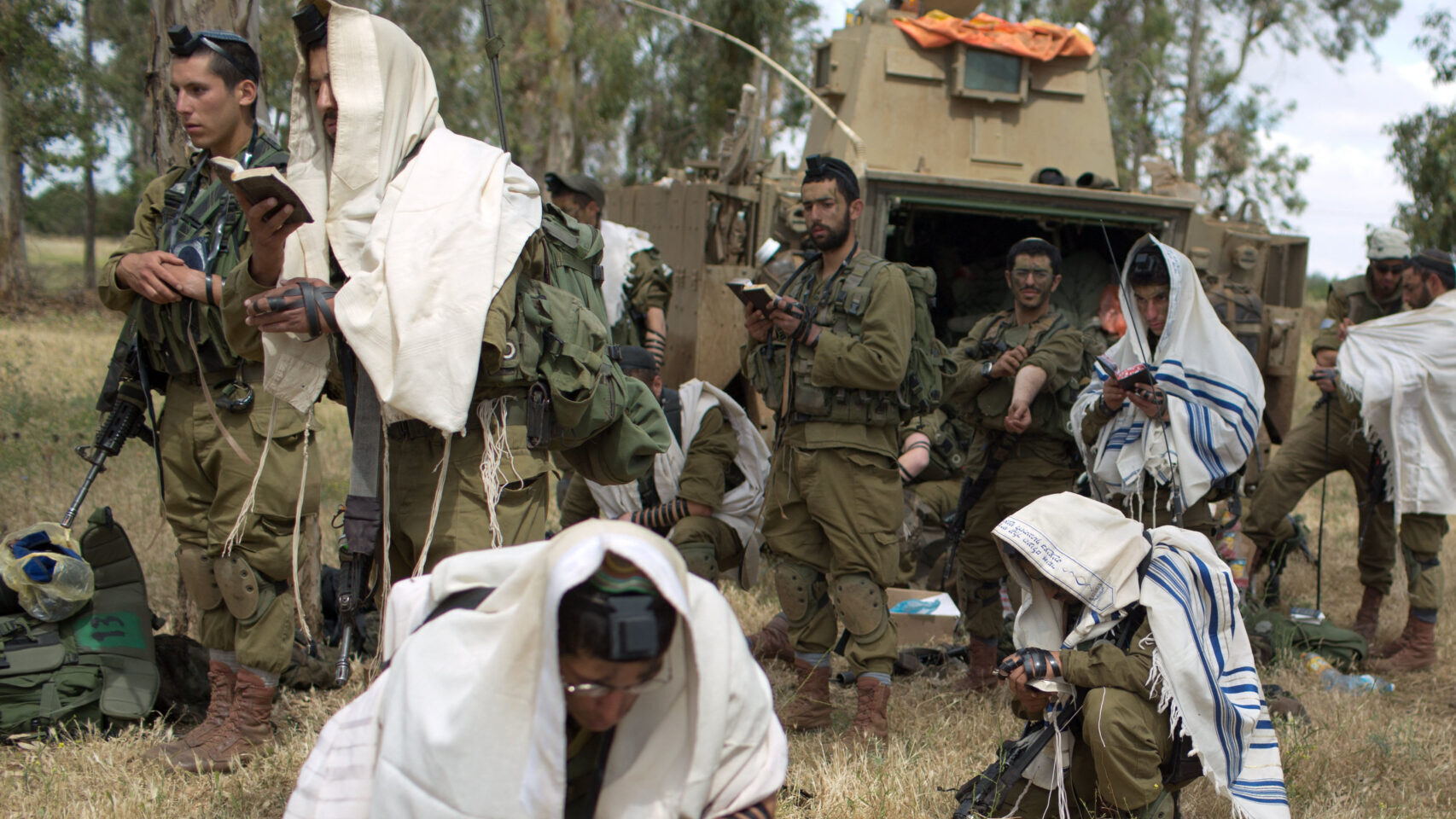
Head of Israel’s Key Security Committee Says New Haredi Draft Framework Will ‘Bring Half of Non-Yeshiva Students Into the Army Within 5 Years’
Israel’s unfolding dispute over military service reached another turning point this weekend after MK Boaz Bismuth, chair of the Knesset’s Foreign Affairs and Defense Committee, offered one of the most detailed public defenses to date of the government’s proposed draft arrangement for the ultra-Orthodox community. His remarks shed light on a bill that has fueled weeks of political paralysis and ignited a wider debate over shared national responsibility.
Bismuth rejected the circulating drafts that critics say would cement inequality between secular Israelis—who are conscripted at 18—and most Haredi men, who have been exempted for decades on the basis of religious study. “People haven’t seen the text,” he said, insisting that the leaked versions do not reflect the final bill that will be presented to the committee.
According to Bismuth, the proposal does include enforcement tools, and its underlying assumption is that social change happens gradually, not by decree. He argued that the plan would significantly expand enlistment among ultra-Orthodox Israelis who are not enrolled full-time in religious educational institutions. “Within five years, 50% of those who are not in yeshiva will come to the army,” he said, calling the shift “a major step” toward broadening participation in national service.
Give the gift of hope
We practice what we preach:
accurate, fearless journalism. But we can't do it alone.
- On the ground in Gaza, Syria, Israel, Egypt, Pakistan, and more
- Our program trained more than 100 journalists
- Calling out fake news and reporting real facts
- On the ground in Gaza, Syria, Israel, Egypt, Pakistan, and more
- Our program trained more than 100 journalists
- Calling out fake news and reporting real facts
Join us.
Support The Media Line. Save democracy.
For foreign readers, the dispute centers on one of Israel’s most sensitive internal fault lines: whether the country’s compulsory draft should apply equally to all sectors. Ultra-Orthodox parties, essential to Prime Minister Benjamin Netanyahu’s coalition, have long opposed universal enlistment, while much of the public—and many reservists—argue that the war has made reform unavoidable.
Bismuth framed the government’s approach as an evolution in line with other societal changes that once seemed unthinkable. He recalled earlier debates about women in combat roles and noted that his own daughter recently returned from Gaza wearing a red beret, now a commonplace sight. The same, he suggested, could happen gradually with the Haredi community: “Each one who joins becomes an ambassador.”
Pressed about the government’s political will to pass the bill, Bismuth was direct: “The prime minister wants this law very much.” His statement appeared aimed at signaling unity inside a coalition that has been divided over service obligations while managing multiple crises, from the budget to stalled judicial legislation.
He also addressed two separate controversies: the appointment of Itai Ofir as the next military advocate general, saying he personally knows “at least one candidate better than him,” and speculation that Likud MK Tally Gotliv might join the sensitive subcommittee overseeing Israel’s intelligence services. According to Bismuth, she would perform well if appointed, though “it’s not relevant right now,” with several candidates under review.
As the coalition moves toward a decisive vote, Bismuth’s remarks highlight how the government hopes to reframe the debate—from accusations of inequality to claims of incremental integration—while navigating one of Israel’s most enduring and politically explosive questions.
