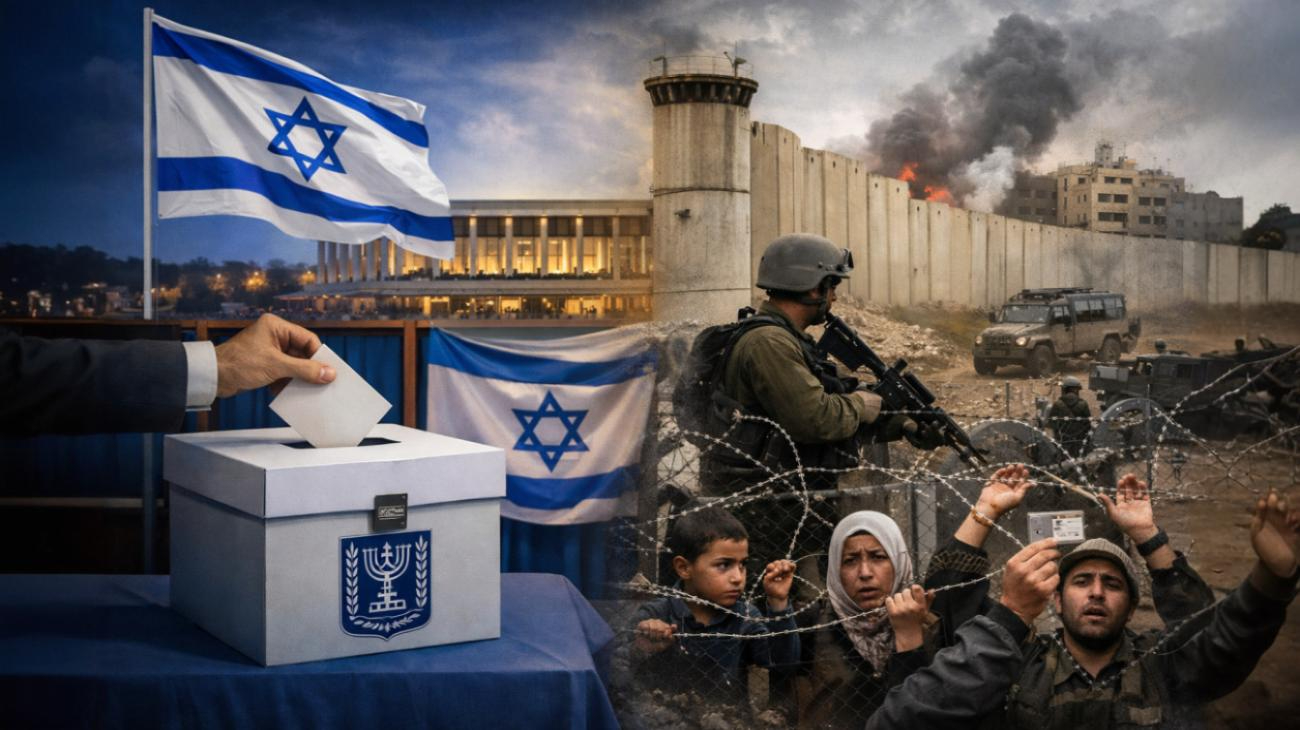
The West and the Illusion of Ideal Israeli Democracy
Western political discourse often promotes the notion that Israel stands as a democratic beacon in the Middle East, highlighting its legislative institutions, periodic elections, and diverse press. Yet this framing relies on a superficial understanding of democracy, overlooking the deeper standards by which liberal systems are judged—equal citizenship, universal rights for all under the state’s authority, adherence to the rule of law, and the rejection of ethnic or religious privilege.
When the Israeli case is evaluated through these criteria, the distance between the polished narrative and the political and legal reality becomes stark, casting serious doubt on claims that Israel maintains a robust democratic record. The constitutional formula defining the state as “Jewish and democratic” embodies an inherent contradiction. The state’s Jewish character grants collective rights and exclusive political privileges to Jews, conflicting with the core democratic principle of equal citizenship.
This tension was sharpened by the 2018 Nation-State Law, which declared that the right to self-determination in Israel belongs “exclusively to the Jewish people,” diminishing the political standing of Palestinian citizens within the 1948 borders and curtailing their role in shaping the state’s national identity and political project. Moreover, the automatic citizenship available to any Jew worldwide—contrasted against the denial of the right of return or family reunification to Palestinians born in the country—illustrates a discriminatory legal order at odds with modern democratic norms and relegates Palestinian citizens to an inferior civic status in their own homeland.
The consequences of this discrimination emerge clearly in public policy, especially in land-use planning and resource distribution. Unrecognized Arab villages inside the Green Line, including areas of the Negev and Galilee, are deprived of basic infrastructure such as water, electricity, and sewage systems, even as Jewish towns and settlements receive extensive investment and development. Villages like Ka’abiyye, Taybeh, and Arraba continue to lack essential state services, while nearby Jewish localities benefit from substantial funding for education, healthcare, and housing.
Meanwhile, “admissions committees” in Jewish towns routinely exclude Arab applicants under the guise of “cultural incompatibility,” entrenching national segregation and turning discrimination into an openly sanctioned system. Budget gaps between Jewish and Arab schools continue to widen, degrading the quality of education available to Palestinian children within the Green Line. These inequalities become even more severe in the occupied Palestinian territories, where Palestinian schools in the West Bank and Gaza face strict limits on construction and expansion and are periodically damaged during military operations, while schools in Jewish settlements receive generous state funding—a clear indication of institutionalized discrimination.
Defenders of “Israeli democracy” often point to the presence of Arab parties in the Knesset as proof of inclusivity, but such representation has limited influence. Arab parties have rarely been accepted as partners in governing coalitions, as many Jewish parties insist that the state’s Jewish character restricts substantive Palestinian participation in decision-making. Attempts by the Central Elections Committee to disqualify Arab candidates on the grounds that they “deny the Jewishness of the state” recur frequently, accompanied by political and media campaigns aimed at delegitimizing Arab representation and constraining its effectiveness.
Give the gift of hope
We practice what we preach:
accurate, fearless journalism. But we can't do it alone.
- On the ground in Gaza, Syria, Israel, Egypt, Pakistan, and more
- Our program trained more than 100 journalists
- Calling out fake news and reporting real facts
- On the ground in Gaza, Syria, Israel, Egypt, Pakistan, and more
- Our program trained more than 100 journalists
- Calling out fake news and reporting real facts
Join us.
Support The Media Line. Save democracy.
The situation becomes even more complex when examining the territories occupied since 1967, where millions of Palestinians in the West Bank, Gaza, and East Jerusalem live under direct Israeli authority without any political voice in the state that controls their movement, resources, and daily life. Palestinians are governed by military law and tried in military courts, while Jewish settlers in the same areas are governed by civil law—a stark legal bifurcation that contradicts even the most basic democratic principles. This dual regime compounds humanitarian distress, as Israeli authorities frequently block Palestinian construction, road expansion, and access to land while allowing settlements to expand under military protection.
Major human rights organizations—including Amnesty International and Human Rights Watch—have described these conditions as forms of apartheid, given the system’s structured preference for one population over another and the resulting violations of Palestinians’ rights to movement, education, health, and property. These include the presence of widespread checkpoints that impede Palestinians from reaching workplaces, schools, or hospitals, while settlers move freely. Violations extend as well to the treatment of Palestinian detainees in Israeli prisons, where reports document sleep deprivation, psychological and physical abuse, denial of family visits, and deliberate medical neglect—practices that violate international conventions prohibiting torture and degrading treatment.
Multiple investigations have also found that Palestinian children face harsh interrogations and mistreatment, raising further alarm about the state’s adherence to human rights norms. Concerns about these practices are not limited to advocacy groups; they have reached international judicial bodies. In South Africa’s case before the International Court of Justice alleging violations of Israel’s obligations under the Genocide Convention, the court issued binding provisional measures in January 2024 requiring Israel to prevent genocidal acts, curtail incitement, allow humanitarian aid, and preserve evidence.
A later ruling emphasized that the humanitarian crisis had worsened and ordered Israel to open crossings and facilitate aid delivery. The International Criminal Court has also entered the picture: In 2021, its prosecutor opened a formal investigation into alleged war crimes and crimes against humanity in the West Bank, East Jerusalem, and Gaza. In May 2024, the prosecutor sought arrest warrants for Prime Minister Benjamin Netanyahu and Defense Minister Yoav Gallant, citing substantial evidence of serious violations of international humanitarian law. That Israel now faces active international criminal scrutiny emphasizes the gravity of global concerns and severely undermines the Western narrative portraying Israel as a democracy committed to the rule of law.
Domestic political dynamics further complicate this picture. Netanyahu’s government includes hard-line figures like Itamar Ben-Gvir and Bezalel Smotrich, whose records of exclusionary policies toward Palestinians, endorsement of settlement expansion, and rejection of a two-state solution reflect an entrenched shift toward nationalist extremism. Their prominence signals an erosion of liberal norms and a governing agenda shaped by the interests of narrow sectarian blocs at the expense of minority rights. The internal crisis sparked by the 2022 judicial overhaul likewise exposed the fragility of Israel’s institutional checks and balances; notably, Palestinians were almost entirely absent from the debate, despite the direct implications for their lives.
Prominent Israeli figures have voiced concerns about these trends: Former Prime Minister Ehud Barak warned that Israel is “on the brink of an abyss, sliding into an undemocratic system,” while former President Reuven Rivlin cautioned that growing polarization and militarized political rhetoric threaten the state’s future. Former Defense Minister Moshe Ya’alon argued that far-right policies are pushing the country toward a tribal, religious model of governance, not a democratic one. Writers like Amos Oz and David Grossman have long warned that religious nationalism and continued control over another people will erode Israel’s moral foundations.
Former Supreme Court presidents and jurists have likewise condemned efforts to weaken the judiciary as a “coup against Israel’s constitutional order.” Taken together—structural discrimination within the Green Line, military domination of occupied territories, extensive documentation by human rights organizations, international judicial scrutiny, the rise of nationalist-religious movements, and internal warnings—the evidence makes clear that the portrayal of Israel as an “oasis of democracy” collapses under serious examination. The system combines ethno-democratic governance for Jews, diminished rights for Palestinian citizens, and undemocratic rule over Palestinians living under occupation.
Understanding these realities is necessary to grasp the nature of the conflict and move beyond simplistic narratives that obscure its political and moral stakes. The claim that Israel serves as a regional model of democracy, therefore, falters when held against the actual standards of liberal governance and human rights. The reality reflects a double structure: full rights for Jewish citizens alongside diminished rights for Palestinians within the Green Line, and undemocratic military rule over Palestinians in the occupied territories, sustained through institutional discrimination, rights violations, rising religious-nationalist influence, internal warnings from leading Israeli figures, and ongoing international legal action.
Acknowledging this reality is indispensable for understanding the conflict and for developing policies grounded in equality, legality, and universal human rights—policies capable of addressing discrimination and the unlawful subjugation of another people.
Ambassador Amr Helmy, permanent representative of Egypt to the UN Food and Agriculture Organization (translated by Asaf Zilberfarb)
