
Israeli Strikes in Lebanon Trigger New Wave of Displacement After Hezbollah Joins Regional War
Some analysts describe Hezbollah’s entry into the war as a reckless decision that prompted Israeli strikes in southern Lebanon and Beirut suburbs, forcing tens of thousands to flee their homes
[BEIRUT] It was not déjà vu, though it felt like it. Once again, people across Lebanon found themselves reliving a familiar trauma. In the early hours of the morning, tens of thousands fled their homes with whatever they could carry. Hezbollah had entered the widening regional war launched by the United States and Israel against Iran. After rockets were fired toward northern Israel, causing no injuries or damage, the Tehran-backed Shiite militia pushed Lebanon into a crisis many here know too well. Israeli strikes soon followed. Bombings in southern Lebanon and Beirut’s southern suburbs killed 31 people and wounded dozens more.
What idiots, dragging us into this again; I can’t find another word to describe them
As in previous rounds of fighting, civilians fled. Many spent the night on the move, gripped by the sound of bombardment and the fear of what might come next. “What idiots, dragging us into this again; I can’t find another word to describe them,” a young Lebanese woman said at dawn after a sleepless night. “Now, we have to watch their people fleeing the streets and dying,” she told The Media Line. Some analysts have described Hezbollah’s decision to enter the war as reckless, even suicidal. Lebanese Prime Minister Nawaf Salam has said Lebanon will prohibit Hezbollah’s military activities.
For many Lebanese, the latest displacement recalls the autumn of 2024, when an Israeli offensive hit eastern and southern Lebanon and Beirut’s southern suburbs, killing thousands over two months and destroying large numbers of homes. Now, many of those who fled then have fled again.
On Monday morning, the Israeli military ordered evacuations in 53 towns and villages in southern Lebanon. With few places to go, many displaced families headed to Beirut, where the streets again became a refuge. Schools that had served as shelters just over a year ago are once more housing the displaced, though authorities are restricting press access to the sites.
“We are from a village on the Lebanese border, but we haven’t been able to return for two and a half years because our lands have been occupied and our homes destroyed,” said Jude, who asked not to use her real name. She declined to identify her village but told The Media Line that “there is only a strip of land between us and the Israeli enemy.” Since cross-border clashes between Hezbollah and Israel began on October 8, 2023, her family had been living in Nabatiyeh, the main inland city in southern Lebanon, about 13 kilometers from the border.
Give the gift of hope
We practice what we preach:
accurate, fearless journalism. But we can't do it alone.
- On the ground in Gaza, Syria, Israel, Egypt, Pakistan, and more
- Our program trained more than 100 journalists
- Calling out fake news and reporting real facts
- On the ground in Gaza, Syria, Israel, Egypt, Pakistan, and more
- Our program trained more than 100 journalists
- Calling out fake news and reporting real facts
Join us.
Support The Media Line. Save democracy.
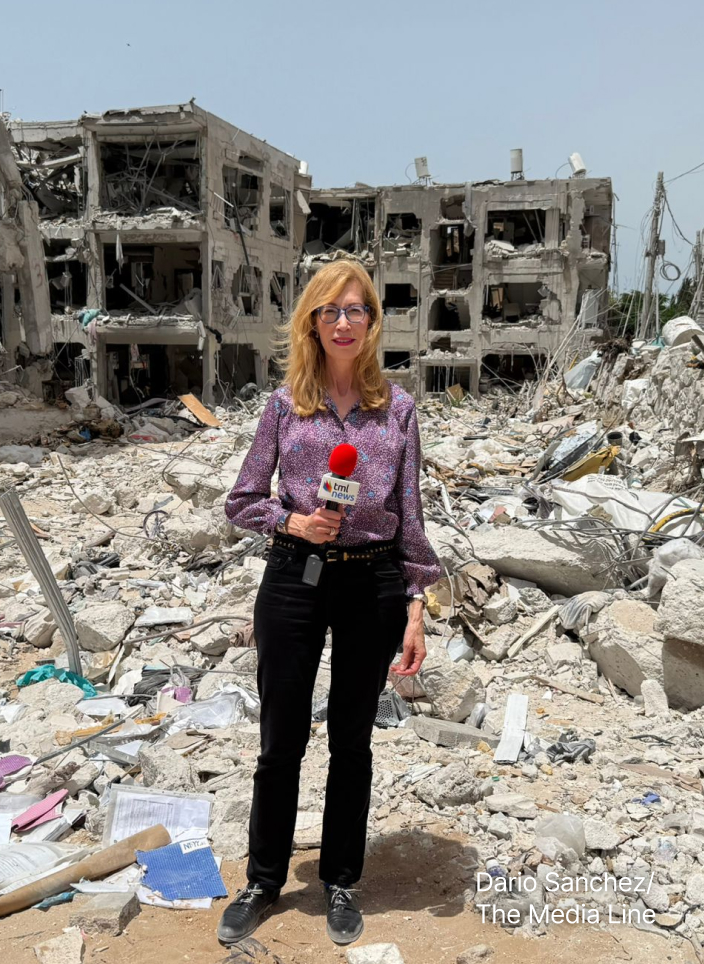
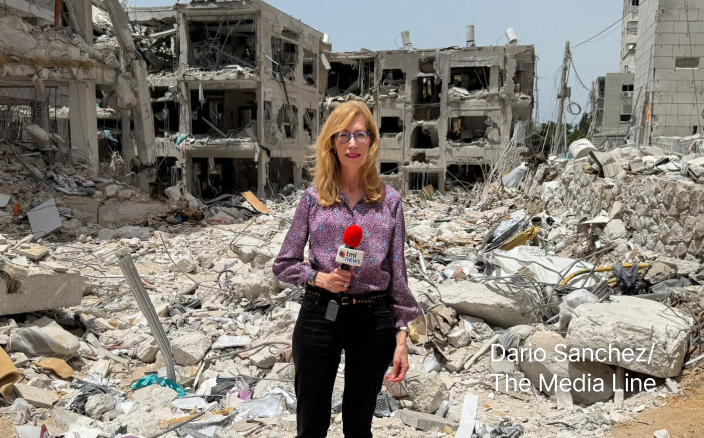
We can no longer bear what has happened to us, what they have done to us, and we don’t know where we are going or what God has in store for us
Now they have fled again. Reaching Beirut took nine hours, a trip that usually lasts less than 90 minutes. “We can no longer bear what has happened to us, what they have done to us, and we don’t know where we are going or what God has in store for us,” she said through tears in Beirut’s Martyrs’ Square.
We’ve been through so much, and we’re still in war after war, and there’s no rest
Like many Lebanese displaced more than once, Jude and her family of six say they are at the end of their strength. “We’ve been through so much, and we’re still in war after war, and there’s no rest,” she said. She and three of her daughters sat in the shade while her husband and son slept in the car. “There’s nowhere else to go, and when something happens, everyone gets greedy and rents go up,” she said.
“The cheapest room costs $1,700, and it’s an empty room, with nothing in it,” she added. Displaced for a second time, Jude says she does not know where to turn. “Since the war, we’ve been dominated by bitterness, the heat, and fear, and we’re in a very bad mental state,” she said, adding that she “used to go to the psychiatric hospital a lot because of this situation.”
The frustration surrounding this latest round of fighting is sharpened by the fact that Hezbollah, not Israel, initiated this escalation. Still, many civilians are reluctant to discuss the group’s role openly. Lama Alam grew visibly tense when asked what she thought of Hezbollah’s actions. “I don’t know anything about that,” said the mother of five, who is originally from Aleppo, Syria, and has lived for 14 years in Beirut’s southern suburbs. “God knows how we escaped last night, because just before we left, a shell hit us; some died, others survived, but we’re not sure who,” the 40-year-old told The Media Line. Her baby, just six months old, cried until she picked her up. Above them, the sky was clear and the sun intense, offering little comfort to those likely to spend the night outdoors.
During the 2024 fighting, Syrians were often barred from entering schools converted into shelters under an unofficial policy enforced by Lebanese authorities.
“We are tired of the war; we have been forced to abandon our homes several times,” Alam said. Her family paid 1.5 million Lebanese pounds, about $15, to escape the bombardment on a journey of less than 10 minutes. They had to split up into several taxis. Along with her sister and sister-in-law, about 20 people now lay on blankets in the sun. “We don’t know if we’ll be here for several days, or months, or even years!” she said. “We want to stay in our homes; we shouldn’t have to suffer this humiliation.” She added that returning to Syria was not an option for them.
We want to stay in our homes; we shouldn’t have to suffer this humiliation
On Monday morning, new strikes hit Beirut’s southern suburbs, where Alam had lived for the past 14 years, as attacks continued across southern Lebanon. It was not yet clear whether there were casualties or who had been targeted. Israel Defense Forces Chief of Staff Lt. Gen. Eyal Zamir said the military was “not only on the defensive, but also on the offensive.” “We must prepare for many days of combat,” he added. Defense Minister Israel Katz said Hezbollah “will pay a heavy price for firing on Israel.”
“Naim Qassem, Hezbollah’s secretary general, who decided to fire under pressure from Iran, is now a clear target for elimination,” Katz added in a post on X. As in previous rounds of fighting, civilians who did not choose this war are again bearing the brunt.
