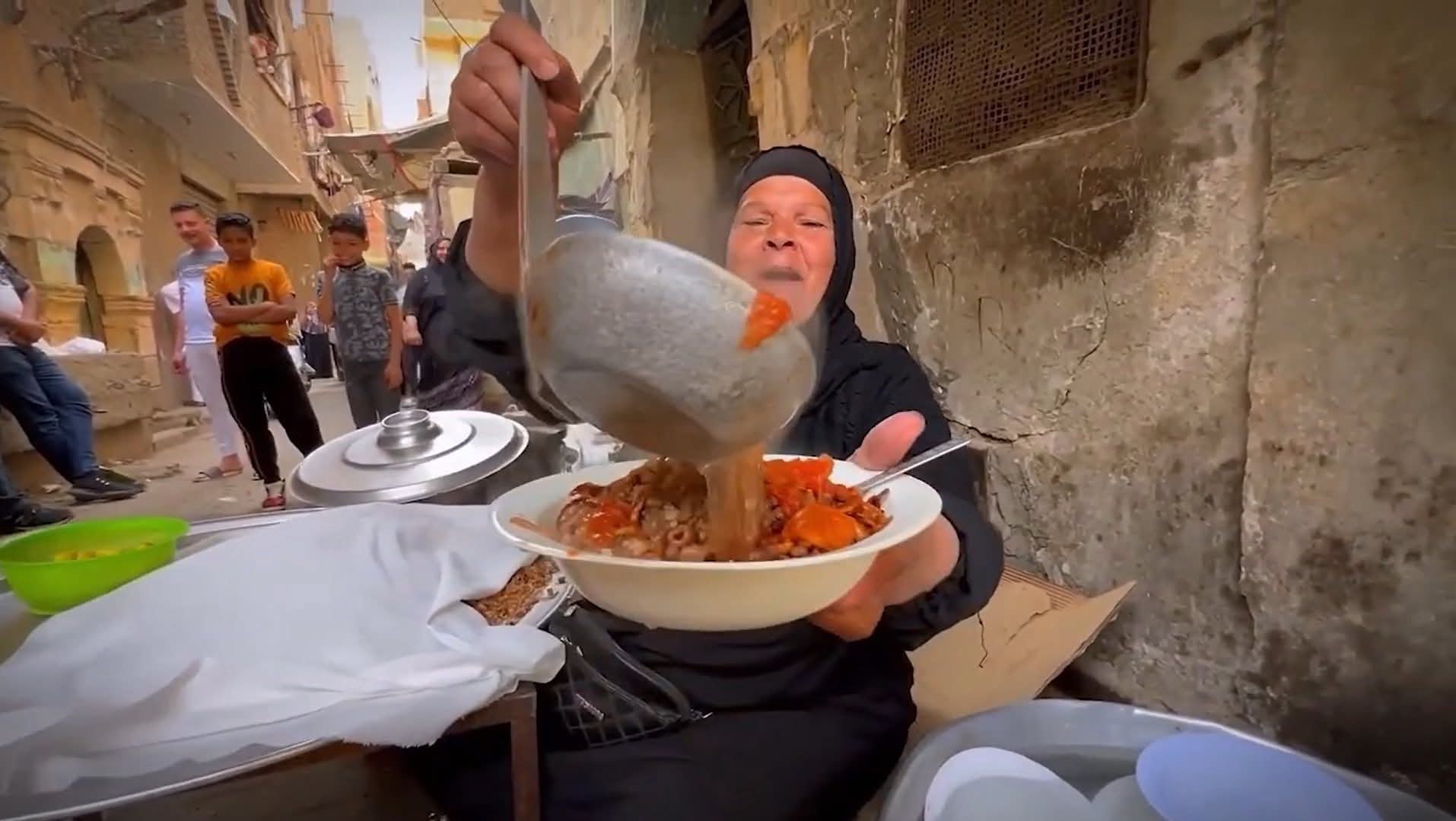
From Street Food to World Heritage: How Koshary Became Egypt’s UNESCO Dish
In Egypt, koshary is not a trend, a novelty, or a “must-try” imported by social media. It is a daily, familiar constant, served in bustling downtown shops, eaten in quiet homes, and shared across neighborhoods where people may disagree on politics but rarely dispute comfort food. That everyday intimacy is part of why the dish’s latest milestone has resonated so widely: On Dec. 10, 2025, UNESCO inscribed “Koshary, daily life dish and practices associated with it” on the Representative List of the Intangible Cultural Heritage of Humanity.
“Koshary is not just a dish in Egypt; it is a national icon and an essential part of the country’s social fabric and culinary heritage,” Ehab Medhat, consultant of information systems and civil society organization at the Arab Foundation for Development and Strategic Studies, told The Media Line. “This dish is not just food; it’s an integral part of Egyptian culture and history,” he added.
This dish is not just food; it’s an integral part of Egyptian culture and history
Koshary’s origin story is often told through the lens of Egypt’s role as a crossroads of empire, migration, and commerce. The dish took form in the 19th century, during the British occupation, and spread because it answered a simple need: it was affordable, filling, and made with ingredients accessible and easy to scale in cities.
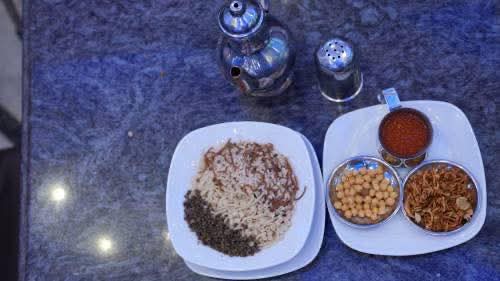
Koshary (Ahmed Zidan)
“The origins of koshary trace back to the 19th century during British occupation,” Medhat said. “The dish was initially popular among the working class due to its affordability and nutritional value,” he added.
But koshary also carries a deeper cultural logic: It is a blend that became coherent only after it passed through Egypt’s kitchens. “Koshary is a unique blend of several global influences that converged in Egypt,” Medhat explained. “It is truly a delicious reflection of Egypt as a crossroads of culture and trade, where foreign elements were embraced, adapted, and ultimately made uniquely Egyptian,” he added.
That hybridity is part of the dish’s modern identity. It is not “authentic” because it is untouched by outside influence; it is authentic because Egypt made koshary its own over time, through repetition and the ordinary task of feeding people.
Koshary is sometimes described as complicated because it is not made in one pot. It is assembled—layered—so that each element retains its texture and purpose. Yet its complexity is functional rather than performative.
It is often described as complex because it involves cooking several components separately, but the process is manageable and results in a fantastic dish
“It is often described as complex because it involves cooking several components separately,” Medhat said, “but the process is manageable and results in a fantastic dish,” he added.
Medhat described koshary as a structured dish built from distinct layers—starches, legumes, sauces, and toppings—assembled rather than simply mixed. In his explanation, it combines rice and brown lentils with pasta, a spiced tomato sauce, crispy fried onions, chickpeas, a garlic-vinegar daqqa, and, for those who want it, a chili-based sauce. Each component is prepared on its own, then brought together to create a balance of texture, acidity, and heat that makes the dish feel both hearty and sharp.
Give the gift of hope
We practice what we preach:
accurate, fearless journalism. But we can't do it alone.
- On the ground in Gaza, Syria, Israel, Egypt, Pakistan, and more
- Our program trained more than 100 journalists
- Calling out fake news and reporting real facts
- On the ground in Gaza, Syria, Israel, Egypt, Pakistan, and more
- Our program trained more than 100 journalists
- Calling out fake news and reporting real facts
Join us.
Support The Media Line. Save democracy.


Koshary is sustained not only by recipes but also by people—cooks, vendors, supply chains —and by the informal knowledge that moves through families and workplaces. One of the most striking examples, Medhat said, sits outside the spotlight of Cairo’s most famous koshary addresses.
“There is a small village in the Qalyubiyya Governorate called Al-Abadla (العبادلة),” Medhat said. “Remarkably, while the village itself has no koshary shops, over 90% of its residents are involved in the koshary business, running famous restaurants and supplying koshary expertise across Egypt,” he further explained.
“They are often credited with preserving and perfecting the original street food preparation methods,” he added, an argument that the dish’s cultural value is not only in what koshary tastes like, but in the labor networks and inherited craft that allow it to stay consistent, day after day.
If koshary is Egypt’s national dish in practice, Abu Tarek has become one of its best-known emblems, particularly for visitors and for Egyptians who see the restaurant as a living fragment of downtown Cairo’s culinary memory.
“Koshary Abu Tarek boasts a history spanning over 90 years,” said Emad Yousery, media adviser at Abu Tarek restaurant in Cairo. “The founder began the business by selling koshary plates from a portable glass box, traveling throughout downtown Cairo,” he added.

Koshary cart (Ahmed Zidan)
Yousery said the story continued through the next generation. “Mr. Abu Tarek, the son, continued this legacy using a koshary cart,” he explained, before demand pushed the business toward a permanent address. As popularity grew, the restaurant expanded vertically: “High customer demand necessitated the opening of additional floors, positioning the restaurant as arguably the world’s first multi-story establishment dedicated to serving a single local dish,” he added.
Abu Tarek has also sought to formalize its reputation on a global stage. “Koshary Abu Tarek set a Guinness World Record in 2015 by preparing the largest koshary plate, weighing 8 tons,” Yousery said, adding that it is recognized among TasteAtlas’ “Best 100 Restaurants in the World.”
UNESCO’s intangible heritage designation is not focused on crown-jewel cuisine, but living practice, ritual transmission, and community meaning. For that reason, koshary’s inclusion has emphasized how the dish is made, shared, taught, and consumed as part of daily life.
Yousery said Abu Tarek took part in the recognition process. “Koshary Abu Tarek collaborated with UNESCO during the meal’s cultural recognition process,” he said. “This partnership, facilitated through the Egyptian Ministry of Culture, involved providing a documentary film detailing the history of koshary … [and] the restaurant provided full access and facilities for the UNESCO team, enabling them to film on-site and conduct interviews with patrons,” he added.
For many Egyptians, UNESCO’s label is emotionally satisfying. It is external validation of something they have always known to be central. But recognition also creates practical consequences—new expectations about standards, authenticity, and branding.
Medhat argued that the designation is unlikely to “freeze” the dish into a single fixed recipe. Instead, he sees it shaping how koshary is represented and safeguarded. “The UNESCO recognition will primarily affect quality, authenticity, and market expansion rather than freezing the recipe,” he said.
At the industry level, Yousery framed the moment as a responsibility. “With koshary now formally recognized by UNESCO, it is imperative that all aspects of the tradition, from the culinary techniques to the serving presentation, are preserved and protected,” he said. But he also pointed to the pressures of modern demand: “The industry must also keep pace with rapidly advancing technology.”
In practical terms, both voices described a future where koshary is positioned as a cultural experience as much as a meal, particularly for visitors. “A key priority is the intensive training of skilled personnel to strengthen this sector and utilize koshary as a potential contributor to the national income via tourism,” Yousery said.
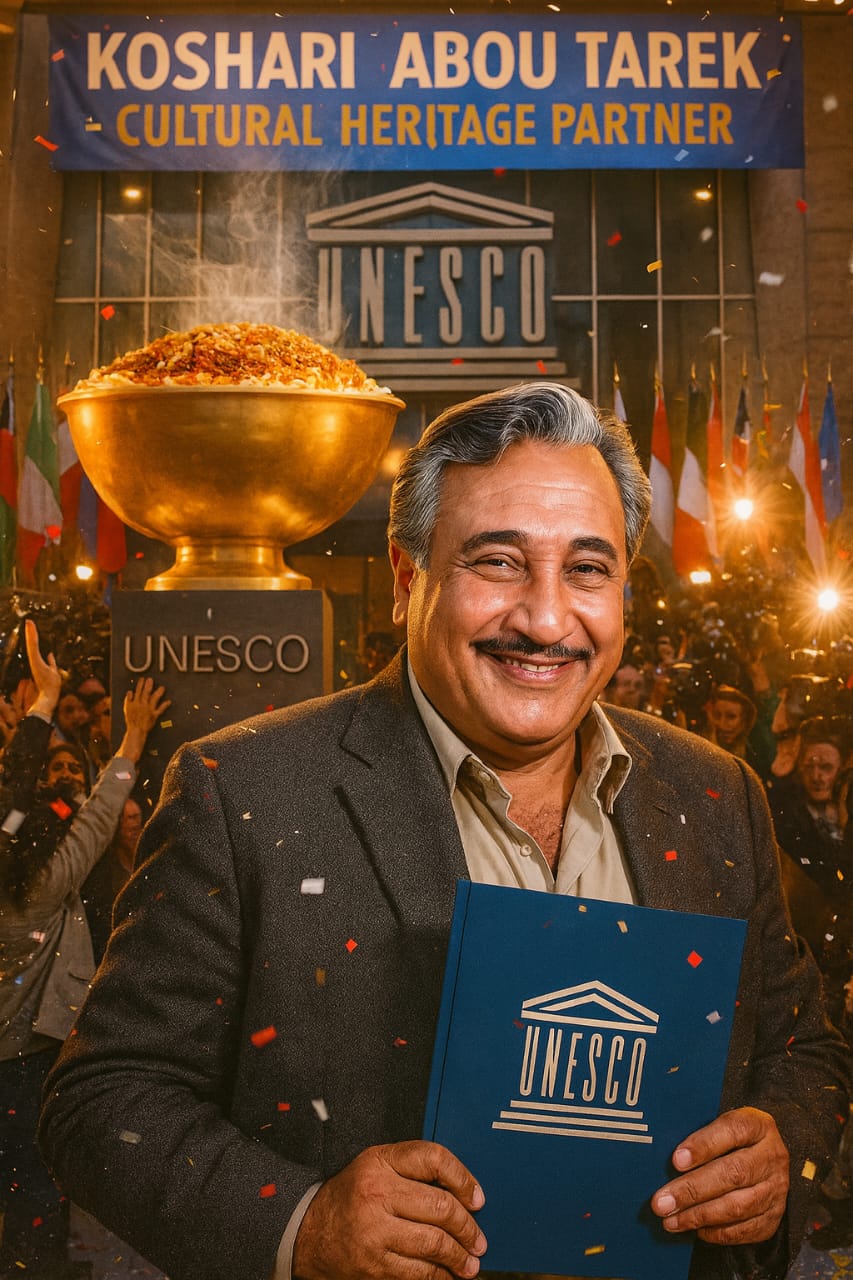
Koshari Abou Tarek UNESCO (Ahmed Zidan)
The media effect, he added, has already been tangible. “The UNESCO recognition generated significant media coverage, both domestically and internationally,” he said. “This publicity directly resulted in a surge in demand for koshary,” he added.
Koshary’s symbolic power is expressed not just in national pride, but also in the dish’s social function. In a country where inequality is visible in housing, education, and healthcare, koshary operates differently: it is widely accessible and not coded for status.
“Koshary is characterized by its fixed set of ingredients, meaning that the dish remains the same for all patrons, irrespective of their socioeconomic status,” Yousery said. “This uniformity makes the meal particularly special,” he added.
That philosophy shapes Abu Tarek’s expansion ambitions. Yousery said the restaurant has received “numerous international inquiries and offers for franchising.” However, the risk is reputational: “The primary concern remains finding a skillful workforce capable of preparing the ideal koshary plate to safeguard the meal’s excellent reputation.” The long-term aim, he added, is to expand while “consistently maintaining quality and pricing standards, thereby effectively representing the Egyptian national identity.”
UNESCO’s inscription places koshary in a category often reserved, in the public imagination, for the rare and ceremonial. But the story UNESCO is recognizing is precisely the opposite: Koshary’s heritage lives in repetition—served quickly, assembled carefully, eaten everywhere, and taught across generations as part of ordinary life.
The UNESCO recognition will act as a powerful catalyst for maintaining authenticity and raising standards in the koshary industry
“When a food or culinary tradition receives international UNESCO recognition, it means that it goes beyond the ingredients and taste,” Medhat said. “It certifies the social practices, rituals, and intergenerational knowledge associated with making and consuming the dish,” he added.
And for him, the larger meaning is cultural stewardship. “The UNESCO recognition will act as a powerful catalyst for maintaining authenticity and raising standards in the koshary industry,” Medhat said, “transforming the humble street food into a globally recognized cultural treasure while preserving its unique social traditions,” he concluded.
Note: The interview with Emad Yousery was translated with the assistance of Ahmed Zidan, interpreter and PR representative of Abu Tarek restaurant.
