Pakistan Denies Taliban Claim of Mass-Casualty Kabul Strike
Conflicting accounts over a disputed airstrike leave questions about the target and reported civilian deaths unresolved
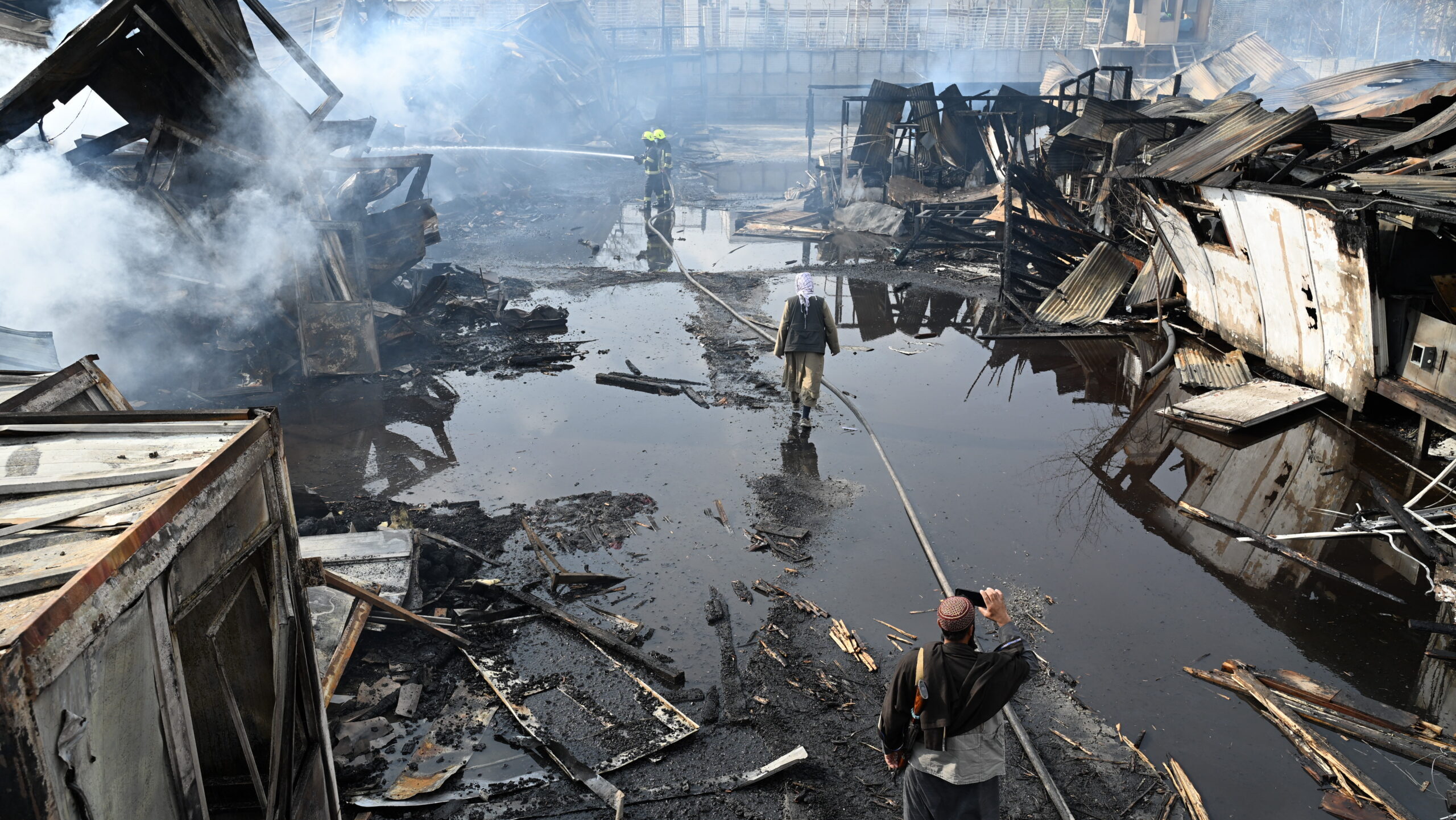
[Islamabad] Pakistan on Tuesday strongly rejected the Afghan Taliban’s claim that Pakistan Air Force jets struck a hospital or drug rehabilitation center in Kabul overnight on March 16. Taliban officials said the attack killed 400 patients, but independent verification remained limited.
Islamabad said the target was a Taliban military facility, not a medical site, while Taliban officials described the strike as a mass-casualty attack on civilians.
Pakistani security officials said the site was used to store weapons and ammunition. They pointed to a massive fireball visible across Kabul and its outskirts as evidence that large quantities of flammable material had been stored there. A senior security official told The Media Line that such strikes are carried out only after precise monitoring and confirmation through intelligence and multiple sources, adding that the air force hits only verified locations and caused no collateral damage.
According to Information Minister Ataullah Tarar, Pakistan’s armed forces carried out precision airstrikes on Afghan Taliban military installations in Kabul and Nangarhar that were allegedly being used to support terrorism.
The strikes targeted two locations in Kabul and four in Nangarhar, including ammunition depots, logistics hubs, and technical infrastructure used to back militant proxies
“The strikes targeted two locations in Kabul and four in Nangarhar, including ammunition depots, logistics hubs, and technical infrastructure used to back militant proxies,” he added.
Tarar said the Nangarhar strikes hit sites and infrastructure that Pakistan says were used by the Taliban to support proxy armed groups. He also rejected Taliban claims of civilian casualties.
Taliban officials gave a sharply different account. Kabul deputy spokesperson Hamdullah Fitrat claimed that the bombardment of a drug rehabilitation center had caused 400 deaths and 250 injuries.
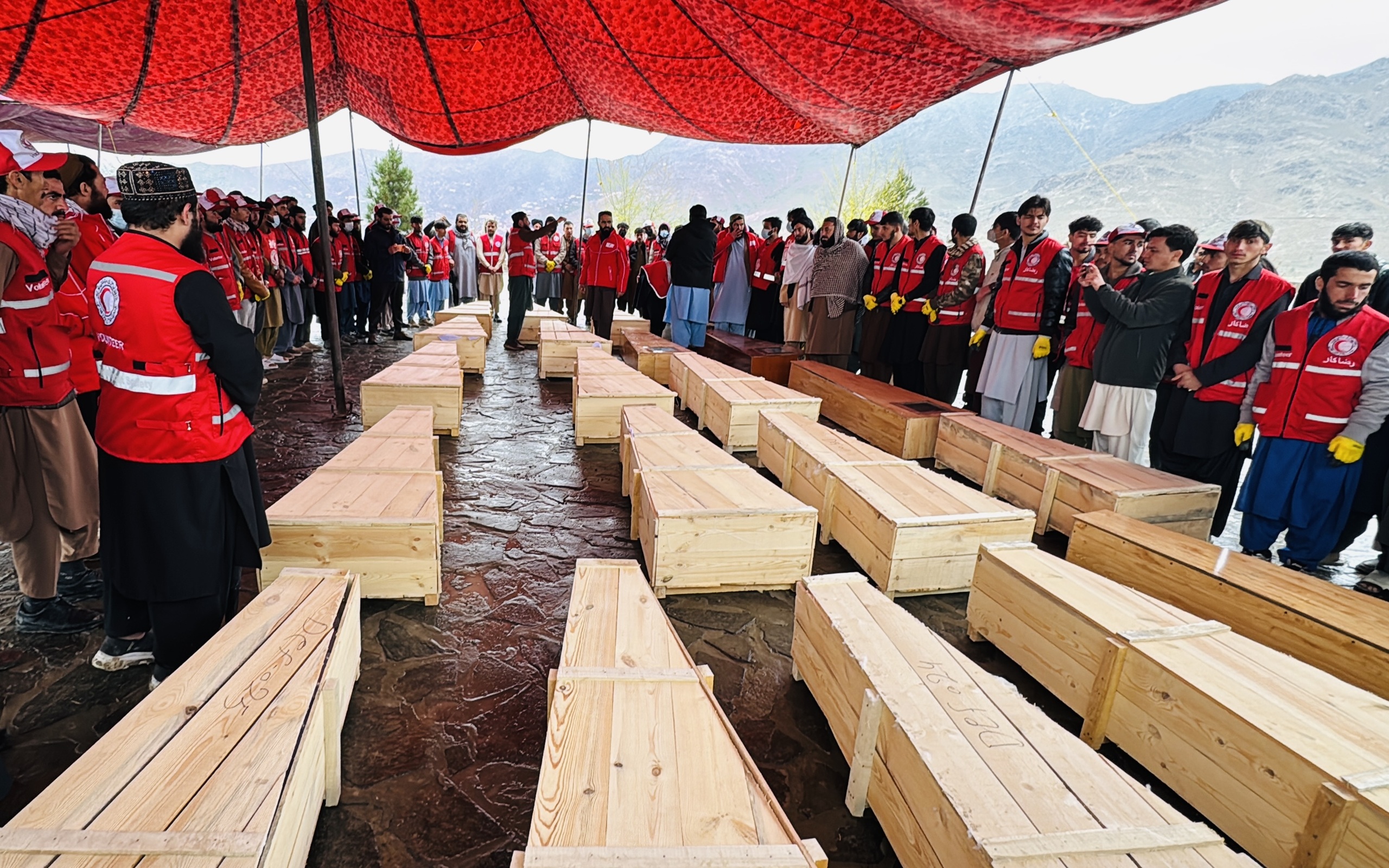
Funeral ceremony held for victims who lost their lives in the attack on Kabul, Afghanistan on March 18, 2026. (Hamid Sabawoon/Anadolu via Getty Images)
Zabihullah Mujahid, chief spokesperson for the Taliban, separately confirmed that airstrikes had taken place and warned that there was no longer room for diplomacy with Islamabad, saying the group would seek retaliation.
PAF jets targeted the former US Phoenix camp, which was used by the regime’s Defense Ministry for storing leftover US ammunition and other explosives
At the center of the dispute are both the identity of the target and the scale of the casualties. Taliban officials described the site as a rehabilitation center or hospital. Ahmad Nabizada, a Kabul-based former Afghan intelligence official, told The Media Line that “PAF jets targeted the former US Phoenix camp, which was used by the regime’s Defense Ministry for storing leftover US ammunition and other explosives.”
Give the gift of hope
We practice what we preach:
accurate, fearless journalism. But we can't do it alone.
- On the ground in Gaza, Syria, Israel, Egypt, Pakistan, and more
- Our program trained more than 100 journalists
- Calling out fake news and reporting real facts
- On the ground in Gaza, Syria, Israel, Egypt, Pakistan, and more
- Our program trained more than 100 journalists
- Calling out fake news and reporting real facts
Join us.
Support The Media Line. Save democracy.
Nabizada said he saw the camp burning and alleged that the adjacent treatment building was later set on fire and blown up to conceal the destruction of the Phoenix camp. He also disputed the reported death toll. The Media Line could not independently verify those claims.
Khaama Press, an Afghan online news agency citing local sources, also reported that Pakistan launched multiple airstrikes across the region, targeting Jalalabad Airport and the districts of Achin, Khogyani, and Shinwari. Local officials in Nangarhar have not issued an official statement on casualties or damage from those attacks.
Pakistani officials said the Nangarhar strikes targeted terrorist hideouts, including ammunition depots and operational bases.
Islamabad says the operation reached beyond disputed sites in Kabul and hit core Taliban security infrastructure as well. Between Saturday and early Sunday, the Pakistan Air Force struck the Badri Unit training center in Kandahar, the special forces unit that protects Taliban Supreme Leader Hibatullah Akhundzada.
The heavily guarded facility, near a compound linked to deceased Taliban founder Mullah Omar, is considered one of the most trusted units under Akhundzada’s direct command. Afghan media reported significant losses and the destruction of weapons and ammunition there, though exact figures remain unconfirmed.
Local sources told The Media Line that Akhundzada remains alive and fled to a secure location, despite initial social media claims that he had been killed.
Pakistan says the current campaign is part of a broader effort launched after diplomacy failed. After exhausting what it described as every nonkinetic avenue to persuade the Afghan Taliban to stop harboring the banned Tehreek-e-Taliban Pakistan (TTP), its affiliated terrorist networks, the Balochistan Liberation Army, and al-Qaida, Pakistan launched Operation Righteous Fury on February 26.
As Pakistan carried out that operation along its western border, the United States and Israel launched Operation Epic Fury/Roaring Lion against Iran on February 28. The overlap has made mediation harder, strained diplomacy, and diverted international attention across a region already under pressure from simultaneous conflicts.
Since the launch of Righteous Fury, Pakistan’s armed forces have carried out sustained cross-border operations targeting armed groups and Taliban-linked sites on Afghan soil.
According to the Pakistan Army’s media wing, air and ground forces struck TTP safe houses, training camps, weapons depots, and Taliban installations across Kabul, Kandahar, Khost, Nangarhar, Paktia, and Paktika.
Military statements claim that hundreds of terrorists were neutralized, more than 600 Taliban fighters were killed in the opening days, and dozens of outposts, vehicles, and key attack infrastructure sites were destroyed. Those figures could not be independently verified.
I urge all parties to exercise maximum restraint and respect international law, including the protection of civilians and civilian objects such as hospitals
International concern has grown alongside the fighting. Richard Bennett, the UN special rapporteur on Afghanistan, expressed concern over recent airstrikes and urged both sides to de-escalate. “I urge all parties to exercise maximum restraint and respect international law, including the protection of civilians and civilian objects such as hospitals,” he said.
Chinese Foreign Minister Wang Yi also called for a peaceful resolution to the dispute between Afghanistan and Pakistan. He warned that the use of force would escalate tensions and threaten regional stability. China has pursued mediation efforts, with its special envoy for Afghanistan actively shuttling between Kabul and Islamabad in recent days.
The Pakistan-Afghanistan confrontation has drawn less attention than the broader Middle East war, but it is rooted in a long-running dispute with major regional implications. Pakistan has repeatedly accused Afghanistan’s Taliban government of providing safe haven to terrorist groups, particularly TTP, which Islamabad says is responsible for cross-border attacks. Kabul denies the charge.
Farzana Shah, a Peshawar-based defense analyst and expert on regional armed groups, told The Media Line that “the current Pakistan–Afghanistan confrontation represents the kinetic phase of a long-simmering security rupture centered on cross-border militancy.”
She added that “since early 2026, Pakistan has shifted from defensive to pre-emptive airpower projection inside Afghanistan, targeting TTP sanctuaries and what it frames as enabling infrastructure under Taliban oversight.”
Shah said the campaign may be operationally effective in the short term, but it has not forced the Taliban to sever ties with TTP. Instead, she said, Kabul has rejected the allegations, recast the crisis as a violation of sovereignty, and turned a counterterrorism dispute into an overt interstate confrontation.
In her view, the conflict is more likely to settle into a protracted, low-intensity confrontation marked by intermittent strikes, retaliatory attacks, and proxy escalation inside Pakistan.
Muhammed Yasir Abassen, an Afghan political analyst and conflict-zone specialist, focused on the diplomatic outlook. He told The Media Line that Pakistan is likely to continue calibrated cross-border and stand-off strikes to deter armed groups while trying to avoid a broader regional escalation.
Abassen said the Afghan Taliban are likely to maintain a defensive posture, publicly denying the presence of groups such as TTP, tightening internal security, and avoiding direct conventional retaliation. He added that without credible verification or political dialogue addressing the core dispute over safe havens, tensions are likely to persist or intensify, even if regional mediation produces temporary relief.
Another sign of pressure inside Afghanistan emerged in local media reporting. Taliban intelligence has warned local outlets against reporting casualties from Pakistani airstrikes, saying such coverage could have “serious consequences.”
Amu TV, citing sources, reported on Tuesday that the advisory was sent via WhatsApp to journalists, with Taliban intelligence monitoring reporting from border areas.
The warning came as cross-border clashes with Pakistan entered their 20th day and as independent scrutiny of civilian casualty claims grew harder to sustain.
