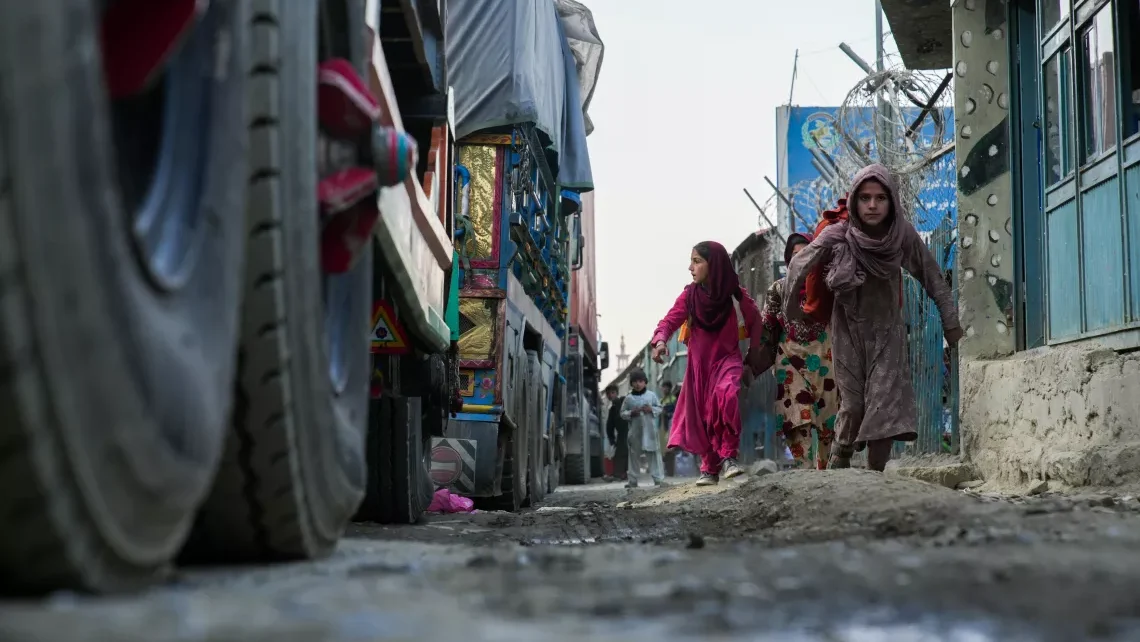
UN Reports: Afghanistan on Verge Humanitarian Disaster Amid Soaring Malnutrition and Food Scarcity
More than 17 million people in Afghanistan are facing acute food insecurity this winter, the United Nations World Food Program (WFP) warned Tuesday, as hunger and malnutrition deepen across the country amid severe funding shortfalls and converging crises.
According to the latest Integrated Food Security Phase Classification report, this figure is about 3 million higher than last year, when roughly 14.8 million people were in crisis. Acute malnutrition is rising sharply, with nearly 4 million children expected to suffer from it in the coming year.
Officials warned that without immediate and adequate intervention, many of these children could face life-threatening conditions, with untreated cases expected to result in a significant increase in child deaths.
WFP officials said the agency is struggling to provide sufficient aid to meet the growing needs. John Aylieff, WFP’s country director in Afghanistan, said, “Funding cuts are forcing us to make extremely difficult decisions.
“Families are skipping meals for days, children are going hungry, and winter is only making things worse. Without urgent international support, the situation will deteriorate further.”
Give the gift of hope
We practice what we preach:
accurate, fearless journalism. But we can't do it alone.
- On the ground in Gaza, Syria, Israel, Egypt, Pakistan, and more
- Our program trained more than 100 journalists
- Calling out fake news and reporting real facts
- On the ground in Gaza, Syria, Israel, Egypt, Pakistan, and more
- Our program trained more than 100 journalists
- Calling out fake news and reporting real facts
Join us.
Support The Media Line. Save democracy.


He added that WFP teams on the ground have witnessed families taking extreme measures to survive, including selling essential belongings or skipping meals to feed their children. “The human cost is immense, and the winter months will amplify these risks,” Aylieff warned.
The agency said it urgently requires $468 million to deliver life-saving food assistance to 6 million of Afghanistan’s most vulnerable people throughout the winter.
The crisis is being exacerbated by a combination of persistent drought, economic decline, recent earthquakes, and the return of migrants from neighboring countries, which have all strained already fragile household food security.
WFP has repeatedly called for additional international funding to expand food distribution, nutrition support, and emergency assistance, particularly for children and pregnant or breastfeeding women.
WFP spokesperson Ezzatullah Wasiq said, “Our teams are reaching tens of thousands of people every week, but the gap between need and assistance is widening. Many families have no food reserves and face impossible choices. Global support is essential to prevent a catastrophic hunger crisis.”
The funding gap comes at a critical moment, as Afghanistan braces for severe winter weather that typically disrupts supply lines and access to basic services.
For the first time in decades, WFP said it is unable to carry out a large-scale winter response while maintaining its nationwide emergency food and nutrition programs.
The United Nations Children’s Fund (UNICEF) warned that nearly 4 million children in Afghanistan are at risk of acute malnutrition, emphasizing that access to healthcare and essential nutrition remains dangerously limited.
At the same time, the International Organization for Migration reported that returning migrants are confronting extreme poverty and severe food shortages, compounding an already critical humanitarian crisis.
