How an Israeli Biofeedback Device Is Helping Users Relearn Calm After October 7
By turning invisible physiological cues into immediate visual feedback, the Reflect Orb aims to help trauma-affected users rebuild a sense of control one short session at a time
Stress is often something we feel before we can name it. A tightening in the chest, shallow breathing, restless fingers. Learning to recognize and manage those signals usually takes time, guidance, and practice.
An Israeli startup believes it can shorten that learning curve and put the process directly into your hands.
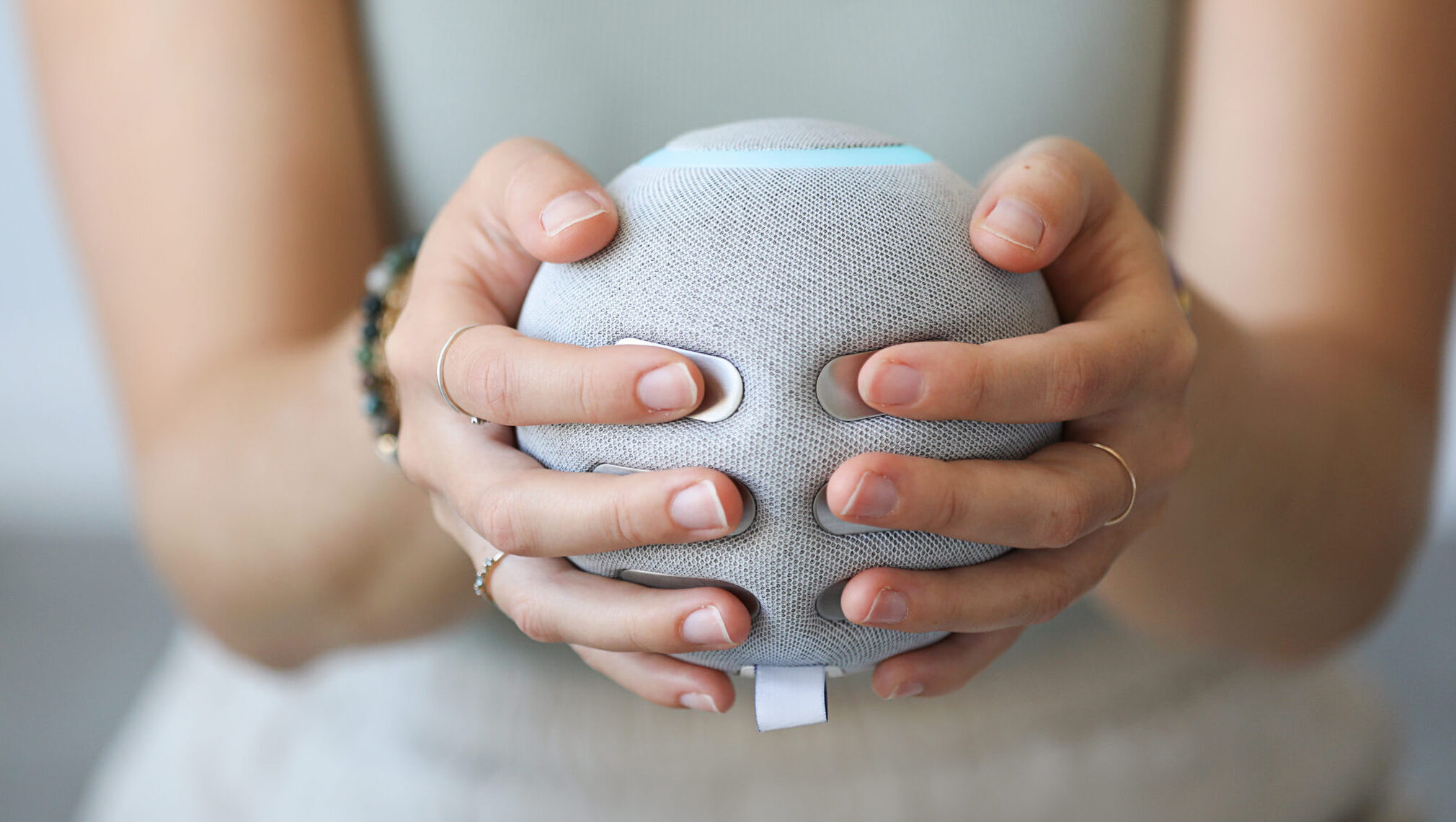
The idea is now taking shape through a device developed by Reflect Innovation; a company focused on helping people better understand and regulate their stress response. The product is a small, soft, handheld orb designed for use with the fingertips. As the user holds it, the device gathers physiological signals from the fingers and translates them into visual feedback. A light ring at the top of the orb shifts in color, offering a real-time indication of the user’s stress level.
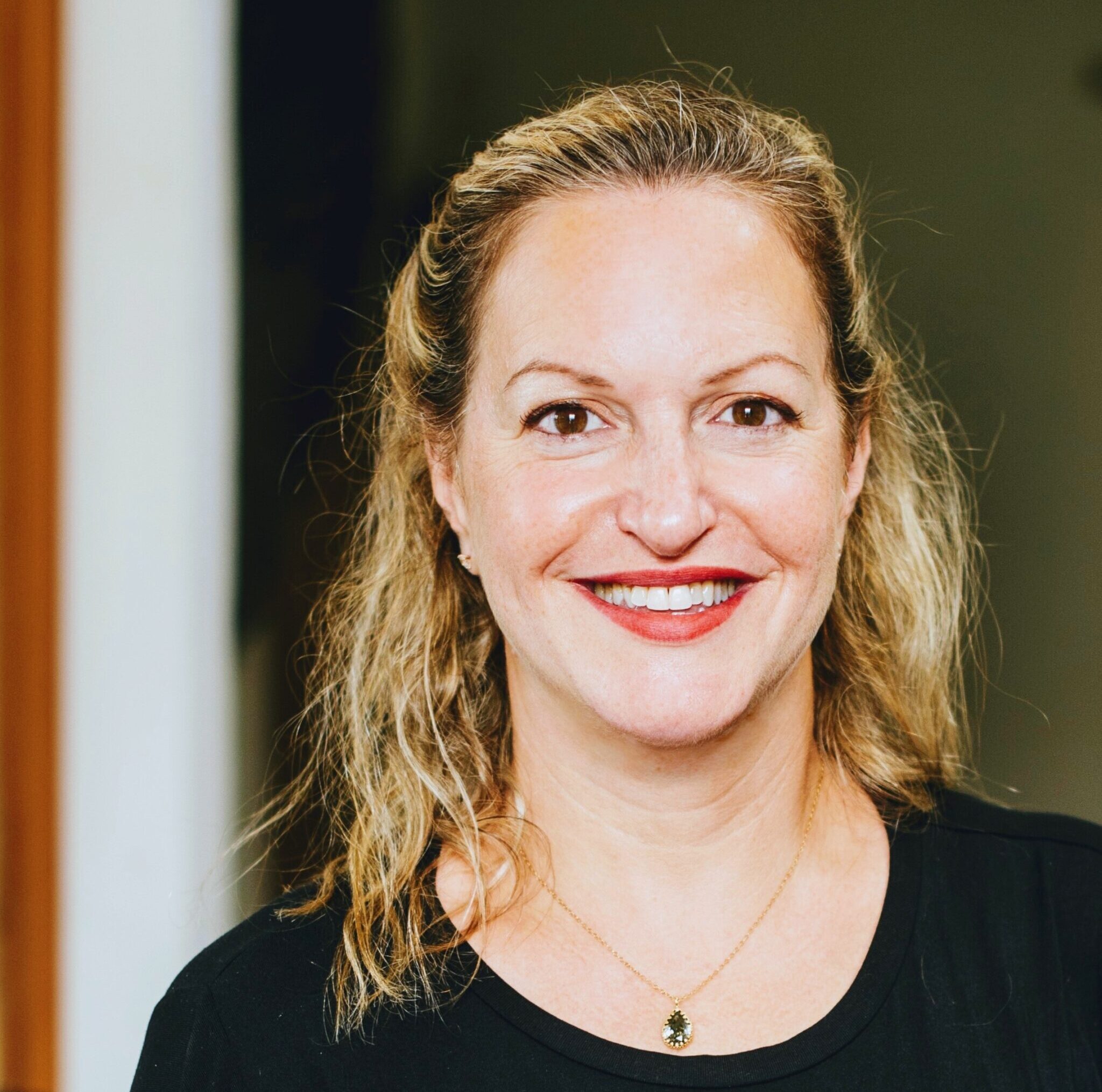
Michal Gruberger Ph.D., chief scientists at Reflect Innovation. (Courtesy: Reflect Innovation)
The company’s chief scientist, Dr. Michal Gruberger, says that with repeated use, this feedback helps users become more aware of their internal state and gradually learn how to calm their nervous system. Over time, the practice is intended to improve stress management, reduce anxiety, and support overall well-being.
“The Reflect Orb is essentially a biofeedback device,” Gruberger told The Media Line. “This means that it collects physiological data from the body about the state of stress that the body is in, and it presents the information back to the user in real time. So, it actually serves as a facilitator of learning how to self-regulate, because as you practice, you can see the impact of your practice on your body in real time.”
It actually serves as a facilitator of learning how to self-regulate, because as you practice, you can see the impact of your practice on your body in real time
The Reflect Orb adapts tools traditionally used in clinical settings and brings them into a home device, while aiming to maintain clinical-level accuracy.
Reflect did not invent biofeedback. As founder and CEO, Noga Sapir explained, “We gave it a new kind of setting and interpretation so everyone can do it.”
The orb is paired with a mobile app and guided psychoeducation. Users hold the device in their hands and learn to tune in to their bodies’ physical signals.
In the trauma space, the role of the body is very important, because people who have gone through trauma may be either dissociated or hyperaroused, and bringing them back to a level where they can operate is really important
“In the trauma space, the role of the body is very important, because people who have gone through trauma may be either dissociated or hyperaroused, and bringing them back to a level where they can operate is really important,” Sapir said. “Having a tangible solution, something that you feel and manage, is really important.”
She added that one of Reflect’s main challenges was developing a tool that is both accessible and precise. The goal was to allow people to use the device independently, without a clinician present, although many clinicians already work with Reflect as part of their patient treatment.
Reflect had a soft launch in 2022 in the United States, followed by a full launch at the end of 2023, around the time of the October 7, Hamas massacre.
Sapir created Reflect out of her own personal experience with anxiety, combined with her academic background in neuroscience and textile design. She previously served in the IDF’s 8200 intelligence unit and worked at other technology companies before developing Reflect. Throughout her career, she said, she has been curious about the mind-body connection and how people can learn to self-regulate by “hacking the body and the nervous system.”
Give the gift of hope
We practice what we preach:
accurate, fearless journalism. But we can't do it alone.
- On the ground in Gaza, Syria, Israel, Egypt, Pakistan, and more
- Our program trained more than 100 journalists
- Calling out fake news and reporting real facts
- On the ground in Gaza, Syria, Israel, Egypt, Pakistan, and more
- Our program trained more than 100 journalists
- Calling out fake news and reporting real facts
Join us.
Support The Media Line. Save democracy.

Noga Sapir, Founder and CEO, Reflect Innovation. (Courtesy: Reflect Innovation)
Initially, the device was aimed at a US audience. All of the tools were in English, and the target population included those with ADHD, anxiety, eating disorders, and some psychosomatic conditions. After October 7, however, the team realized the device could play a critical role for people experiencing symptoms of trauma following the attack.
“We went through a massive shift with an understanding of what the product can do after October 7,” Sapir said.
In the weeks that followed, Reflect moved quickly to make the device available in Israel. This included translating the app into Hebrew.
“We really wanted to serve our community,” Sapir said. “We manufacture in Israel, and we wanted to help.”
In Israel, Reflect primarily serves clinicians and therapists. After October 7, the company donated many devices to the therapeutic community, which significantly increased awareness of the product. Today, Reflect has approximately 3,000 users in America and another 500 in Israel.
The device is also sold through the company’s website and on Amazon.
“It was about bringing something into their toolbox that they were missing,” Sapir added. “I think with clinicians, they were very quick to understand the value of Reflect and integrated it very quickly into their work.”
As demand grew, Reflect continued to evolve to meet the needs of October 7 survivors. This included developing new protocols, such as guidance for use in group therapy sessions. The company also formed collaborations with the Ministry of Defense, kibbutzim in southern Israel that were heavily affected by the attacks, and families of hostages. The company also forged collaborations with the Clalit health fund, hospitals such as Hadassah Medical Organization and Tel Aviv Sourasky Medical Center, and Reichman University.
“For us, it was a change in use cases, how to use Reflect in the context of trauma therapy, as well as using it with children, which is something that before that we never really explored,” Sapir continued. “We knew that the orb is really interesting to kids, and they like it and are drawn to it, but it became an urgent need to help parents and therapists learn how to use Reflect with kids—for instance, in the hotels after their communities were evacuated. The company completely adapted very quickly.”
Alongside this shift, Reflect also began collecting data and conducting a study to support these new use cases, examining the use of the device in trauma therapy among Nova music festival survivors and hostage families.
From a scientific standpoint, Reflect measures success in several ways. These include standardized questionnaires such as the PCL Trauma Scale, as well as broader indicators such as sleep quality and overall life satisfaction, Gruberger told The Media Line. In addition, the device collects physiological data that helps the company assess whether users are improving their self-regulation.
“That’s really gold proof,” Gruberger said.
The team also tracks usability metrics. According to Sapir, users engage with the orb at significantly higher rates than with comparable solutions.
“We see their sessions getting longer and longer,” Sapir said. “There is growth in demand, both in Israel and in the States. We haven’t spent one shekel in Israel on marketing Reflect, but we keep getting demand. So that’s a strong indication that this is bringing value.”
We haven’t spent one shekel in Israel on marketing Reflect, but we keep getting demand. So that’s a strong indication that this is bringing value.
Beyond the data, Reflect also receives a growing number of personal stories from users.
“We have a boy on the autism spectrum from the south who calls the orb the ball that helps him have good dreams at night,” Gruberger said. “We have a Nova survivor who managed to tell her story after six months by holding the orb. There are some really exciting moments and stories that are powerful in helping us understand that this is really changing people’s lives.”

Children use the Reflect Orb. ( Courtesy: Reflect Innovation)
She also pointed to its use in a support group for teenagers from Kibbutz Netiv HaAsara, where a counselor described how the device helped participants open up. According to Gruberger, “it became a real icebreaker.”
Using the tool in Israel has allowed Reflect to gather evidence of its effectiveness far more quickly than if the company had relied solely on data from the United States, Gruberger said. Israel’s small and close-knit ecosystem has made researchers and medical institutions more accessible. In addition, the local market has been more adaptable due to the ongoing emergency, which has forced the company to move quickly and evolve. Working directly with communities and organizations at a grassroots level was also easier in Israel, Sapir added.
Looking ahead, Sapir told The Media Line that she envisions the Reflect Orb being used in schools, government clinics, and even workplaces over the next five years. The company is also exploring ways to adapt the device and develop protocols for more personalized experiences, such as Reflect for trauma, Reflect for anxiety, or Reflect for children.
The company is backed by venture capital and private funding, though Sapir noted that fundraising has been more challenging during the two years of war. Escalations in the conflict have made it harder to secure international investment. Still, she said, the Israeli startup ecosystem has shown resilience, and Reflect continues to grow.
“Israel is the ultimate place for creating such a solution,” Gruberger added, “both from the tech side and, unfortunately, from the trauma side.”
She noted that countries around the world are now looking to Israel for insights on coping with trauma and supporting mental health.
Sapir agreed. “There’s an imperative, and an economic and social justification, to bring reliable tools that build resilience into society,” she said. “It’s one thing after we deal with a traumatic event, but I think resilience training is something everyone should have.”
Manny Waks, an advocate for people dealing with trauma, contributed to this article.
This report is part of Trauma Tech, a new series developed and created by Maayan Hoffman and debuting on The Media Line. The series explores how Israel is building and exporting breakthrough mental health technologies that can transform life at home and bring hope to communities worldwide.
