Ramadan Supply Chains vs. Survival: 2 Realities Across the Middle East
Gulf logistics systems manage seasonal demand through imports and digital monitoring, while families in Gaza adapt rituals amid shortages and displacement
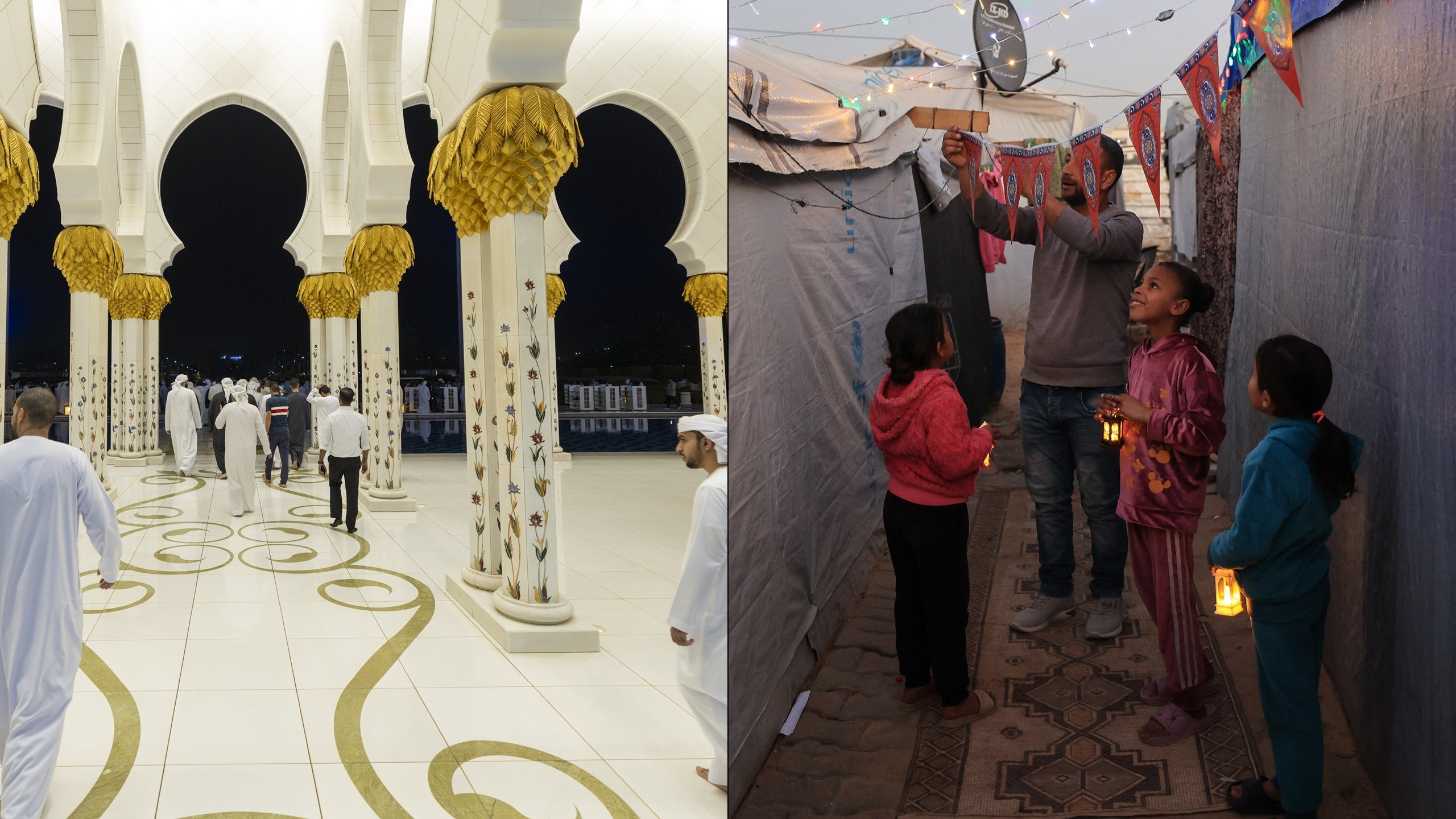
Every year, Ramadan reshapes daily life across the Middle East. Work schedules change, cities shift to nocturnal rhythms, and family life reorganizes around the evening meal. Yet the conditions under which the month unfolds differ widely across the region. In the Gulf states, Ramadan is prepared through planning, supply chains, and coordinated market management. In Gaza, it is experienced through continuity of ritual despite instability.
Both settings follow the same religious calendar. What separates them is the surrounding infrastructure.
During Ramadan, daily consumption compresses into a narrow evening window between sunset and dawn. Families host extended relatives and guests, charitable distribution increases, and meals become larger and more frequent at night. The result is not simply more food consumption, but concentrated consumption that places sudden pressure on retail supply in a predictable seasonal cycle.
In the Gulf, Ramadan does not begin with the moon sighting alone. Preparations start weeks earlier in ports, warehouses, and retail distribution networks. Because food security depends largely on imports, the month triggers a predictable surge in demand. The region functions structurally as a consumption market rather than an agricultural producer, meaning seasonal consumption spikes must be absorbed through logistics rather than domestic production increases.
The advent of Ramadan creates a dent in an already strained system of food imports
“The GCC and Saudi Arabia are heavily dependent on the import of food for even their daily needs. The GCC imports almost 85% of its food, while the Kingdom of Saudi Arabia is reliant on imports for up to 80% of its needs. The advent of Ramadan creates a dent in an already strained system of food imports,” Diptanshu Anand, an executive at Inductus Global, told The Media Line.
That pressure is driven by timing as well as volume: shipments must arrive before the fasting month, creating a compressed import window in late winter each year. Ports effectively operate as seasonal buffers, storing weeks of national consumption.
“Jebel Ali in Dubai acts as the primary gateway for food imports into the GCC markets. DP World’s data indicates a surge in imports from up to six to eight weeks before the holy month,” he noted.
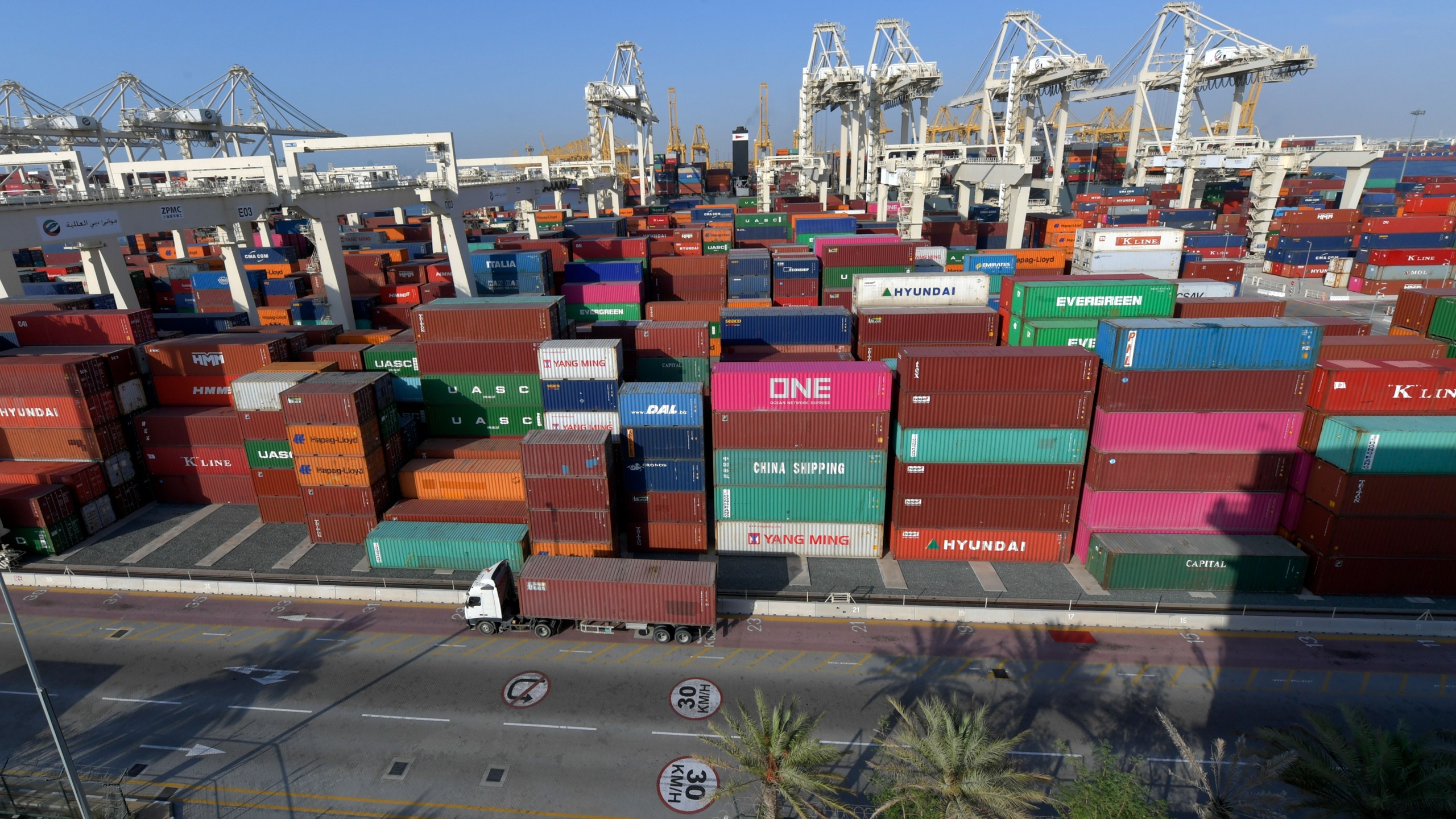
Containers are stacked at the port of Jebel Ali, operated by the Dubai-based giant ports operator DP World, in the southern outskirts of the Gulf emirate of Dubai, on June 18, 2020. (KARIM SAHIB/AFP via Getty Images)
The increase is measurable across staple goods. Importers adjust purchasing cycles, wholesalers expand warehouse leasing, and retailers build inventory to avoid shortages during peak evening consumption hours.
“If we take the average data from 2023-2025, we can see that there is a rise in rice imports, which increase by 25%, onions and garlic by 35%, nuts such as walnuts, almonds, and pistachios by around 15%, and beverage shipments, including juices and soft drinks, by roughly 5%,” he said.
Rice, a central staple in many Ramadan meals, follows a clear international supply pattern. South Asian exporters dominate shipments to the Gulf, and trade restrictions or pricing changes in exporting countries can directly influence Gulf purchasing strategies.
“India, the biggest exporter of rice in the world … supplied 1.1 million metric tons of basmati rice in 2023 to the Kingdom of Saudi Arabia, followed closely by the UAE, to which they supplied 800,000 metric tons of rice in 2023. Pakistan holds the second position in rice exports to the GCC markets,” he noted.
“Basmati rice is mostly a duopoly of India and Pakistan, as they account for 70% of rice exports to the GCC,” he added.
Perishables are deliberately sourced from multiple regions to reduce vulnerability. Instead of relying on a single supplier, the region spreads procurement across Asia, Africa, and Europe so disruptions in one area do not translate into shortages.
“The vegetable imports for the market are not dominated by any specific countries. The GCC countries enjoy a stable and diverse group of nations from which they can import,” he noted.
Despite rising consumption, Gulf governments aim to keep Ramadan from turning into an inflationary period. Retailers and regulators operate jointly to stabilize prices. The system relies on forecasting demand, pre-positioning goods, and monitoring retail behavior rather than reacting after shortages appear.
Give the gift of hope
We practice what we preach:
accurate, fearless journalism. But we can't do it alone.
- On the ground in Gaza, Syria, Israel, Egypt, Pakistan, and more
- Our program trained more than 100 journalists
- Calling out fake news and reporting real facts
- On the ground in Gaza, Syria, Israel, Egypt, Pakistan, and more
- Our program trained more than 100 journalists
- Calling out fake news and reporting real facts
Join us.
Support The Media Line. Save democracy.
“The price increases because demand spikes sharply, but the governments intervene aggressively to suppress price increases. Baseline food inflation in the GCC has been moderate in recent years,” Anand noted.
“The UAE’s Central Bank’s Quarterly Economic Review puts consumer price inflation at around 2.17% in late 2025, with forecasts pointing to around 1.8% in 2026, with effective price controls, diversified imports, and stable energy and housing costs helping limit sharp food price spikes,” he added.
Retail chains play a central operational role by building inventory early, absorbing demand, and distributing supplies through the month to reduce panic-buying cycles.
“In Saudi Arabia and the UAE, major retail chains such as Panda, BinDawood, LuLu, and Carrefour control the majority of these two markets and stockpile food for the upcoming Ramadan period approximately six to eight weeks ahead of time,” he said.
“The UAE government utilizes digital monitoring systems to track prices via 627 different retail outlets throughout the country,” he added.
Operationally, retail and logistics activity shifts toward nighttime. Deliveries increase after sunset, supermarkets extend opening hours, and staffing patterns change to support peak purchasing periods late in the evening rather than during the day.
This monitoring is designed to detect sudden retail price deviations and enforce temporary caps when necessary, keeping consumer costs predictable even as consumption patterns shift sharply after sunset.
The model was developed partly from earlier regional vulnerability.
“Qatar’s tale of 2017 has been a case study for all the GCC countries. During a diplomatic blockade by its neighbors, the cracks in the system started to show, as the supermarket shelves were left empty,” he said.
“In response, Qatar built redundancy into supply networks by diversifying origins and increasing domestic production in selected categories, reducing reliance on single-route imports,” he added.
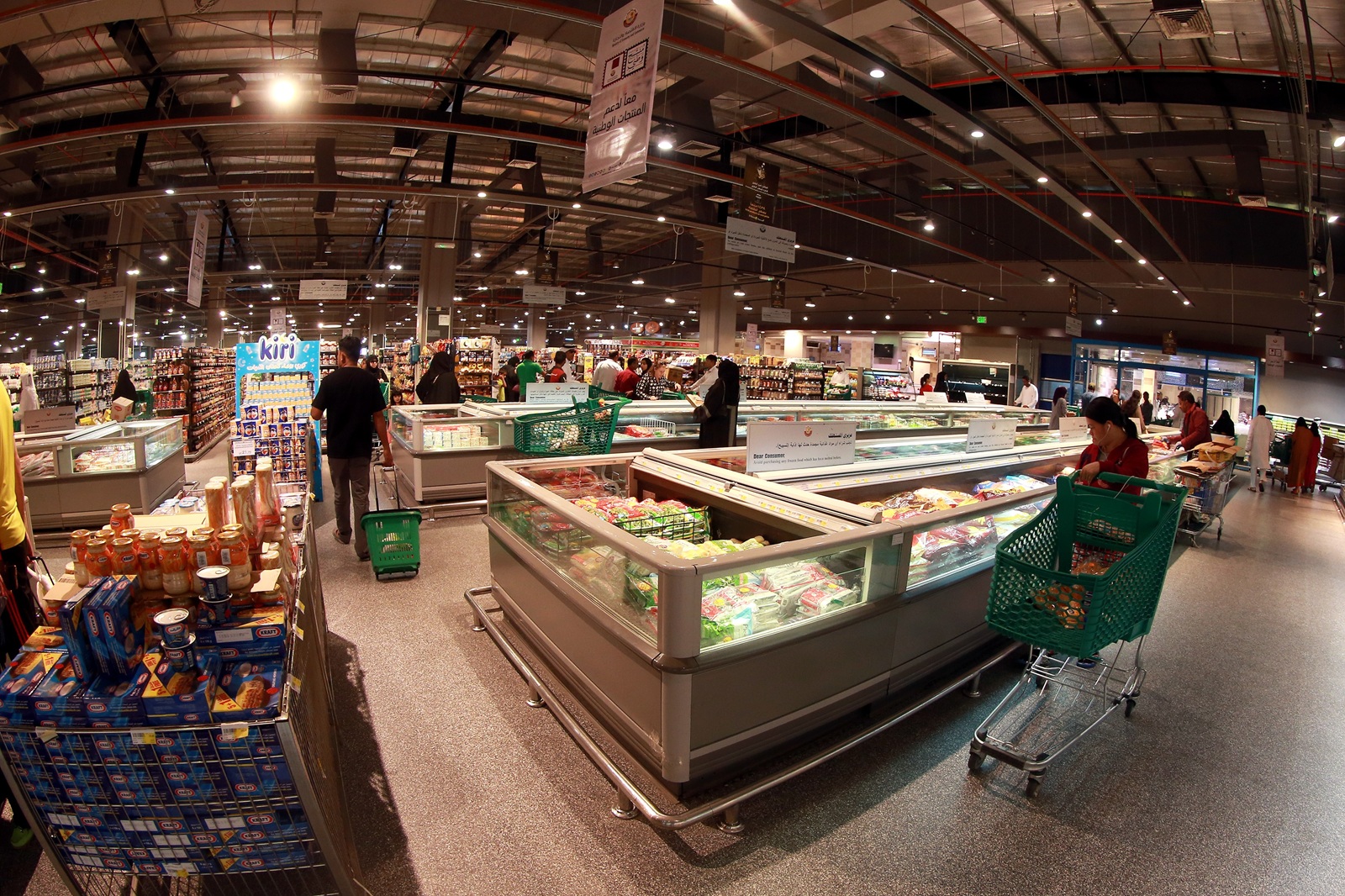
Customers are seen shopping at Al Meera market in Doha, Qatar, on June 9, 2017. People rushed to markets and stocked up on food until the shelves were empty on the first day the crisis broke out between Qatar and the other Gulf countries. (Mohamed Farag/Anadolu Agency/Getty Images)
Drawing on lessons from the 2017 blockade, Anand said all six Gulf countries now enter Ramadan more diversely supplied, well-stocked, and digitally monitored than in the past.
In Gaza, Ramadan arrives under very different circumstances. Instead of planned logistics, the month is shaped by memory, displacement, and efforts to maintain routine. The availability of goods varies over time depending on whether—and when—humanitarian shipments enter, making preparation difficult and often impossible in advance.
Mohammed Timraz, founder of the HeART of Gaza Project, an initiative showcasing art from Gaza to promote dignity, honesty, and a “quiet” voice for the region, spoke to The Media Line about his journey from Gaza to Italy:
“I left Gaza on October 1 after a year and seven months of waiting to receive a scholarship to the University of Parma. Leaving was not an easy choice, nor was it a beginning free of pain,” he said.
“It was a step filled with both gratitude and sorrow—gratitude for a long-awaited academic opportunity, and deep sadness for leaving behind a city enduring one of the hardest chapters in its history,” he added.
His account centers on lived experience rather than the mechanics of preparation.
“Today, I write to describe what Ramadan feels like in Gaza as it is truly lived—not just as it appears in the headlines,” he noted.
Before the current war, Ramadan followed familiar patterns of communal gathering and shared meals.
“Ramadan has always been the generous month for Muslims—a time welcomed with lights, decorations, children’s laughter echoing through the streets, and the scent of food filling the air before the Maghrib call to prayer. But this year—like the past two—Ramadan is completely different,” he noted.
Ramadan has always been the generous month for Muslims—a time welcomed with lights, decorations, children’s laughter echoing through the streets, and the scent of food filling the air before the Maghrib call to prayer. But this year—like the past two—Ramadan is completely different.
“Gaza continues to endure extremely difficult conditions. At almost every iftar table, there is an empty seat. Today, many families are scattered. Some live in tents or among the remains of destroyed homes, trying to build fragments of life from rubble and patience from pain,” he added.
Even so, many practices associated with the month continue in adapted form.
“They buy simple lights, decorate tents, hang ornaments above the rubble—as if declaring that life, no matter how dark it becomes, cannot be completely extinguished. But their laughter is quieter. Their questions are heavier,” he noted.
Ramadan 2026 in Gaza City. (Courtesy Mohammed Timraz)
Food availability shapes daily reality.
“While the entry of some goods has slightly improved compared to previous months, prices remain high. Many families cannot afford basic necessities. Some struggle to prepare even a simple meal for iftar,” he said.
“Families try to support one another, to share what little they have—but the scale of need is greater than individual capacity,” he added.
Local initiatives like his seek to address shortages through informal assistance networks.
“Since the beginning of this crisis, I launched a campaign called ‘We Are Not Alone.’ Its mission is to support families in need by providing food, water, medicine, clothing, and other essential supplies. Despite a limited budget, my team and I believe that solidarity can truly make a difference,” he said.
Ramadan in Gaza is not what it once was. But even among the rubble, there remains a seed of hope—a hope that refuses to disappear.
“Ramadan in Gaza is not what it once was. But even among the rubble, there remains a seed of hope—a hope that refuses to disappear,” Timraz concluded.
Across the region, Ramadan remains the same religious observance. In one setting, systems are designed to guarantee continuity through forecasting, storage, and regulation. In the other, continuity depends on social ties and individual adaptation when predictability is absent.
