Desperation Drives Afghan Children Into Dangerous Border Trade
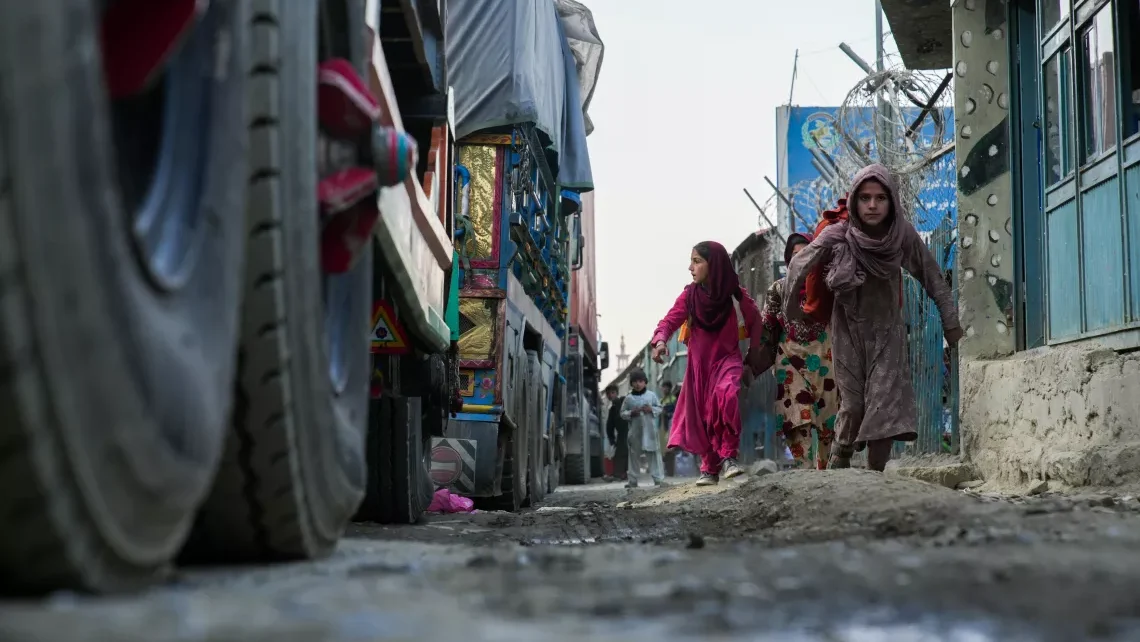
An alarming surge in child smuggling at the Torkham border crossing between Pakistan and Afghanistan has spotlighted the exploitation of Afghan minors by organized criminal networks, reports The Media Line’s Arshad Mehmood. In recent weeks, Pakistan repatriated 50 Afghan children—some as young as 5—who had been caught transporting goods like cigarettes, electronics, and narcotics across the porous frontier. Officials say the minors were used by smuggling rings that prey on families living in poverty near the border.
Children are often seen clinging to trucks or hiding in compartments to evade detection. Many are subjected to physical or sexual abuse and earn little more than a few hundred rupees. Estimates suggest up to 2,000 children may be involved in daily smuggling operations at Torkham. While Pakistan refrained from pressing charges, tribal elders helped negotiate the children’s return, a move seen as a limited but symbolic step.
Give the gift of hope
We practice what we preach:
accurate, fearless journalism. But we can't do it alone.
- On the ground in Gaza, Syria, Israel, Egypt, Pakistan, and more
- Our program trained more than 100 journalists
- Calling out fake news and reporting real facts
- On the ground in Gaza, Syria, Israel, Egypt, Pakistan, and more
- Our program trained more than 100 journalists
- Calling out fake news and reporting real facts
Join us.
Support The Media Line. Save democracy.
Experts and activists interviewed by Mehmood warn that poverty, lack of education, and the absence of government intervention in Afghanistan have allowed this crisis to fester. Girls face even greater risks, and there are growing concerns that children forced into smuggling could later be recruited by extremist groups.
Afghan and international authorities have yet to implement comprehensive protections. The Afghan government has downplayed the issue, framing it as child labor. But activists insist that without education, jobs, and cross-border cooperation, vulnerable children will remain trapped in cycles of exploitation and danger.
As Mehmood’s reporting makes clear, the suffering of these children is not only a regional humanitarian crisis—it is a preventable tragedy that demands urgent attention. Read the full article for a deeper look into the lives affected and the larger forces at play.
