Gene-Edited Mosquitoes Get a Makeover That Could Supercharge Disease Control
Israeli, German, and French scientists say they have created a gene-editing approach that makes it far simpler to sort male from female mosquitoes, a long-standing bottleneck in large-scale mosquito-control campaigns, according to a Hebrew University of Jerusalem statement released Wednesday.
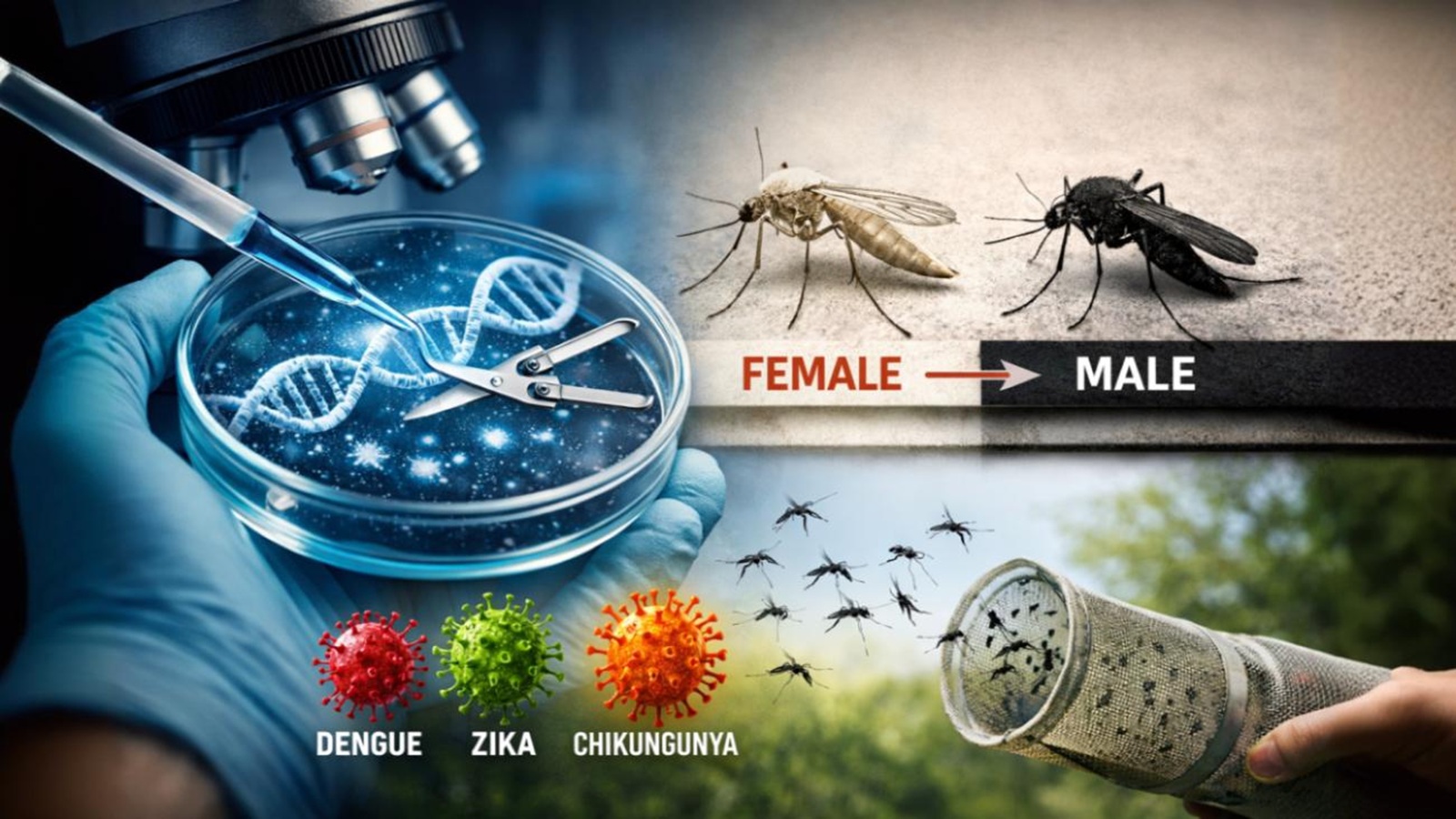
The research targets a basic challenge in public health programs that use the sterile insect technique. Those initiatives release only sterile male mosquitoes into the environment so they mate with wild females and gradually shrink mosquito populations. Females must be excluded because only they bite humans and spread viruses such as dengue, Zika, and chikungunya.
Give the gift of hope
We practice what we preach:
accurate, fearless journalism. But we can't do it alone.
- On the ground in Gaza, Syria, Israel, Egypt, Pakistan, and more
- Our program trained more than 100 journalists
- Calling out fake news and reporting real facts
- On the ground in Gaza, Syria, Israel, Egypt, Pakistan, and more
- Our program trained more than 100 journalists
- Calling out fake news and reporting real facts
Join us.
Support The Media Line. Save democracy.


The study, published in Nature Communications, relies on clustered regularly interspaced short palindromic repeats (CRISPR), a gene-editing technology that allows scientists to precisely cut and modify DNA. Often described as molecular “scissors,” CRISPR has transformed biology over the past decade by making genetic changes faster, cheaper, and far more accurate than earlier methods.
Using CRISPR, the researchers disrupted a gene responsible for yellow pigmentation in mosquitoes. They then restored normal dark coloring only in males by linking the pigmentation process to a genetic “master switch” known as nix, which determines sex development. The result is a stable mosquito strain in which all males appear dark while all females remain pale, allowing rapid visual separation.
Current sorting methods depend on size differences in young mosquitoes, a labor-intensive process that can allow biting females to slip through.
The researchers also found that eggs laid by the pale females dry out quickly, creating an added safety layer if any females escape release. They said the approach could help mosquito-control programs scale up and improve efforts to limit mosquito-borne disease transmission.
