Iraq’s Drought Unveils a Forgotten City of the Dead
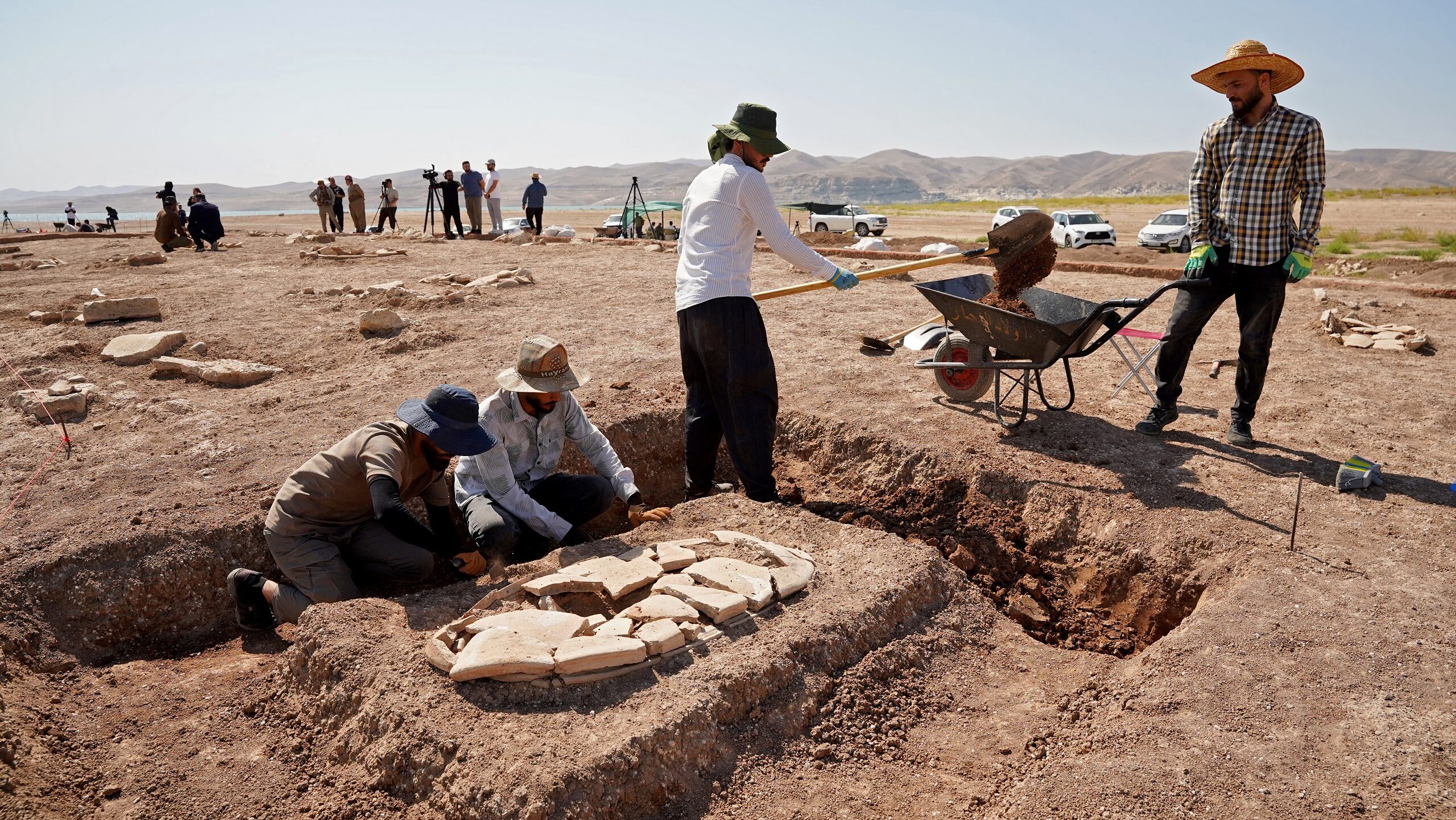
The drought gripping Iraq has cracked the earth, withered its crops, and dimmed its rivers. But in the parched north, it has also peeled back layers of history. As the Mosul Dam reservoir receded to record lows this summer, archaeologists stumbled upon a hidden city of the dead: more than 40 ancient tombs carved into the rocky edges of Duhok province.
Bekas Brefkany, who heads the antiquities department in Duhok, has spent years scanning the landscape. Last year, his team spotted hints of burial chambers. This year, with water “at their lowest,” the tombs finally revealed themselves. “So far, we have discovered approximately 40 tombs,” he said, standing over sites untouched for more than two millennia.
Give the gift of hope
We practice what we preach:
accurate, fearless journalism. But we can't do it alone.
- On the ground in Gaza, Syria, Israel, Egypt, Pakistan, and more
- Our program trained more than 100 journalists
- Calling out fake news and reporting real facts
- On the ground in Gaza, Syria, Israel, Egypt, Pakistan, and more
- Our program trained more than 100 journalists
- Calling out fake news and reporting real facts
Join us.
Support The Media Line. Save democracy.
The chambers, thought to date back 2,300 years to the Hellenistic or Seleucid period, offer a rare glimpse into the lives—and deaths—of people who once walked the ancient crossroads of Mesopotamia. Teams are now carefully excavating the finds and preparing to transfer them to the Duhok Museum, a race against time before rains and dam releases reclaim the site.
Iraq’s water crisis is the unlikely author of these discoveries. Five years of drought, scorching heat, and dwindling river flows have devastated farmers and strained the country’s electricity supply. Water reserves sit at just 8% of capacity, a level officials warn has not been seen since 1933.
For archaeologists, that devastation is also an opportunity. Each drop in the Tigris and Euphrates, rivers throttled further by upstream dams in Turkey and Iran, exposes remnants of civilizations that turned these waters into the cradle of human history. In the drought’s shadow, Iraq’s buried past is speaking again.
