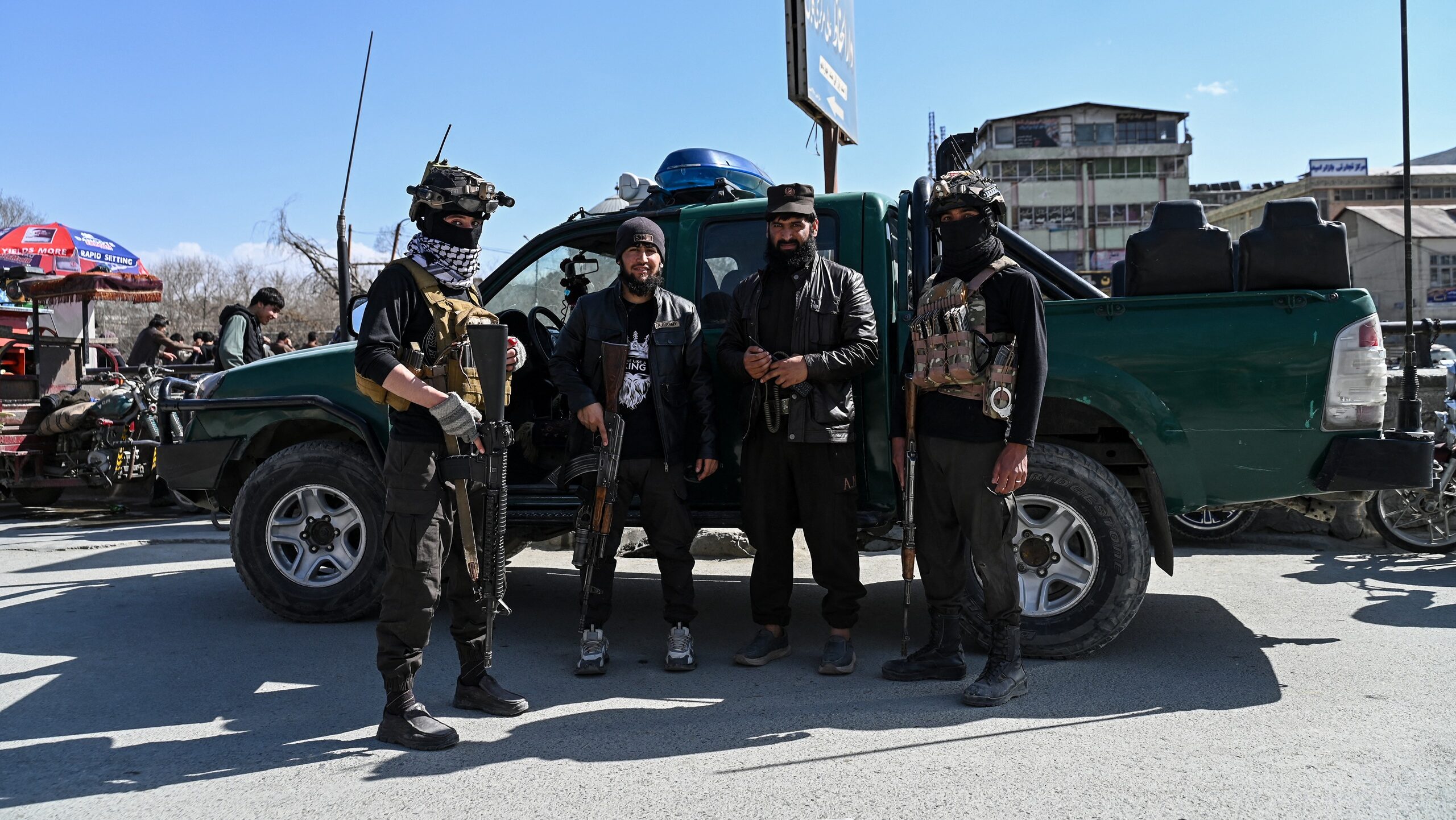
Moscow Sounds Alarm on IS-KP and TTP Presence in Afghanistan
In Arshad Mehmood’s reporting for The Media Line, Russia is no longer speaking about Afghanistan’s security problem in generalities. A new Russian Foreign Ministry assessment, carried by outlets including Interfax and the South Asia Terrorism Portal, estimates that roughly 20,000 to 23,000 fighters tied to international terrorist groups are active in Afghanistan—more than half described as foreign nationals—raising concerns about spillover into Central Asia and Pakistan.
The Russian estimate breaks down the landscape by group: Islamic State-Khorasan Province (IS-KP) at about 3,000 fighters; Tehrik-e-Taliban Pakistan (TTP) at 5,000 to 7,000; al-Qaida at 400 to 1,500; the East Turkestan Islamic Movement, also known as the Turkestan Islamic Party, at 300 to 1,200; the Islamic Movement of Uzbekistan at 150 to 500; and Jamaat Ansarullah at 150 to 250. Moscow’s report says TTP networks operate mainly in Afghanistan’s southeast and east, using those areas to launch attacks into Pakistan—an allegation Islamabad has pressed since the Taliban’s 2021 return.
Give the gift of hope
We practice what we preach:
accurate, fearless journalism. But we can't do it alone.
- On the ground in Gaza, Syria, Israel, Egypt, Pakistan, and more
- Our program trained more than 100 journalists
- Calling out fake news and reporting real facts
- On the ground in Gaza, Syria, Israel, Egypt, Pakistan, and more
- Our program trained more than 100 journalists
- Calling out fake news and reporting real facts
Join us.
Support The Media Line. Save democracy.
Russian security officials are also tying the issue to regional defense planning. Andrey Serdyukov, the Joint Staff chief of the Collective Security Treaty Organization (CSTO), warned on Feb. 13, 2026 that extremist and terrorist groups in Afghanistan threaten neighboring states, while Security Council Secretary Sergei Shoigu flagged the Tajikistan–Afghanistan border as a key pressure point for the bloc.
The Taliban rejected the numbers. Spokesperson Zabihullah Mujahid dismissed the figures and sources as inaccurate and insisted Afghanistan is under unified control and that foreign groups cannot operate there.
Beyond the threat picture, the article argues the report may force a policy reckoning in Moscow, which is described as the only country to have officially recognized the Taliban’s rule. Analysts interviewed by The Media Line say Russia’s recognition was linked to ambitions for mineral access, transit “connectivity,” and security cooperation—goals that look shaky if Afghanistan cannot suppress groups such as IS-KP and TTP. Mehmood’s full piece is worth reading for the granular group-by-group accounting and what it suggests about Russia, Pakistan, and the region’s next security moves.
