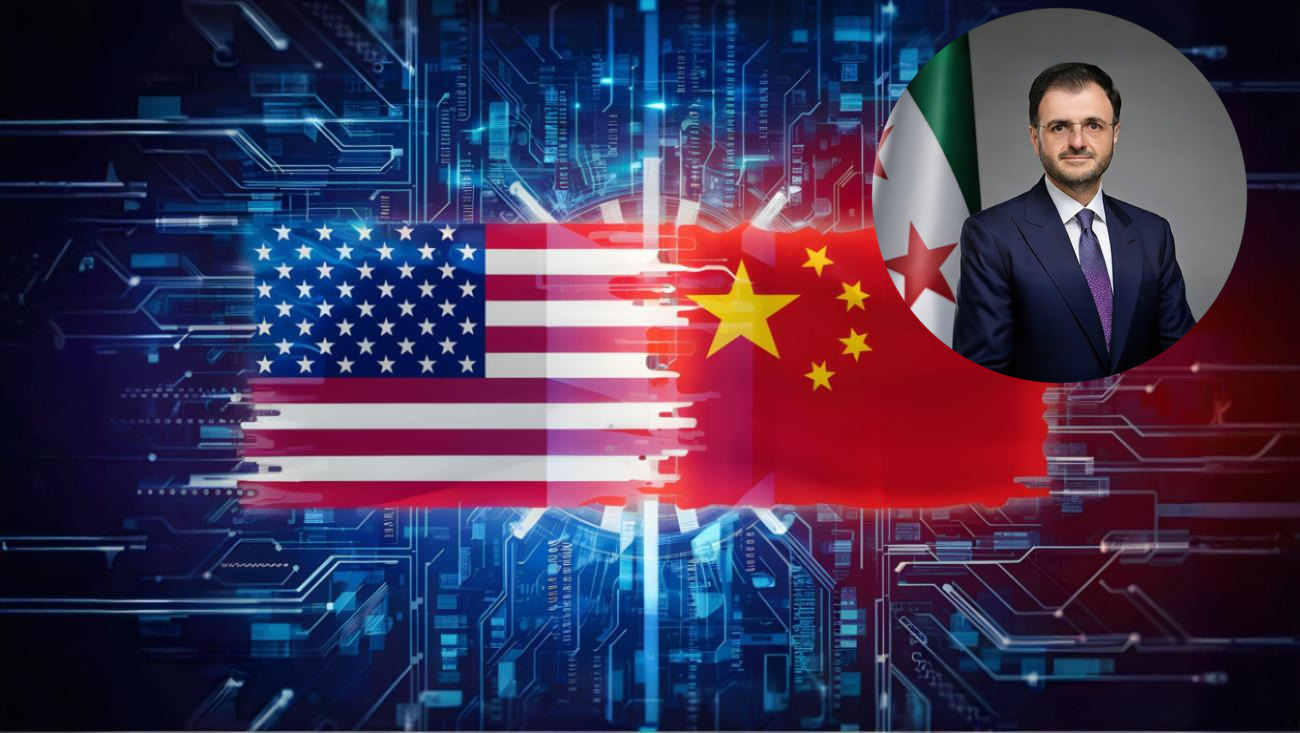
US Warns Syria on Chinese Telecom as Damascus Courts New Partners
In Rizik Alabi’s report, a US State Department delegation sits down with Syrian Communications Minister Abdul Salam Haykal in San Francisco on Feb. 24 with a message Washington has delivered across capitals for years: think twice before building your digital backbone with Chinese technology. The Americans warn that buying critical telecommunications infrastructure from Chinese firms could expose sensitive data and create national security vulnerabilities, given longstanding US claims that Beijing can compel companies to cooperate with its security services—an allegation China denies.
What looks like a procurement dispute is really a struggle over who wires Syria’s postwar future. As the country tries to reconnect with regional markets and revive investment, telecom is no longer just about coverage maps and network speed. Supplier decisions shape financing, maintenance, standards, upgrades, and long-term dependence—and they telegraph where Damascus sits in the geopolitical pecking order.
Give the gift of hope
We practice what we preach:
accurate, fearless journalism. But we can't do it alone.
- On the ground in Gaza, Syria, Israel, Egypt, Pakistan, and more
- Our program trained more than 100 journalists
- Calling out fake news and reporting real facts
- On the ground in Gaza, Syria, Israel, Egypt, Pakistan, and more
- Our program trained more than 100 journalists
- Calling out fake news and reporting real facts
Join us.
Support The Media Line. Save democracy.


Alabi traces how China’s relationship with Damascus predates Syria’s current political transition. During Bashar Assad’s rule, Beijing backed Syria at the UN Security Council, often alongside Russia, invoking sovereignty and opposing forced regime change. Analysts quoted in the piece argue that China’s approach is less ideological than transactional: it partners with “the state,” whoever runs it, so long as interests are protected.
Syria’s reality on the ground helps explain the pull. Industry estimates suggest a significant share of equipment used by Syria’s two mobile networks relies on Chinese technologies, shaped by years of Western sanctions, procurement constraints, and the appeal of cheaper, faster-to-deploy systems. Rebuilding telecommunications is portrayed as a core economic priority because weak coverage and slow internet deter investment and commerce.
Sources in the article also lay out the tradeoffs. Reem Al-Hassan, an economic expert on reconstruction, says the issue is “governed by numbers before slogans,” while warning about long-term financial dependency and urging diversification. Cybersecurity expert Tarek Nasser argues the debate “goes beyond the issue of direct espionage” to control over supply chains, vendor concentration, and whether Syria can build real oversight, audits, and enforceable privacy rules.
The central paradox is hard to miss: Washington warns Syria away from Chinese telecom gear while US restrictions and export controls limit Western alternatives at scale. Alabi’s full piece is worth reading for how it frames Syria’s balancing act—trying to rebuild fast without becoming collateral in US-China rivalry.
