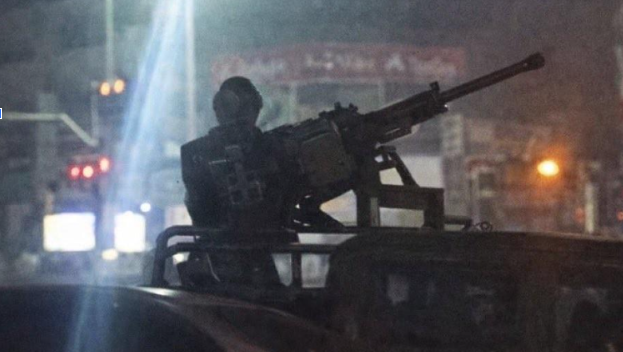
‘We Were Not Supposed To Kill People’: Security Forces Show Signs of Strain
Three weeks after Iran’s blood-soaked crackdown, Omid Habibinia reports that the most dangerous fault line for the Islamic Republic may be inside the security apparatus itself: morale. An Islamic Revolutionary Guard Corps (IRGC) member, speaking via an intermediary, says he has not reported to work since Jan. 18, citing severe depression, medical treatment, and disgust at what he describes as “shoot-to-kill orders” and the brutality inflicted on civilians. He says members of his own family were among the wounded or the disappeared—and that even after expecting a harsh response, he was still shocked by what he saw.
Give the gift of hope
We practice what we preach:
accurate, fearless journalism. But we can't do it alone.
- On the ground in Gaza, Syria, Israel, Egypt, Pakistan, and more
- Our program trained more than 100 journalists
- Calling out fake news and reporting real facts
- On the ground in Gaza, Syria, Israel, Egypt, Pakistan, and more
- Our program trained more than 100 journalists
- Calling out fake news and reporting real facts
Join us.
Support The Media Line. Save democracy.

Any hint of dissent comes wrapped in fear. Unconfirmed reports cited in the story say the IRGC’s Intelligence Protection Organization circulated confidential directives warning commanders that refusing orders—whether from immediate superiors or the Supreme National Security Council—would be met with severe punishment, including immediate arrest and referral to special military courts. The regime’s public posture echoes that message: the IRGC Intelligence Organization issued a rare warning against “insubordination, desertion or disobedience,” threatening prosecution and “decisive action.”
Outside the chain of command, the reporting turns gut-level. A video released by Iran International shows a regime agent shooting a wounded female protester at point-blank range. Human rights activists allege executions of detainees, execution-style shootings in the streets, and killings of injured people inside medical facilities—claims difficult to independently verify under near-martial-law conditions and severe internet restrictions. Read the full article and watch the video report; Habibinia’s sourcing makes the stakes impossible to ignore.
