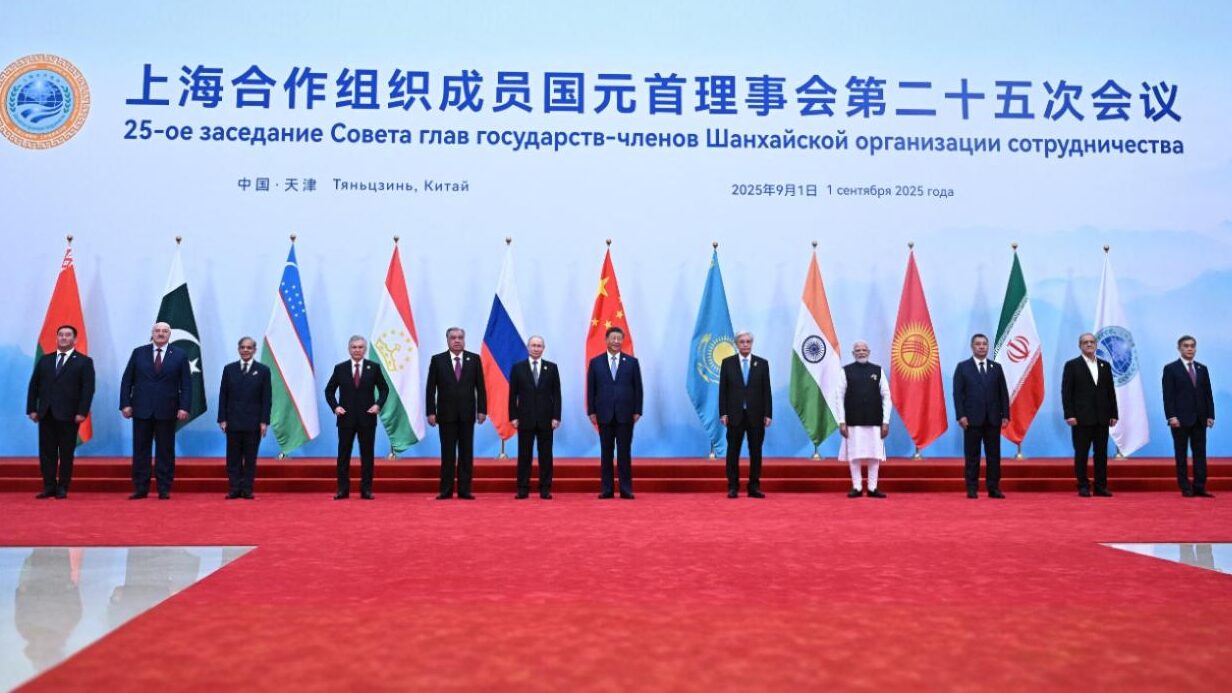
Xi and Putin Use SCO Summit To Push Back on Western Power
The world’s largest Eurasian bloc just wrapped its biggest-ever summit—and the messages from Tianjin carried global weight. As Arshad Mehmood reports, the 25th Shanghai Cooperation Organization (SCO) gathering brought together leaders from more than 20 nations, including China, Russia, India, and Pakistan. On the agenda: terrorism, trade, and a multipolar world order.
Chinese President Xi Jinping framed the SCO as a cornerstone of “equal and orderly multipolarization,” pledging $280 million in aid and $1.4 billion in loans to member states. Russian President Vladimir Putin lashed out at NATO, accusing the West of provoking the Ukraine war, and pushed for joint bonds, a shared payment system, and more trade in national currencies.
Give the gift of hope
We practice what we preach:
accurate, fearless journalism. But we can't do it alone.
- On the ground in Gaza, Syria, Israel, Egypt, Pakistan, and more
- Our program trained more than 100 journalists
- Calling out fake news and reporting real facts
- On the ground in Gaza, Syria, Israel, Egypt, Pakistan, and more
- Our program trained more than 100 journalists
- Calling out fake news and reporting real facts
Join us.
Support The Media Line. Save democracy.
Indian Prime Minister Narendra Modi struck a sharper note, warning that “no double standards on terror will be acceptable,” while Pakistani Prime Minister Shehbaz Sharif called for dialogue and regional diplomacy. The two nuclear rivals avoided direct engagement, just months after their border war ended under a US-brokered ceasefire.
The symbolism was unmistakable. Egypt’s debut at the summit signaled the SCO’s growing reach into the Arab world, while Iran used the stage to push its “Look East” strategy. Analysts say the bloc—representing nearly half the world’s population—remains more a forum than an alliance, but its sheer size makes it impossible to ignore.
From pledges of economic cooperation to sharp words over Ukraine, the Tianjin summit showcased how China and Russia envision an alternative to Western dominance. For a deeper look at the speeches, rivalries, and ambitions shaping Eurasia’s future, read Arshad Mehmood’s full report at The Media Line.
