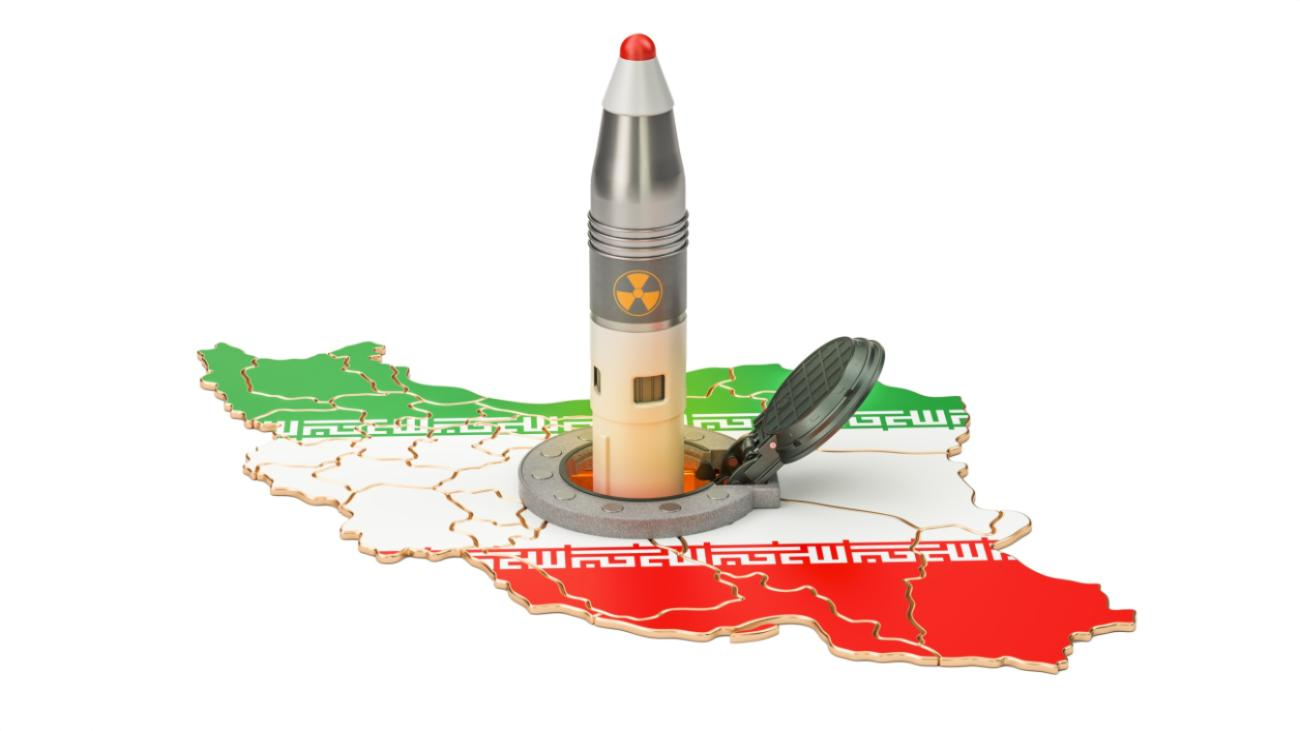
Yemen’s Information Minister Warns of a New Nuclear Threat Model
In a blunt warning shot of an opinion piece, the Republic of Yemen’s Information Minister Moammar Al-Eryani argues that the world’s Iran debate keeps dodging the question that matters most: if Tehran had a nuclear weapon today, would it use it—or pass it to one of its regional proxies?
The warning lands on a symbolic date. March 5 is marked by the United Nations as the International Day for Disarmament and Non-Proliferation Awareness, an annual observance intended to draw global attention to the dangers posed by weapons of mass destruction and the importance of preventing their spread. The date commemorates the entry into force of the Treaty on the Prohibition of Nuclear Weapons in 2021, the first international treaty designed to comprehensively ban nuclear weapons. Against that backdrop, Al-Eryani’s warning about the risks of nuclear proliferation in the Middle East takes on particular resonance.
Give the gift of hope
We practice what we preach:
accurate, fearless journalism. But we can't do it alone.
- On the ground in Gaza, Syria, Israel, Egypt, Pakistan, and more
- Our program trained more than 100 journalists
- Calling out fake news and reporting real facts
- On the ground in Gaza, Syria, Israel, Egypt, Pakistan, and more
- Our program trained more than 100 journalists
- Calling out fake news and reporting real facts
Join us.
Support The Media Line. Save democracy.
Al-Eryani frames the issue as a test of how well outsiders understand the Islamic Republic’s behavior over the past 47 years. In his telling, Iran has not acted like a status-quo state seeking partnerships or stability. Instead, he says, Tehran has poured hundreds of billions of dollars into a cross-border network of armed groups, supplying missiles, drones, training, and money while pushing influence through instability. He points to Hezbollah’s dominance in Lebanon, the erosion of Iraqi sovereignty under pressure from armed groups, mass killing in Syria tied to Iranian-backed forces, and Yemen’s long war after what he describes as Iran’s support for the Houthis’ coup—conflict that also turned the country into a launchpad threatening trade routes.
From there, Al-Eryani goes after a core assumption of classic nuclear deterrence: that even bitter rivals ultimately fear their own destruction. He argues that the Iranian regime’s ideology and official rhetoric—built around hostility and perpetual conflict—make it a poor fit for deterrence models designed for more conventional states. He also contends Iran has pursued a broader toolkit of weapons and delivery systems, pairing nuclear ambition with ballistic missiles, drones, and proxy forces operating across borders.
The sharpest pivot comes when he reframes the nightmare scenario. The question is not only whether Iran would press the button. It is whether a nuclear capability could be transferred, directly or indirectly, to nonstate armed networks—creating a new kind of proliferation that bypasses state control and breaks the logic of deterrence.
Al-Eryani argues that this risk should reshape international policy away from technical arguments over enrichment levels and centrifuge counts and toward a harder assessment of regime intent. He leaves readers with a simple warning: if the world keeps ignoring the central question, it may not like the timing of the answer.
