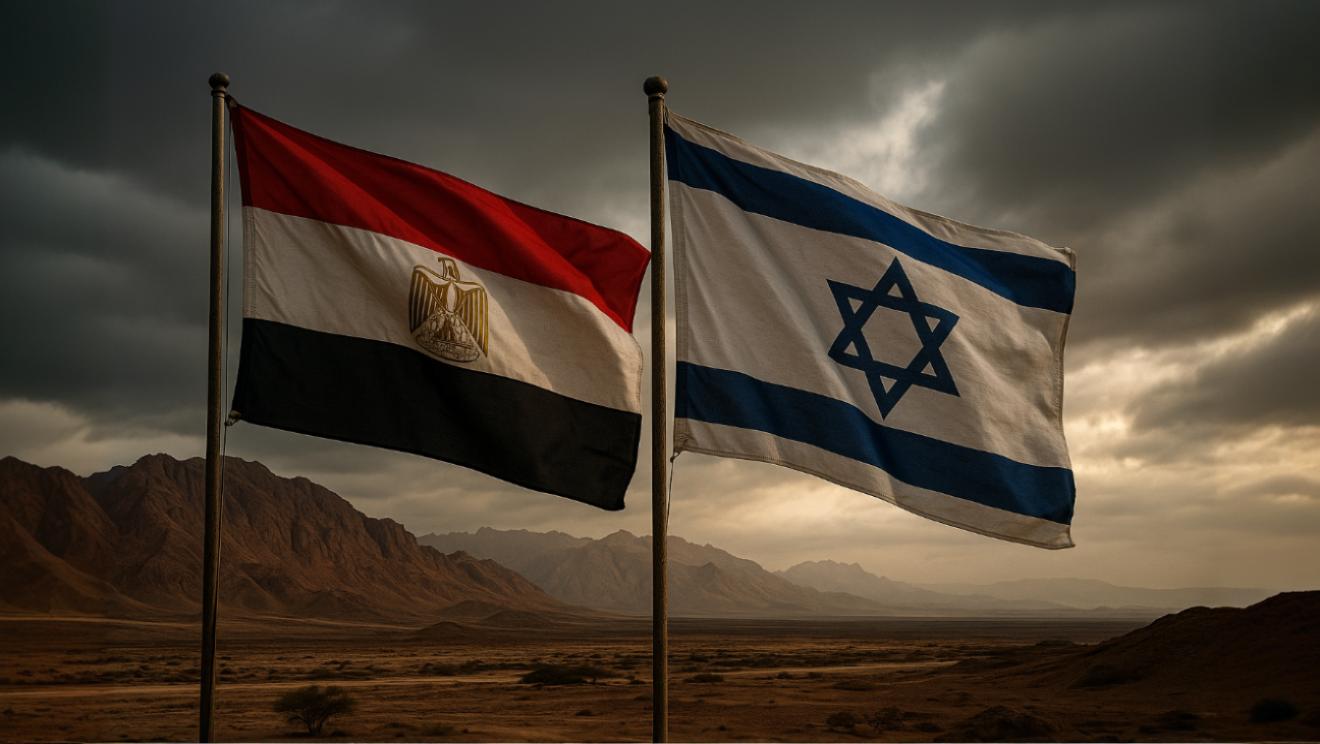
An Attempt To Create Tension Between Cairo and Jerusalem
Yedioth Ahronoth, Israel, September 28
Recently, a wave of warnings about a supposed “dark plot” unfolding in Egypt has flooded Israeli media and social networks: allegations of blatant violations of the peace treaty, a massive uncoordinated Egyptian military buildup in Sinai, and even accelerated preparations for an attack on Israel.
A closer look, however, reveals troubling patterns in both the sources and the credibility of these reports. Most of the journalists and commentators—many of them former security officials—who are sounding the alarm are clearly affiliated with the right wing, and their claims rely on vague, unattributed information rather than statements from official political or military figures. This is a classic echo chamber, where speculation is endlessly recycled and amplified without verification.
The loudest voices now warning of a “new paradigm” in Egypt are often the same figures who remained silent before October 7 or even insisted that Hamas had been successfully deterred. This should concern Israelis, not because an Egyptian attack is imminent, but because it suggests a deliberate effort to inflame tensions between Cairo and Jerusalem for reasons that remain suspiciously opaque.
Give the gift of hope
We practice what we preach:
accurate, fearless journalism. But we can't do it alone.
- On the ground in Gaza, Syria, Israel, Egypt, Pakistan, and more
- Our program trained more than 100 journalists
- Calling out fake news and reporting real facts
- On the ground in Gaza, Syria, Israel, Egypt, Pakistan, and more
- Our program trained more than 100 journalists
- Calling out fake news and reporting real facts
Join us.
Support The Media Line. Save democracy.
A cautionary precedent is the so-called Qatargate scandal, in which Doha sought to burnish its image as a mediator while tarnishing Egypt’s reputation by spreading false stories of Egyptian aggression toward Israel—including a fabricated “mock Egyptian attack” on the Dimona nuclear reactor that turned out to be recycled footage and pure disinformation.
In reality, relations with Egypt are deteriorating for reasons that have nothing to do with Egyptian ambitions to attack Israel and everything to do with Cairo’s growing fear that Israel intends to solve the Gaza problem at Egypt’s expense by forcing Palestinians into Sinai. This fear has intensified as Israel presses its campaign in Gaza, concentrating civilians in the south and fueling speculation about forced migration. Prime Minister Netanyahu’s enthusiasm for a “Promised Land” medallion depicting territory in neighboring Arab states, his provocative interview in which he accused Egypt of blocking Gazan migration, and the long-standing proposal by Minister Gila Gamliel to create a Palestinian state in Sinai have all been read in Cairo as direct threats.
The result is a severe crisis of trust and a dangerous dynamic in which each side misreads the other’s intentions. Egypt’s increased military readiness—primarily aimed at preventing a mass influx of Palestinians into Sinai—may be interpreted in Israel as offensive preparation, prompting heightened alerts and reciprocal threats. This cycle of suspicion risks creating the very conflict neither side seeks, even as the two countries recently signed a major gas deal intended to stabilize relations.
Meanwhile, attention should focus on genuine threats, chief among them the smuggling of weapons from Sinai into Gaza and Israel, including by drones. As with the Philadelphi Corridor, which enabled Hamas to build its arsenal before October 7, these operations are sustained by a mix of neglect, tacit approval, and profiteering by Egyptian actors. Close coordination and trust could curb this trade, but Washington’s engagement as guarantor of the peace agreement remains critical. Israel’s history offers sobering lessons: in both October 1973 and October 2023, leaders’ overconfidence and contempt for their adversaries paved the way for strategic surprises and national traumas.
The challenge of October 2025 may be different but no less perilous—a culture of manufacturing threats driven by dubious political interests and post-traumatic reflexes that favor force over understanding. This mindset, which assesses capabilities while ignoring intentions, combines wishful thinking, ideology, and unhealthy paranoia, all of which reveal how little Israel has learned from the failures that led to October 7. The escalating tension with Egypt, the Arab world’s strongest military power, demands clarity from the Prime Minister and the IDF. Ambiguity and quiet coordination have their place, but when rumors of war take on a life of their own, Israel must issue a public statement aimed at reassurance rather than confrontation. The abrupt shift from complacency to constant shows of force—now a hallmark of Israeli policy—risks triggering a conflict that neither side wants and jeopardizes one of Israel’s most valuable strategic assets: the peace with Egypt that has endured for nearly half a century, even as Israel faces unending conflicts, deep international isolation, and a fractured domestic consensus over the war in Gaza.
Michael Milshtein (translated by Asaf Zilberfarb)
