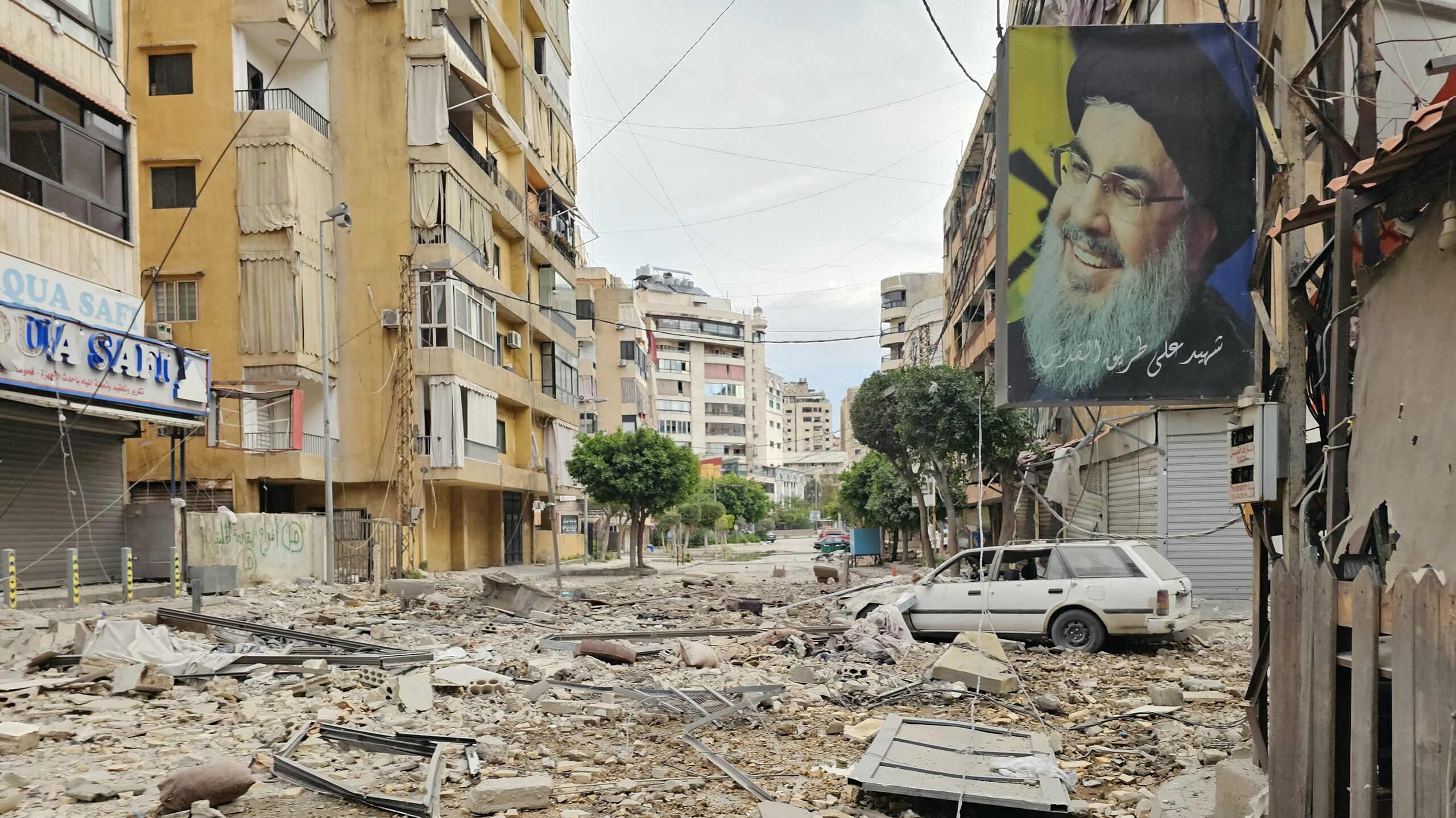
Hezbollah Is Committing Suicide Twice: First by Supporting Hamas and Then by Supporting Iran
Nida Al Watan, Lebanon, March 7
For years, Hezbollah has presented itself as Lebanon’s protector against Israel. But the reality points in the opposite direction: from one crisis to the next, the group has repeatedly dragged the country into disasters it cannot afford.
In that sense, Hezbollah has committed political suicide twice—first by inserting Lebanon into what it called a war of “support and harassment,” and then by launching missiles at Israel and provoking a large-scale military response whose costs are being borne overwhelmingly by ordinary Lebanese.
The first mistake was tying Lebanon’s fate to regional conflicts far beyond its capacity to absorb. Under the slogan of the “unity of arenas and fronts,” Hezbollah pulled the country into a military equation that exceeded both its economic means and its political resilience.
This came at the worst possible moment. Lebanon was already reeling from the deepest financial collapse in its modern history, the decay of state institutions, the mass emigration of its young people, and the near-destruction of its currency.
It had neither the resources nor the social cohesion to sustain another military confrontation. Yet Hezbollah behaved as though the state were its private domain and as though the decision over war and peace belonged to the party alone, rather than to constitutional institutions representing all Lebanese people.
The result has been greater isolation and deeper ruin. Investment has fled, tourism has withered, and southern Lebanon now hovers on the brink of becoming a “second Gaza,” with villages living under constant threat and families displaced from their homes.
Against this reality, Hezbollah’s talk of “victories” rings hollow. In everyday life, those victories translate into destruction, fear, and mounting poverty.
Give the gift of hope
We practice what we preach:
accurate, fearless journalism. But we can't do it alone.
- On the ground in Gaza, Syria, Israel, Egypt, Pakistan, and more
- Our program trained more than 100 journalists
- Calling out fake news and reporting real facts
- On the ground in Gaza, Syria, Israel, Egypt, Pakistan, and more
- Our program trained more than 100 journalists
- Calling out fake news and reporting real facts
Join us.
Support The Media Line. Save democracy.
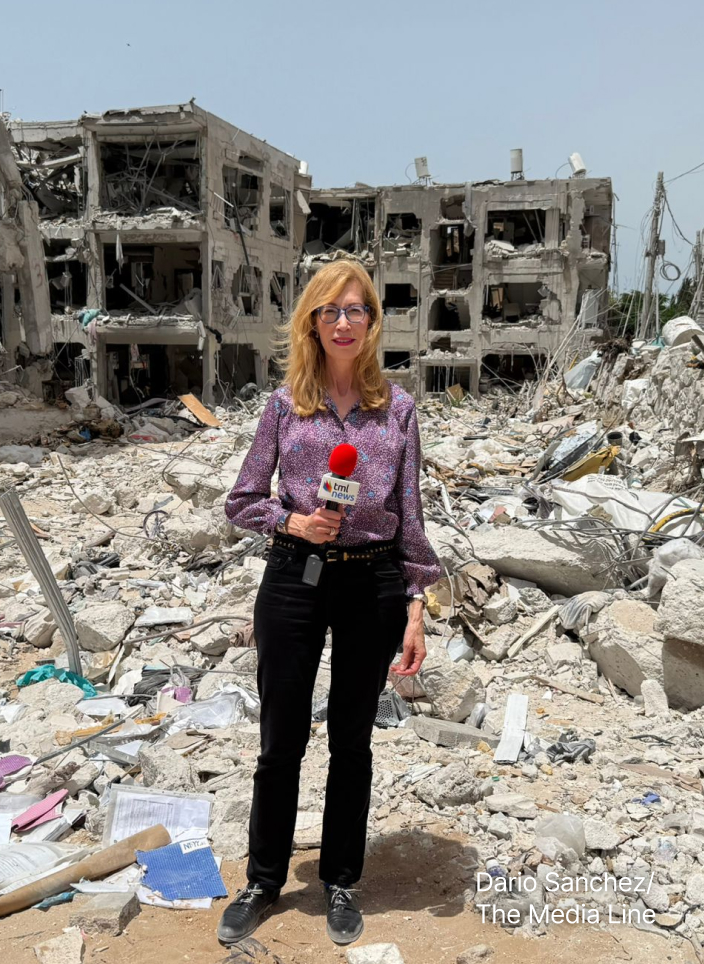
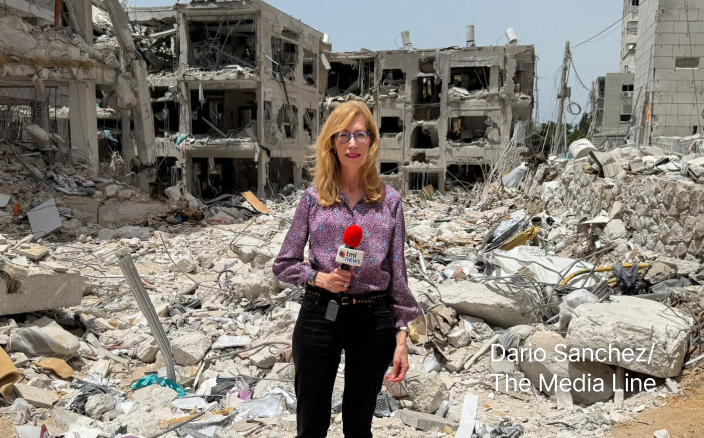
The second act of self-destruction came when Hezbollah escalated further by firing rockets at Israel while fully aware of the likely consequences. At that point, the matter was no longer one of symbolic support or calibrated pressure, but of gambling with the fate of an entire country.
Israel, given its established military doctrine, rarely misses an opportunity to widen the scope of its operations when it believes it has justification to do so.
Once again, Lebanon was transformed into a battlefield—precisely when it most needed stability, recovery, and reconstruction.
The deeper problem is not only the military decision itself, but the worldview behind it. Hezbollah operates as a state within a state, bypassing the government, parliament, and the public at large.
There is no national debate, no referendum, and no serious reckoning with the economic and human consequences. It is as though the lives, livelihoods, and aspirations of the Lebanese people are merely secondary considerations in a broader struggle whose strategic center lies elsewhere, above all in Iran.
Even more troubling is the political formula on which the party increasingly seems to rely: whenever domestic pressure grows because of economic collapse or public anger, it escalates outward to rally its base under the banner of confrontation with Israel.
That approach may provide short-term political cohesion, but over time it further weakens state institutions and destroys what little trust citizens still place in the republic.
Lebanon is not an open arena for settling regional scores, nor is it a platform for sending military signals. It is the homeland of millions who want dignity, employment, and some prospect of a future for their children.
Any political project that does not place those goals at its center is, ultimately, a destructive one, however noble its rhetoric may sound.
Time and again, experience has shown that weapons operating outside the authority of the state do not protect Lebanon; they hold it hostage.
And a hostage cannot build an economy, restore stability, or secure civil peace. To continue down this road means more destruction, more emigration, and perhaps the total collapse of what remains of the Lebanese state.
If there is such a thing as true political suicide, it is the insistence of one faction on dragging an entire nation into war without collective consent and with no clear endgame in sight.
In both instances, the price is paid by Lebanon as a whole—not by Hezbollah alone.
Jean Feghali (translated by Asaf Zilberfarb)
