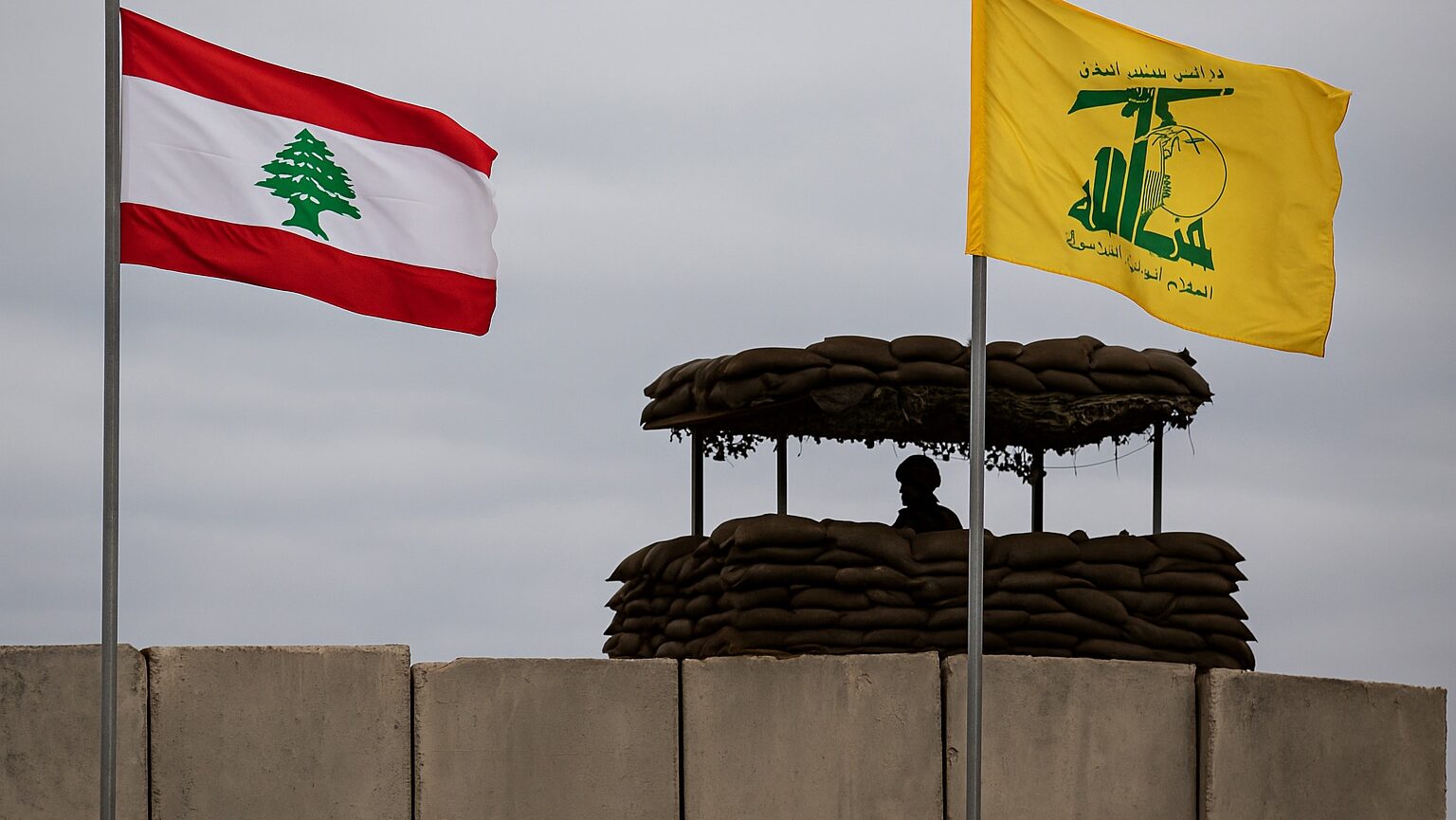
Hezbollah’s Weapons Are Just Decoration
Nida Al Watan, Lebanon, April 5
How does a state like Lebanon assert its sovereignty? Can it disarm Hezbollah in pursuit of that sovereignty? And if it does, will it suddenly become a superstate? One question inevitably leads to another, and each answer opens a door to complicated possibilities—none more daunting than the risk of erecting barricades and bunkers that deepen sectarian divides and shatter the dreams that once floated like colorful balloons in the sky of the Lebanese conscience, buoyed by the promise of a new era and its hopeful rhetoric.
The attempt to seize weapons by force could ignite direct confrontation between the army and Hezbollah, potentially rallying the party’s supporters—long dormant under the weight of disillusionment—into action, channeling their frustration into renewed battles that would, tragically, harm those they claim to protect, and inject their surroundings with hollow “victories” meant to resuscitate a fading morale.
Conversely, excessive leniency and complacency toward the continued existence of these weapons carry their own dangers. To rely on vague inaction, to wait for regional or international shifts, or to gamble on some external magic fix, only ensures the state’s prolonged paralysis, perpetuates its weakness, and magnifies its absence from the national equation. Most dangerously, this vacuum hands Hezbollah a compelling justification to hold onto its arms, using them not for defense but as a political scarecrow—a symbol of power and deterrence.
The party knows these weapons have lost military relevance, especially under the relentless and increasingly brazen Israeli attacks, which are matched only by the audacity of America’s unflinching support, excusing every violation of Lebanese sovereignty with the catchall claim of Israeli preemptive security operations.
Give the gift of hope
We practice what we preach:
accurate, fearless journalism. But we can't do it alone.
- On the ground in Gaza, Syria, Israel, Egypt, Pakistan, and more
- Our program trained more than 100 journalists
- Calling out fake news and reporting real facts
- On the ground in Gaza, Syria, Israel, Egypt, Pakistan, and more
- Our program trained more than 100 journalists
- Calling out fake news and reporting real facts
Join us.
Support The Media Line. Save democracy.
Therefore, perhaps the moment does not call for rhetorical questions or tired condemnations of Israeli aggression, nor for symbolic gestures or sterile communiqués. What is urgently needed is a firm stance rooted in reality—a deliberate and serious pursuit of solutions to the crises born from the state’s frailty and the complexity of daily life for ordinary Lebanese.
Such solutions must be grounded in practical governance. While national security strategies must be pursued through diplomacy and global alliances, attention must also be paid to small but impactful details—details that do not require vast funding, which is in short supply, but which can be addressed by integrating ministerial efforts to coordinate, cooperate, and ease the burden on citizens through straightforward, intuitive laws that tangibly improve everyday life.
Confronting existential challenges should not exempt the state and its institutions from facilitating daily existence, nor from encouraging citizens to re-engage with a framework of rights and responsibilities grounded in social justice. It is through the meticulous handling of small matters that a gradual shift from sectarian loyalty to national identity can occur, slowly climbing the ladder of collective priorities.
A state that enforces the law and alleviates daily hardships is one that can credibly confront larger challenges, ultimately persuading its citizens that Hezbollah’s arsenal is neither a safeguard nor a threat. Rather, such weapons become irrelevant—mere relics with no purpose, not even worth their upkeep.
Only then, in a climate where the state reclaims its role and legitimacy, will Lebanon be able to release those colorful balloons again and watch them soar freely across the sky.
Sana Aljak (translated by Asaf Zilberfarb)
