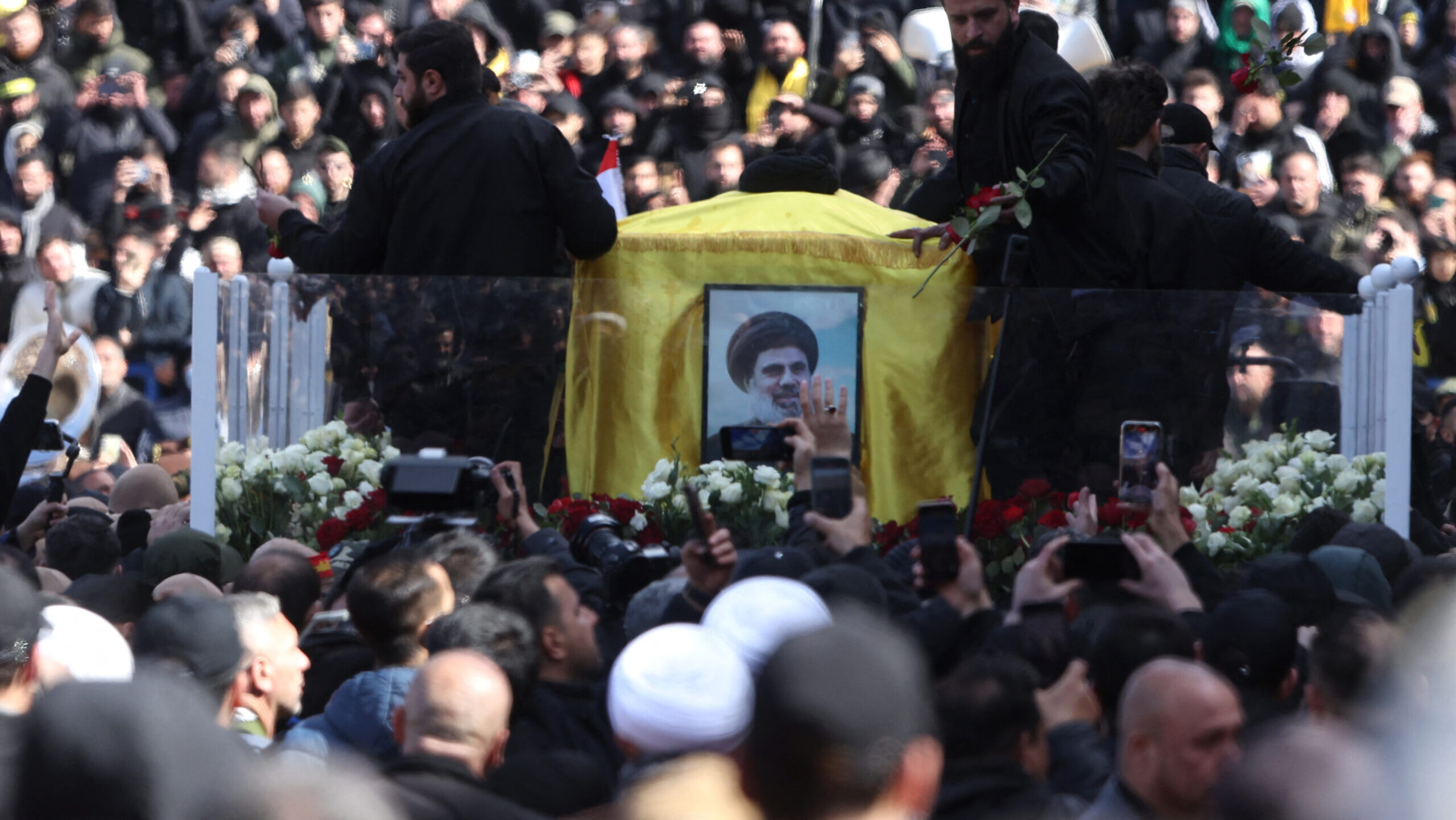
The Hezbollah Paradox
Nidaa Al Watan, Lebanon, March 21
Hezbollah’s actions and rhetoric have become increasingly contradictory, particularly in the aftermath of its defeat by Israel. On one hand, it seeks to assert itself as the ultimate authority, acting as both the state and the dominant power, yet on the other, it scrambles for protection under the very state it undermines—having lost the political and strategic umbrellas it once relied on, from its leadership structure to the Assad regime.
This contradiction is evident in its stance toward the Lebanese Army. It calls for the army’s presence in the town of Hawsh al-Sayyid Ali, yet the moment the army arrives, Hezbollah unleashes its loyalists to hurl insults, level accusations, and brand army officers and soldiers as “agents” and “Zionists.”
What exactly does Hezbollah want? In practical terms, it wants to revert to the status quo before October 8, 2023, when it launched its operation against Israel. But history does not move in reverse—especially not in war. The reality on the ground has changed entirely.
Hezbollah has suffered devastating losses, including two of its top leaders, Secretary-General Hassan Nasrallah and Hashem Safieddine, along with over 30 of its highest-ranking field commanders and more than 120 mid-level field officers. Hundreds of others have been rendered unfit for service, and it has lost much of its military infrastructure south of the Litani River, including key tunnel networks and ammunition depots.
Give the gift of hope
We practice what we preach:
accurate, fearless journalism. But we can't do it alone.
- On the ground in Gaza, Syria, Israel, Egypt, Pakistan, and more
- Our program trained more than 100 journalists
- Calling out fake news and reporting real facts
- On the ground in Gaza, Syria, Israel, Egypt, Pakistan, and more
- Our program trained more than 100 journalists
- Calling out fake news and reporting real facts
Join us.
Support The Media Line. Save democracy.
Externally, the situation is just as dire. Hezbollah has lost what was once its greatest strategic asset: the Syrian lever. With the fall of the Assad regime, it no longer enjoys the logistical and territorial depth that allowed it to operate with impunity. Forced to retreat into Lebanon’s borders, it has attempted to revive its long-standing mantra of “the people, the army, and the resistance.”
But this is where the contradiction deepens: How can it cling to this formula while simultaneously discrediting one of its supposed pillars—the Lebanese Army? The party’s own loyalists have accused the army’s officers and soldiers of treason, labeling them “Zionist agents,” effectively dismantling the very equation Hezbollah seeks to uphold. What remains is an absurd inversion: “the people, the Zionists, and the resistance.”
Hezbollah is now ensnared in its own rhetoric—demanding the army’s protection while actively eroding its legitimacy. Simply repeating the claim of “embracing the army” is no longer enough. If Hezbollah truly seeks legitimacy, it must do more than just pay lip service to the idea of national unity; it must accept the reality that the Lebanese Army alone has the rightful monopoly on weapons.
Until Hezbollah reaches this level of acknowledgment, the rhetoric of its officials—including the latest remarks by MP Hussein Hajj Hassan—is nothing more than a smokescreen, an attempt to obscure the fundamental contradiction of a movement that, on one hand, demands the army’s support, while on the other, denounces it as a traitor.
The real test for Hezbollah is whether it can confront this paradox—or whether it will continue to evade the inevitable reckoning with Lebanon’s sovereignty.
Jean Feghali (translated by Asaf Zilberfarb)
