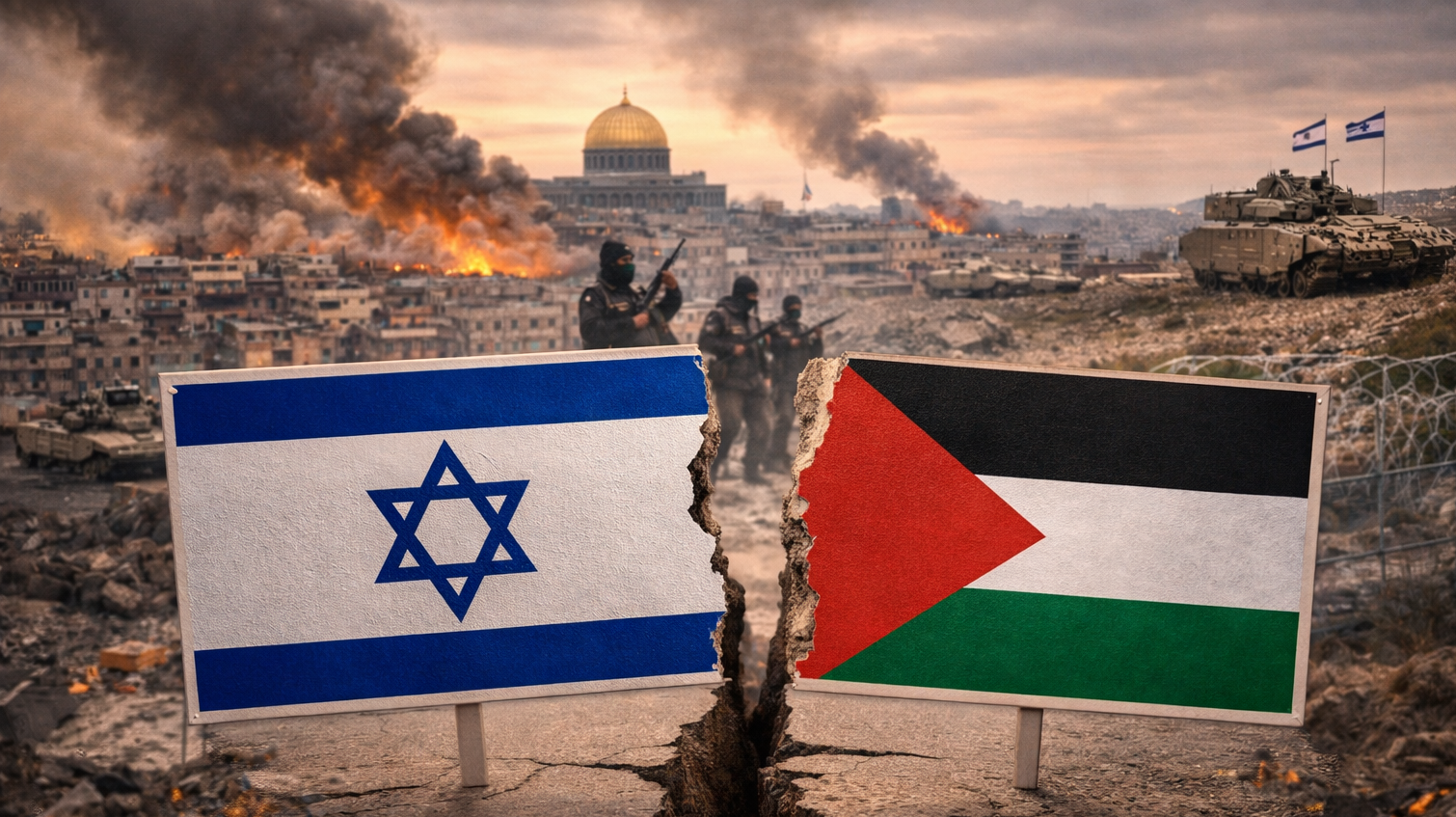
The Problem of the 2-State Solution
Al-Masry Al-Youm, Egypt, August 31
It is no surprise that the Middle East remains a tinderbox, and at the heart of its current volatility lies the fifth Gaza war, which has spiraled into another Israeli invasion of the Strip. Surrounding this central conflict are mounting signs of escalation in the Israeli-Iranian confrontation, particularly through Iran’s so-called “forward defense” strategy, whereby proxy militias maintain weapons outside the authority of nation-states.
Syria, caught in the crossfire, continues its slow disintegration in both the northeast and south, while its center suffers from the splintering influence of multiple factions. Meanwhile, the new Syrian government is attempting the difficult task of repairing ties with Lebanon while simultaneously reaching out to Israel in hopes of establishing security arrangements that can stabilize its battered landscape.
Against this backdrop, regional diplomacy is in overdrive, with Egypt, Saudi Arabia, Qatar, and the United Arab Emirates working tirelessly to broker a ceasefire, a move that could serve the larger strategic aim of reviving the long-elusive two-state solution. This idea, dating back to the 1947 partition plan, has recently gained renewed momentum as several countries have signaled intentions to recognize a Palestinian state, adding to the 147 nations that already have.
The two-state formula continues to present itself as the only viable answer to the protracted Palestinian dilemma, a struggle marked by decades of tragedy beginning with the 1948 war and stretching to the present conflict ignited by Hamas’ October 7, 2023 Al-Aqsa Flood attack. The central flaw in the two-state concept, however, lies in the deep and mutual rejection by both parties to the conflict, which entrenches an ever-widening gap that renders the solution increasingly impossible.
Give the gift of hope
We practice what we preach:
accurate, fearless journalism. But we can't do it alone.
- On the ground in Gaza, Syria, Israel, Egypt, Pakistan, and more
- Our program trained more than 100 journalists
- Calling out fake news and reporting real facts
- On the ground in Gaza, Syria, Israel, Egypt, Pakistan, and more
- Our program trained more than 100 journalists
- Calling out fake news and reporting real facts
Join us.
Support The Media Line. Save democracy.
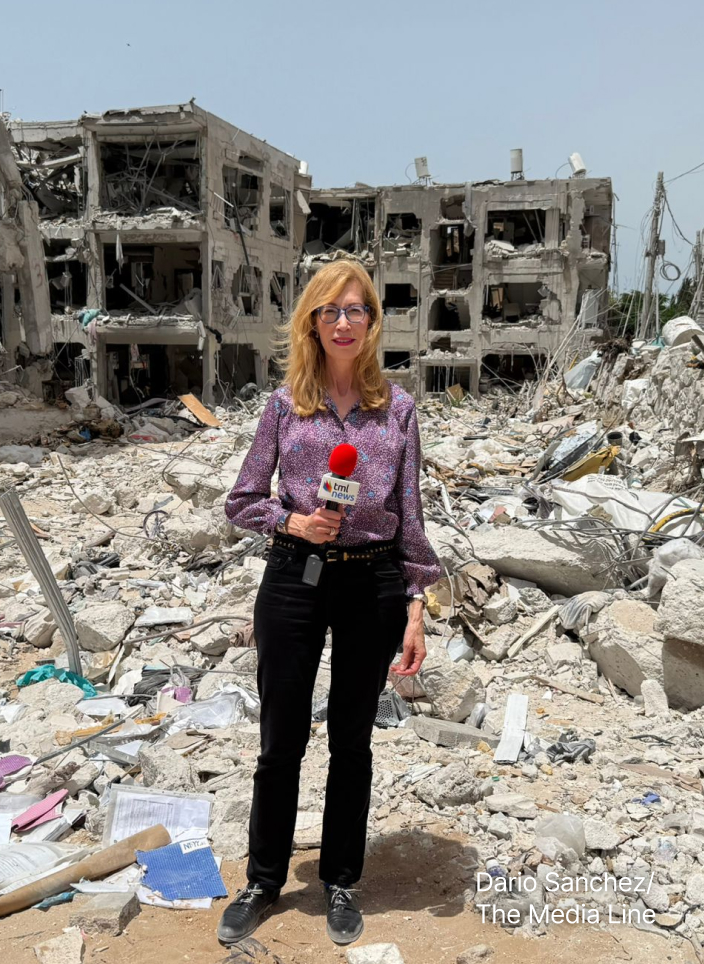
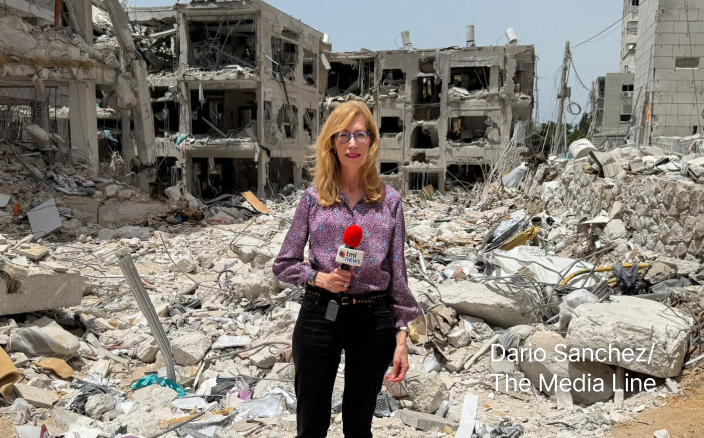
Israel, under Prime Minister Netanyahu, has wholly surrendered to the dictates of the religious far right, accelerating the expansion of settlements designed to fragment any prospective Palestinian state into non-contiguous enclaves. More dangerously still, Israel has pursued policies that embody a creeping form of ethnic cleansing—systematically undermining Palestinian presence in both the West Bank and Gaza—while Netanyahu remains steadfast in his vision of a Greater Israel.
Hamas, for its part, perpetuates the cycle of stalemate, following the Palestinian tradition of accepting ceasefires only after their deadlines lapse, while refusing to cooperate with the Palestinian National Authority or relinquish its weapons—decisions that condemn Gaza’s civilians to famine and devastation. This deepening quagmire has become a crushing burden on internal reform and reconstruction efforts across the Arab world, particularly in Egypt, Jordan, and the Gulf states.
The recent meeting between President Abdel Fattah el-Sisi and Saudi Crown Prince Mohammed bin Salman highlighted the urgency of confronting a sobering reality: the two-state framework is disintegrating before the region’s eyes. The elements of statehood—authority, people, and territory—are fragmented. On both sides, divisions over the prospect of a ceasefire run deep, and the very borders of a future Palestinian state remain undefined. Israel’s only apparent trajectory is further expansion, while Hamas waits for the return of regional “arenas” to reignite confrontation.
Caught between these forces, the Palestinian people continue to pay the ultimate price in lives lost, while the broader vision of an Arab renaissance is imperiled. No remedy exists except the formation of a mature Arab alliance—one that can think strategically, act decisively, and bestow legitimacy on a pathway that guarantees both peace and justice. The task is undeniably arduous, but history’s gates stand open to those wise enough to seize them.
Abdel Moneim Saeed (translated by Asaf Zilberfarb)
