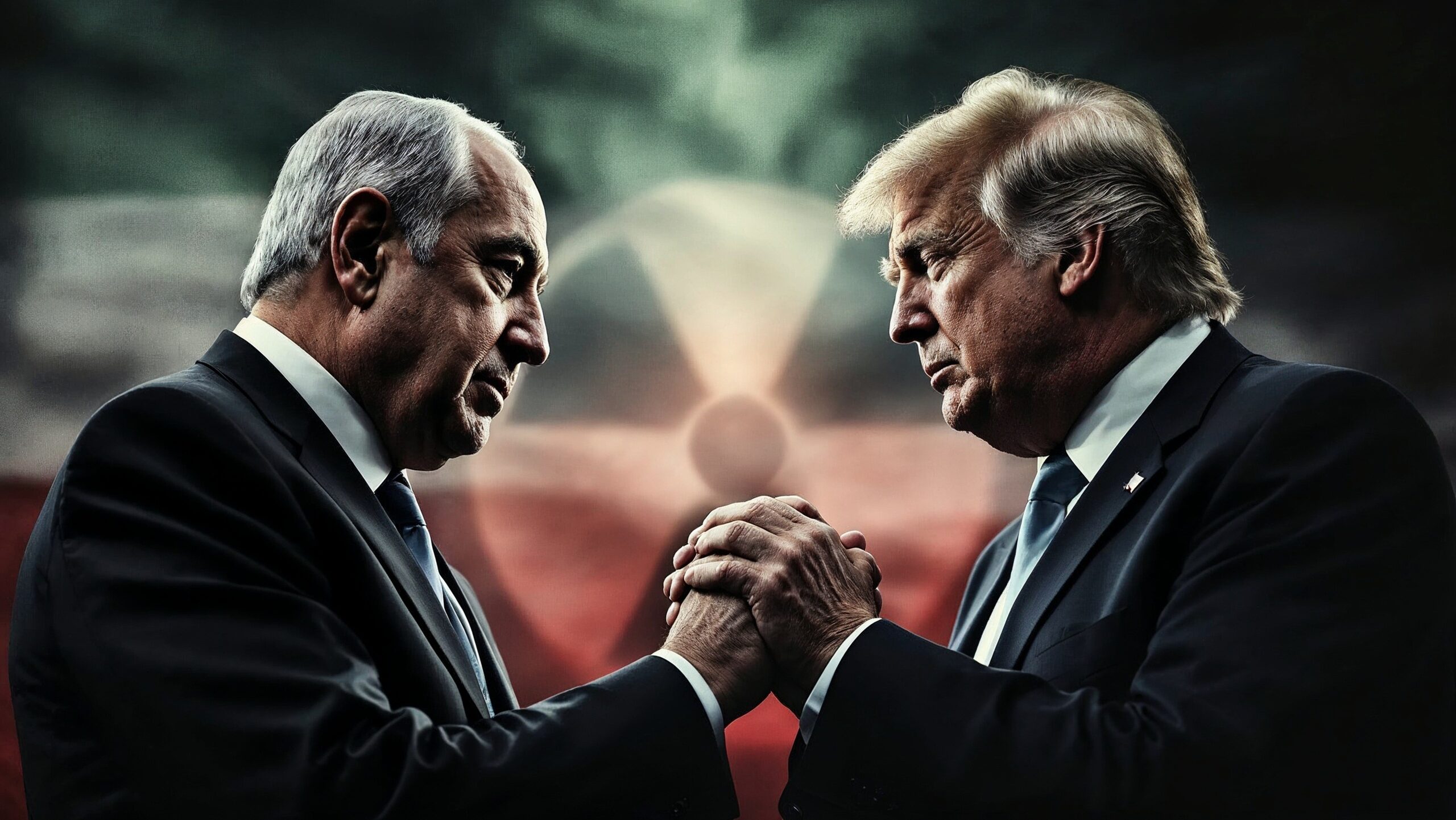
Trump Must Avoid Obama’s Mistakes
Maariv, Israel, April 11
Prime Minister Benjamin Netanyahu’s recent visit to Washington unfolded against the backdrop of two central issues that could potentially strain the historically close relationship between Israel and the Trump administration—tariffs and the Iranian nuclear agreement, the latter of which will be my focus here. Until their most recent meeting, President Trump’s public statements reflected broad alignment with Israel on the Iranian issue, including the need to present a credible military threat. However, recent developments—especially the president’s declaration of his intention to initiate immediate high-level negotiations with Iran before considering other measures—have raised serious concerns.
A few weeks ago, President Trump reached out directly to Iran’s supreme leader, Ali Khamenei, offering to open direct talks. Khamenei rebuffed the offer, but not categorically. Trump has repeatedly warned Iran that it has a choice: Strike a deal with the US or face military consequences. Simultaneously, there have been discussions between the United States and Russia about launching negotiations on a new nuclear accord.
What is even more troubling—and reminiscent of the secret diplomacy that took place in 2012–2013—is the revelation of direct US-Iran talks in Oman, which culminated in Trump’s announcement of the immediate commencement of high-level negotiations. While Trump’s warnings to Iran have been unequivocally stern, and his vision for the ultimate outcome of the negotiations is aligned with what is necessary, the path chosen to reach this objective appears deeply flawed.
Any suggestion of entering negotiations for a new nuclear deal—without Iran first meeting stringent preconditions—is a dangerous miscalculation. We cannot focus solely on the theoretical merits of a future agreement, despite the prime minister’s outline for a “good agreement” and the Foundation for Defense of Democracies’ detailed policy paper on the subject. The critical issue is the need for clear and enforceable preconditions before any talks begin.
This was the fatal flaw in the Obama-era negotiations that resulted in the Joint Comprehensive Plan of Action. The initial demands were sound, but the final agreement provided Iran with a relatively short breakout time to industrial-scale enrichment and nuclear weapons capability, along with hundreds of billions of dollars in sanctions relief. Iran has repeatedly violated international agreements, deceived inspectors, and pursued nuclear advancement under the guise of diplomacy.
Give the gift of hope
We practice what we preach:
accurate, fearless journalism. But we can't do it alone.
- On the ground in Gaza, Syria, Israel, Egypt, Pakistan, and more
- Our program trained more than 100 journalists
- Calling out fake news and reporting real facts
- On the ground in Gaza, Syria, Israel, Egypt, Pakistan, and more
- Our program trained more than 100 journalists
- Calling out fake news and reporting real facts
Join us.
Support The Media Line. Save democracy.


Any new deal that attempts to merely “improve” the existing framework without addressing the need for full dismantlement of the nuclear infrastructure from the outset is destined to fail. A meaningful agreement must dismantle the three core pillars of Iran’s nuclear program: first, fissile material production—Iran must eliminate its enriched uranium stockpile and destroy its centrifuges and associated enrichment facilities; second, weapons system development—Iran must cease all research and design activities related to nuclear weapons, fully disclose past military dimensions, and dismantle research centers operating under civilian or academic cover; third, delivery systems—Iran must terminate its ballistic missile program, which is explicitly designed to carry nuclear warheads.
These conditions must be fulfilled before the start of any negotiations, under US leadership and international supervision. Iran must not be permitted to retain any nuclear capabilities on its territory. The international community made a grave error in 2015, led by President Obama, when it legitimized Tehran’s nuclear program even as the regime continued clandestine weaponization efforts. President Trump cannot—and by all indications does not wish to—repeat those mistakes. He must be made fully aware of the dangerous implications of recent diplomatic overtures.
Predictably, Iran will likely reject these preconditions as a prelude to talks. Based on the statements coming from its negotiators, it is clear that Tehran’s objective is not a resolution but sanctions relief, budgetary breathing room, and strategic delay. This would buy time for Iran to recover from recent military setbacks and to neutralize any Israeli threat while talks are ongoing.
Israel must be prepared for a large-scale operation to neutralize the Iranian nuclear threat—preferably in coordination with the United States, but also independently, if necessary. Priorities must shift: Eliminating Iran’s weapons development programs and enriched uranium stockpile must come first. Only afterward—or in parallel—should enrichment sites like Natanz and Fordow, as well as new underground facilities and advanced centrifuge networks, be targeted and dismantled.
Simply destroying nuclear facilities without first addressing weaponization and fuel stockpiles would be a critical error. The combination of an existing uranium reserve, advanced centrifuges, and weapons system blueprints would allow Iran to reconstitute its program quickly, potentially at a smaller, hidden site, and even seek international sympathy after the destruction of known facilities.
Full partnership with the US would greatly enhance the mission’s deterrence and operational capabilities, but Israel must remain ready to act alone. Washington and Jerusalem must stand united in eliminating the most severe existential threat to Israel, which also jeopardizes American interests. The era of blind diplomacy with Tehran has ended. The regime’s serial violations of its commitments must be met with firmness, not appeasement.
The last thing President Trump wants is to be equated with President Obama. The lesson of 2015 must serve as a clear warning against making another bad deal. There must be no negotiations until Iran fully dismantles its nuclear infrastructure. The bitter experience of past diplomacy has taught us that strong opening statements are no guarantee of strong outcomes.
Jacob Nagel (translated by Asaf Zilberfarb)
