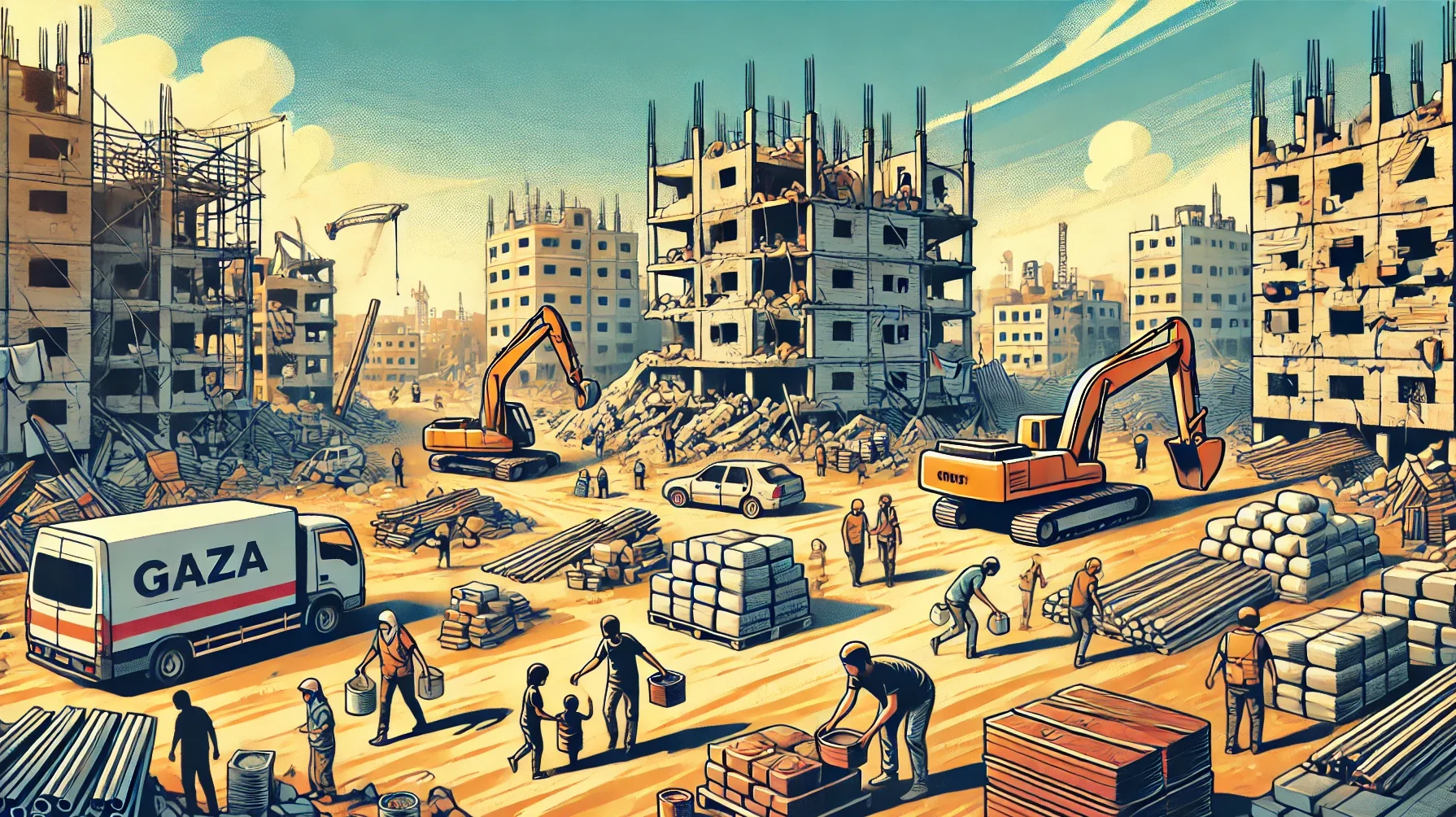
Will Gaza Change the Region’s Fortunes?
Asharq Al-Awsat, London, January 17
The Gaza war is drawing to a close. In the wake of its unspeakable hardships, the war may well be the catalyst for a paradigm shift in Palestinian fortunes and the broader region. It is imperative that we rally around this beleaguered nation, offering our unwavering support to help move past this tumultuous phase. Such support can be a vital impetus for a new beginning following the far-reaching consequences sparked by Gaza’s ordeal.
The Gaza war has indeed ushered in the unforeseen: the collapse of an entrenched regional order and the emergence of a fresh geopolitical landscape. Absent this conflict, countries like Syria and Lebanon might have persisted in a stagnant status quo marred by chaotic governance and escalating conflicts.
As the longest and most ferocious chapter of the Israeli-Palestinian conflict comes to an end, it’s crucial to extend humanitarian aid to the two million residents of Gaza. One salient takeaway from Gaza’s tumult is that neglecting an issue and leaving it as someone else’s burden is untenable. Lasting peace for Israel is inextricably tied to peace for its neighbors. Half-measures—like signing half a peace agreement—inevitably yield incomplete resolutions. Any pursuit of peace, grounded in justice and fairness, demands a strategic effort to counter pervasive cultural and media-driven antagonism.
Though the guns may soon fall silent, and clashes are expected to cease imminently, the war in Gaza might very well serve as the precursor to internal Palestinian reconciliation. It offers a chance to unify governance, bridging the divide between Gaza and Ramallah that has persisted since 2007. This could mark the inception of the two-state solution project, championed by Saudi Arabia yet staunchly opposed by Israel. Such quests for peace invariably start with resistance but often culminate in reconciliation and diplomacy.
Give the gift of hope
We practice what we preach:
accurate, fearless journalism. But we can't do it alone.
- On the ground in Gaza, Syria, Israel, Egypt, Pakistan, and more
- Our program trained more than 100 journalists
- Calling out fake news and reporting real facts
- On the ground in Gaza, Syria, Israel, Egypt, Pakistan, and more
- Our program trained more than 100 journalists
- Calling out fake news and reporting real facts
Join us.
Support The Media Line. Save democracy.
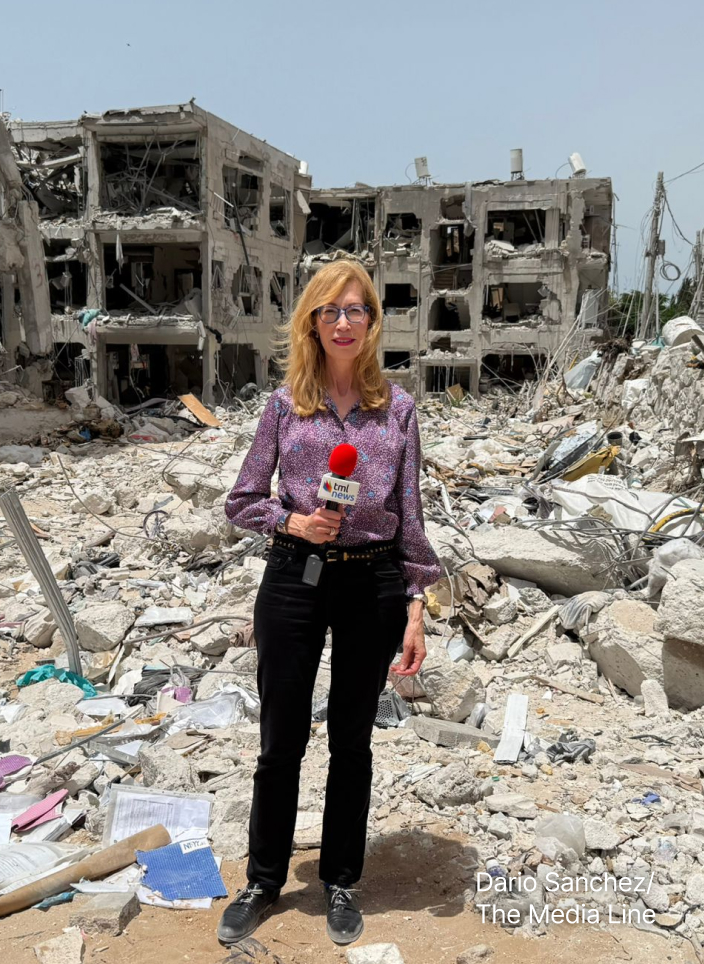
October 2023’s events could be reminiscent of the October 1973 war. Though that victory was limited—Egypt reclaimed a scant 20 kilometers beyond the Suez Canal—it paved the way for broader gains in the Camp David Accords, where Egypt regained the entire Sinai Peninsula, an expanse three times the size of Israel itself.
The Gaza war drastically reshaped the region: it shattered Hezbollah’s power and leadership, precipitated the fall of Bashar Assad’s regime, and thwarted the Iranian dream of dominating the eastern Arab world. This moment offers a genuine opportunity to forge regional peace initiatives, quelling major threats and long-standing wars.
All eyes now turn to Iran, reeling from a year of profound upheaval that dismantled decades of accrued influence and alliances. Iran, facing a phase of introspection—evident in candid media discourses and likely more intense private deliberations—stands at a crossroads.
It has two clear paths: one, to embrace the shifting realities by pursuing peaceful engagement with Arab nations, bolstering the Palestinian peace initiative. This participation could significantly enhance Palestinian prospects without resorting to the costly cycles of violence and destruction.
Second, Iran could choose to rebuild its military arsenal and reignite regional conflicts to regain Syria, Lebanon, and Gaza—a path fraught with expenses and likely devoid of public support within Iran, especially as the threat of stringent economic sanctions looms under US President-elect Donald Trump and his incoming administration, potentially endangering the regime itself.
In confronting this new reality, a pragmatic approach is essential. The year has commenced on an auspicious note: Lebanon witnesses a new political order, Syria experiences a leadership shift, Hamas is poised to integrate into a unified Palestinian Authority, and signs suggest Iraq is moving to curtail militias, if not dismantle them entirely.
The cost of these transformations has been staggering, as evidenced in Gaza, Lebanon, and ultimately in Syria’s two-decade-long turmoil. Are we on the brink of realizing a project that quells unrest, chaos, and occupation while fostering regional consensus? Previously deemed unattainable before the Gaza war, the prospect of such a paradigm shift is now firmly within our grasp. —Abdulrahman Al-Rashed (translated by Asaf Zilberfarb)
