
Security Agencies Warn of Radicalized Islamist Threats
Counterterrorism services identify violent Islamist radicalization as the dominant internal security danger across Western democracies
Ask the FBI in the US, MI5 in the UK, or ASIO in Australia—the security agencies responsible for protecting their citizens—what they consider the greatest threat in their respective countries. They will uniformly identify people radicalized by Islamist extremists to commit acts of terror.
Often, these agencies operate in the shadows of those who rule. Governments have different priorities, such as placating voters—especially constituencies whose electoral support they need.
Since 9/11, when al-Qaida destroyed the twin towers of the World Trade Center in New York, there has been a concerted effort to delineate and categorize the majority of Muslims who emigrated to the West as peace-loving, while minimizing the influence of those who imported ideologies hostile toward Western values.
Many remember the aftermath of the London Underground attacks in July 2005, when homegrown Muslim extremists carried out multiple bombings that left 56 innocent civilians dead and 786 injured. A massive campaign followed to defend Islam as a religion of peace, and the tagline “not in my name” was embraced.
Since that attack, Muslim communities around the world have used the charge of Islamophobia to insulate themselves from criticism of what is occurring within their communities.
These responses had a twofold effect. They insulated Muslim communities from scrutiny of what was transpiring within communal institutions such as mosques and schools. In many communities in the UK, for instance, Sharia law was being practiced surreptitiously, and society turned a blind eye to practices that would ordinarily offend Western sensibilities; the grooming scandal is a classic example.
They have also neutralized criticism of Islam in the public sphere by elevating the charge of Islamophobia to the level of the worst forms of racism. They have even struck fear by threatening those who criticize Islam; the Charlie Hebdo murders are a clear illustration of this.
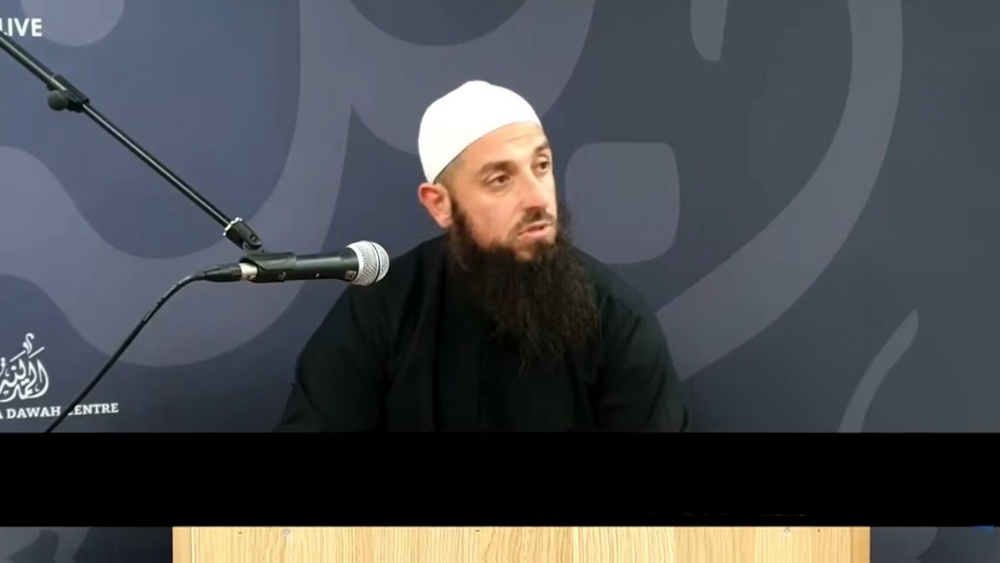
Radical Islamist preachers have had a relatively free rein in many Western countries that have opened their borders to large-scale Muslim immigration over the last few decades. One can point to only a few instances in which an imam was deported. Yet there are numerous instances in which imams preached hatred and incited against the countries that welcomed them, with little recourse.
Give the gift of hope
We practice what we preach:
accurate, fearless journalism. But we can't do it alone.
- On the ground in Gaza, Syria, Israel, Egypt, Pakistan, and more
- Our program trained more than 100 journalists
- Calling out fake news and reporting real facts
- On the ground in Gaza, Syria, Israel, Egypt, Pakistan, and more
- Our program trained more than 100 journalists
- Calling out fake news and reporting real facts
Join us.
Support The Media Line. Save democracy.
Authorities acted on hate speech in very few cases. In Australia, the peak body of the Jewish community-initiated action against the imam Wisam Haddad, who spewed a litany of antisemitic tropes against Jews.
After the Bondi massacre—perpetrated by two individuals who had been radicalized into identifying with ISIS and were affiliated with the mosque presided over by the imam Wisam Haddad—it came as no surprise that the focus returned to the dangers of radical Islam.
It was only a decade earlier that thousands of radicalized youths across the West rushed to Syria to enlist with ISIS. Mosques led by radical imams were among the major incubators driving this movement.
Australia has now enacted legislation granting powers to expel radical preachers or deny them visas.
A more draconian approach was recently proffered by former Australian Prime Minister Scott Morrison, who, at a conference on antisemitism in Israel, suggested establishing a national register to accredit Muslim preachers. The goal is to root out preachers who promote hate and fail to honor and respect Western democratic values.
Needless to say, peak Muslim bodies were up in arms, accusing Morrison of Islamophobia, and they were supported by allies on the left. Some on the right expressed support for Morrison’s proposal.
Morrison’s proposal is not an attack on Islam. Indeed, it includes engagement with the Muslim community in the process. It presents a challenge—and an opportunity—for Muslim community leadership to demonstrate that it rejects messages of hate and the distortions and radical interpretations used by Islamist extremists.
It also requires acknowledging that many of the major terrorist attacks over the last few decades have been perpetrated by Muslim extremists.
Rather than denying that such attacks have anything to do with Islam, a stronger message would be for Muslim leadership to be more forthright in rejecting extremist versions promulgated by groups such as the Muslim Brotherhood and its offshoots in the Sunni world, as well as the Shiite version exemplified by the ayatollahs ruling Iran.
What worries the broader society is the concern that while most Muslims abhor violence or refrain from it, many are either sympathetic to, or too intimidated to oppose, more extreme versions of Islam.
Others argue that Islam is a supremacist religion and irredeemably opposed to Western values.
Regardless, radical Islam has established strong foundations throughout the West, where many—out of faith in liberal values—have turned a blind eye even as Islamists feel more emboldened and empowered. Across Europe, calls are being voiced to continue the process of Islamizing the West.
Society needs to confront this phenomenon, and Morrison’s proposal is not a panacea. Education, communal engagement, and other measures to counter radicalism must also be employed.
So, rather than pour scorn on Morrison’s proposal, it may be worth adopting across the West as a small but meaningful step to arrest the spread of radical Islam.
