
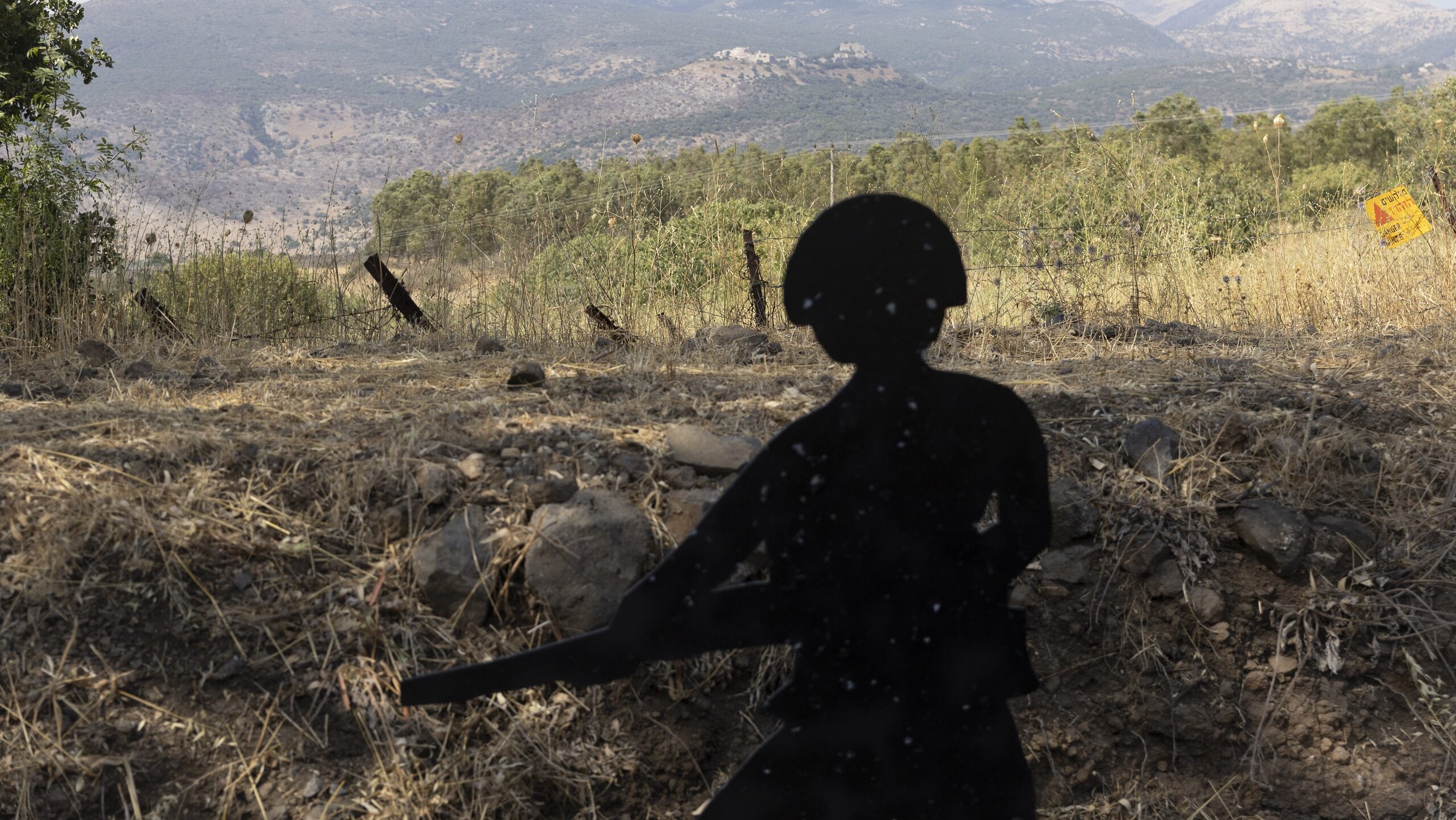
Strategic Words Could Signal Intent To De-escalate Israel-Hezbollah War
When leaders of terrorist organizations speak, their words must be considered carefully. Plans for October 7 were provided clearly and unambiguously within the rants of Iran’s proxy leadership. Whether out of disbelief or arrogance, Israel’s defense echelon tragically left the gates to disaster open—quite literally—by ignoring the threats from Hezbollah leader Hassan Nasrallah and other Iranian proxies such as Yemen’s Houthis. Each agency’s responsibility for the resulting horrors will be debated and investigated for decades.
Now, following eight of history’s bloodier months, foes have drawn a line in the sand by making a cease-fire in the Gaza Strip a condition for virtually any potential stability in the region. Ask almost anyone from Kiryat Shmona, within firing range of the Lebanese border, if they feel secure enough to return to homes abandoned after October 7.
Israel has been retooling its message strategically. The phrase “to remove Hamas” is key to understanding Israel’s position on a cease-fire, and rumors suggest the possibility of Palestinian Authority involvement in Gaza at the end of the war. The trial balloons and cracks in the end-of-war messaging may also point to diplomatic channels pressing Israel to lean on an end of war.
Sheikh Naim Qassem, Hezbollah’s deputy leader, reiterated in an interview with The Associated Press that “if there is a cease-fire in Gaza, we will stop without any discussion.” Lebanese Foreign Minister Abdullah Bou Habib delivered a message through Azeri Foreign Minister Jeyhun Bayramov to Israeli Foreign Minister Israel Katz, stating that Lebanon did not want a war. Katz responded with a message stating, “We need to return our residents to their homes. If it is not through a diplomatic solution, it will be through war.”
Enter the conciliators. Traditional allies such as the Europeans cajole and threaten the Jewish state to answer the call for calm, and America lines up new friends in the region such as the United Arab Emirates—an extremely important relationship—to make their voices heard with promised support for postwar Gaza. All of which points to unrelenting international pressure to halt the war.
Adding to the plan, Hamas demands that all Israeli forces be withdrawn. The deal would effectively tie Israel’s hands while setting it up for a future October 7. Even if one-tenth of Hamas’ infrastructure remains and its leadership continues to rule Gaza, the future for Israel looks uncertain.
The latest rounds of fighting in Gaza align with US aims to prevent a regional war and confront Iran directly. The tactical operation could serve as a barometer of whether Israel will enter a larger war with Hezbollah.
Give the gift of hope
We practice what we preach:
accurate, fearless journalism. But we can't do it alone.
- On the ground in Gaza, Syria, Israel, Egypt, Pakistan, and more
- Our program trained more than 100 journalists
- Calling out fake news and reporting real facts
- On the ground in Gaza, Syria, Israel, Egypt, Pakistan, and more
- Our program trained more than 100 journalists
- Calling out fake news and reporting real facts
Join us.
Support The Media Line. Save democracy.
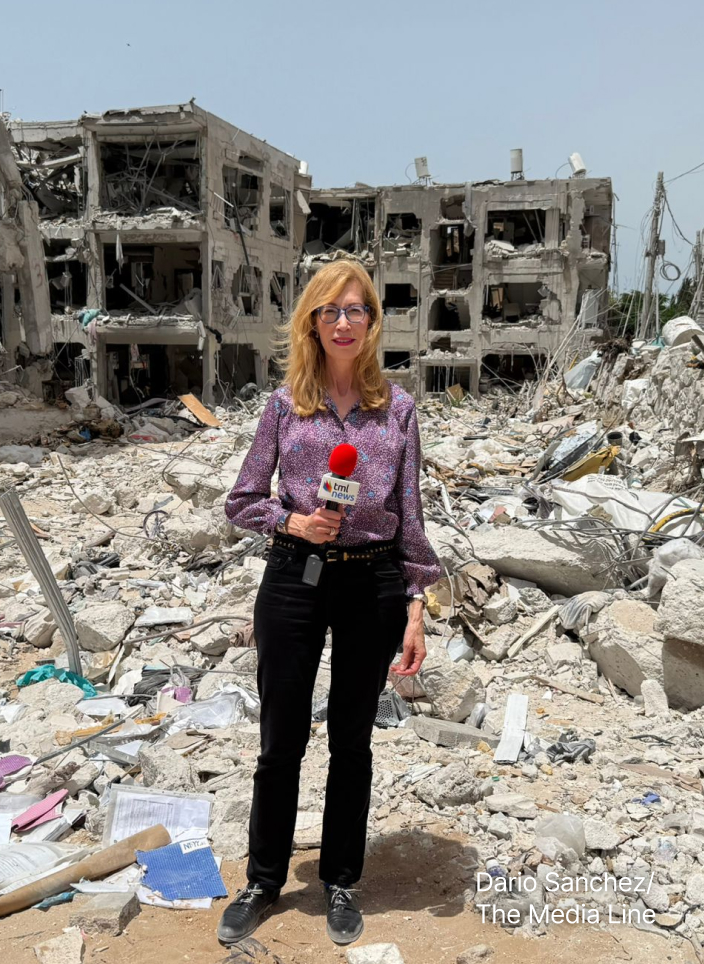
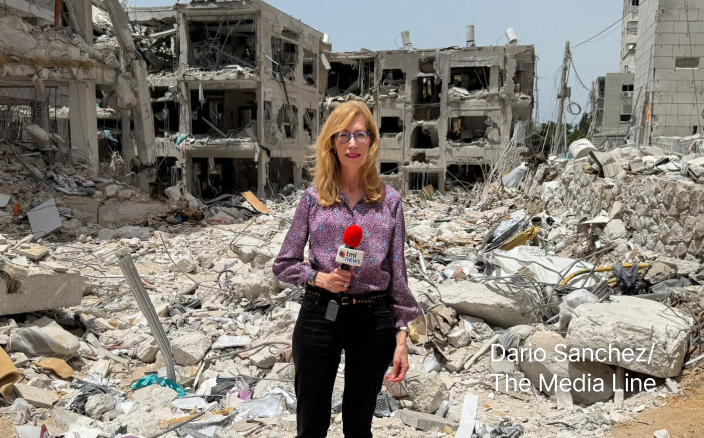
The Iranian-backed proxy has been clear in its messaging, stating that its goal is to stop the fighting in Gaza. It doesn’t seem as though Tehran is looking to escalate hostilities with Israel, regardless of the number of rockets they fired into the Jewish state’s northern borders since October 8.
However, Iran’s mission to the United Nations, writing on June 28 on the X platform, formerly known as Twitter, warned Israel that if it launches a full-scale attack on Hezbollah in Lebanon, “an obliterating war will ensue.”
Iran has used its prowess and its proxies to showcase its military capabilities in the region and exert pressure as they deem necessary.
These exercises have been partially a rehearsal (or dry run) to cunningly expose the world to their capabilities and a litmus test in understanding Israel and the international communities’ reactions, both militarily and diplomatically.
An internal division on end-of-war strategy has pitted Defense Minister Yoav Gallant against Prime Minister Benjamin Netanyahu. The former, a key interlocutor with the United States, has attempted to calm the situation, fearing a larger conflagration, and sees a need for an end-of-war strategy. He said over the weekend that a diplomatic solution was preferable to war and that Israel was not looking for a war with Hezbollah. But if the Iran-back armed group decided to escalate the situation, Israel would “know what to do.”
The war that Israel initiated as a response to the October 7 invasion of Israel’s southern border was conceptualized by Prime Minister Netanyahu with three goals; destroying Hamas, killing the leadership, and bringing back the hostages who were forcefully held captive in Gaza.
The first goal is one that the IDF chief of staff has said is nearly attained. The military can presumably finish the job of dismantling Hamas’ operational terrorist infrastructure. But this depends on a monitored Philadelphi corridor and all tunnels originating in Egypt and winding through Gaza eliminated.
The second goal of ridding Gaza of all its terrorists seems unattainable which leaves the war-torn area in a state of uncertainty.
As for the hostages, one can hope that in whatever deal may be cut with the Iranian-backed proxy, all hostages will be released. Fear that some hostages remain as bargaining chips for future negotiations leaves this chapter open in this unsettling war which has brought endless death and destruction, insecurity to Israel, and a decimated Gaza needing to be rebuilt.
“A complete and permanent cease-fire in Gaza” is the demand of Nasrallah. But even if an all-out war with Lebanon is averted, the 150,000 long-range missiles aimed at Israel as well as the Houthis’ bag of tricks and drones, won’t offset any cease-fire or diplomatic solution.
As for the 80,000 civilians who have not been able to return to their residences since October, a cease-fire won’t bring them peace of mind or home.
The clock is ticking and an all-out war looms. Every word and every second count; the time for a diplomatic solution is slipping away.
