Kristallnacht: Prelude to Genocide
Nazi forces and civilian mobs burned synagogues, smashed businesses, and terrorized Jewish families across Germany and Austria on November 9–10, 1938, while authorities ordered police to stand aside
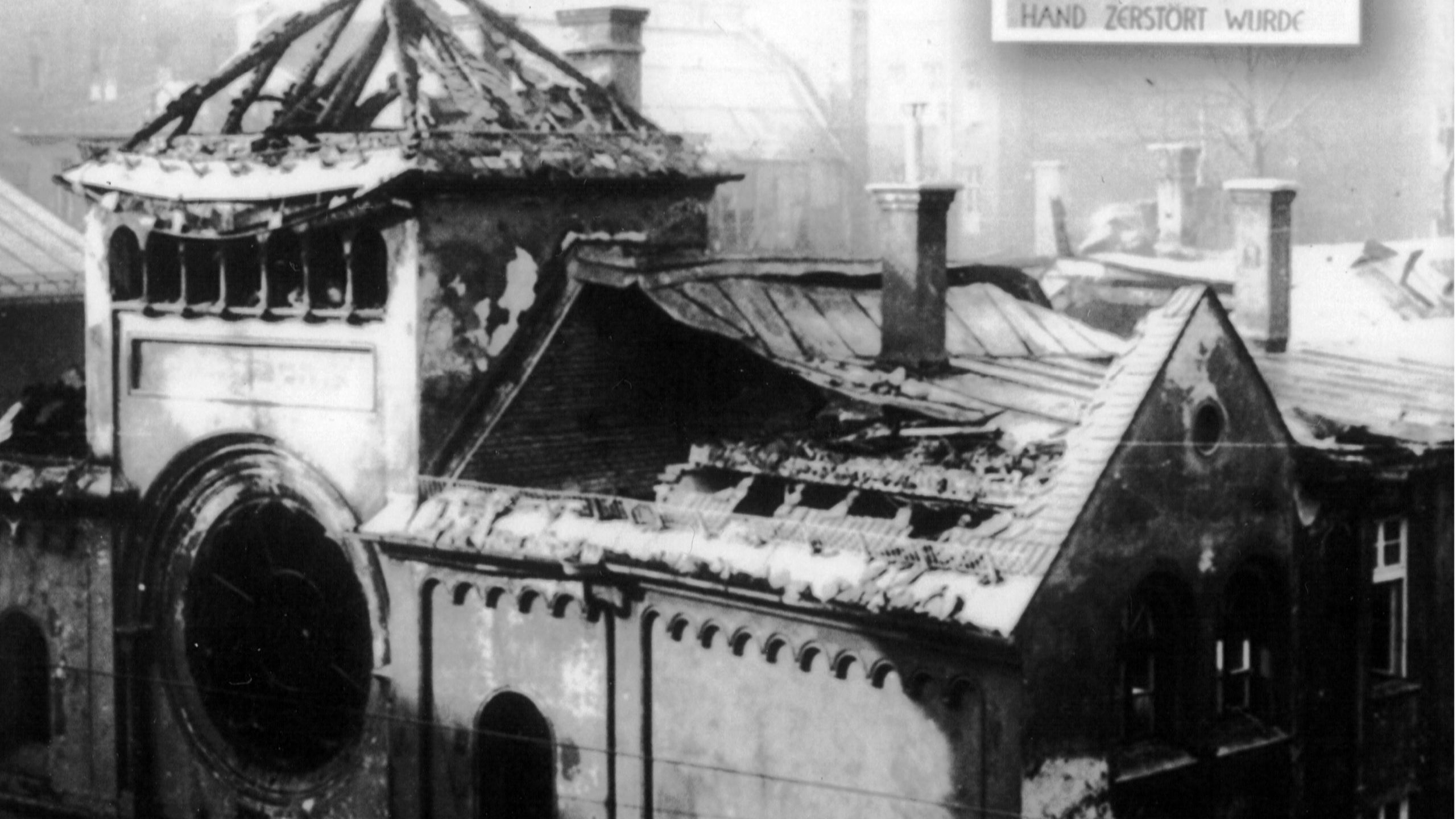
On the 87th anniversary of Kristallnacht, The Media Line remembers a night of terror that marked a decisive descent into the darkest chapter of modern history. The events of November 9–10, 1938, were not an eruption of random violence but a carefully orchestrated assault on Jewish life across Germany and Austria. Over the course of a single night, Nazi paramilitaries, youth groups, and civilian mobs—guided, encouraged, and shielded by the state—swept through cities, towns, and villages, leaving devastation behind them while police officers and government officials were ordered to look away.
The scale of destruction was staggering. More than 1,400 synagogues and places of worship were attacked, burned, or desecrated, their sacred scrolls and furnishings hurled into the streets. Jewish-owned shops and businesses had their windows smashed, giving rise to the shattered-glass image that later gave the pogrom its name. Storefronts were ruined, merchandise thrown to the ground, and entire commercial districts were gutted in a frenzy of hatred. In many places, fire brigades were told to protect neighboring non-Jewish buildings while allowing synagogues to burn. By morning, the glow of fires had illuminated countless communities, revealing how deeply antisemitism had been woven into the machinery of the state.
Give the gift of hope
We practice what we preach:
accurate, fearless journalism. But we can't do it alone.
- On the ground in Gaza, Syria, Israel, Egypt, Pakistan, and more
- Our program trained more than 100 journalists
- Calling out fake news and reporting real facts
- On the ground in Gaza, Syria, Israel, Egypt, Pakistan, and more
- Our program trained more than 100 journalists
- Calling out fake news and reporting real facts
Join us.
Support The Media Line. Save democracy.
The human cost was even greater. Jewish families were dragged from their homes, beaten, humiliated, and terrorized as their neighbors watched. Approximately 30,000 Jewish men were arrested and sent to concentration camps such as Dachau and Buchenwald, where many were brutalized and hundreds died in the immediate aftermath. The arrests were not incidental; they were part of a broader strategy to intimidate, isolate, and push Jews toward exile—all while stripping them of their dignity, livelihoods, and ultimately their safety.
Kristallnacht made unmistakably clear what the Nazi regime intended. Until then, many outside Germany had clung to the belief that antisemitic laws, boycotts, and harassment might remain confined to discrimination and social exclusion. The coordinated brutality of that night exposed the depth of the regime’s ambition: the eradication of Jewish life from European society. Newspapers reported the violence, diplomats cabled detailed accounts, and Jewish communities pleaded for action. Yet the international response was muted and fragmented. Borders remained largely closed, and avenues for rescue narrowed.
In hindsight, Kristallnacht stands as the turning point—the moment when persecution shifted from policy to nationwide physical violence, laying the groundwork for the systematic mass murder that followed. It was a warning, delivered in broken glass, blood, and flames—a warning the world failed to hear.
Eighty-seven years later, the echoes of that night still resonate. The shattered synagogues and scarred survivors remind us that unchecked hatred can metastasize into genocide, and that silence in the face of injustice carries a terrible cost. Remembering Kristallnacht is not only an act of commemoration but a call to vigilance—a reminder that memory must stand as a barrier against the return of such darkness.
