One Year Into Israel’s Quneitra Operation, Residents Report Daily Restrictions as Officials Cite Long-Term Threats
Syrian farmers describe land seizures and blocked roads, while Israeli analysts warn of future risks from weakened state
[QUNEITRA, Syria] Turki Al-Mustafa knows which roads close when. The 63-year-old farmer checks every morning before leaving his house in Al-Hamidiyah: Is the main road open? Will the checkpoint let him through? Can he reach his fields before the afternoon patrol?
“Day and night, we live under the constant presence of Israeli army patrols moving in four-wheel-drive vehicles around the village,” he told The Media Line. “It increases our fear and anxiety.”
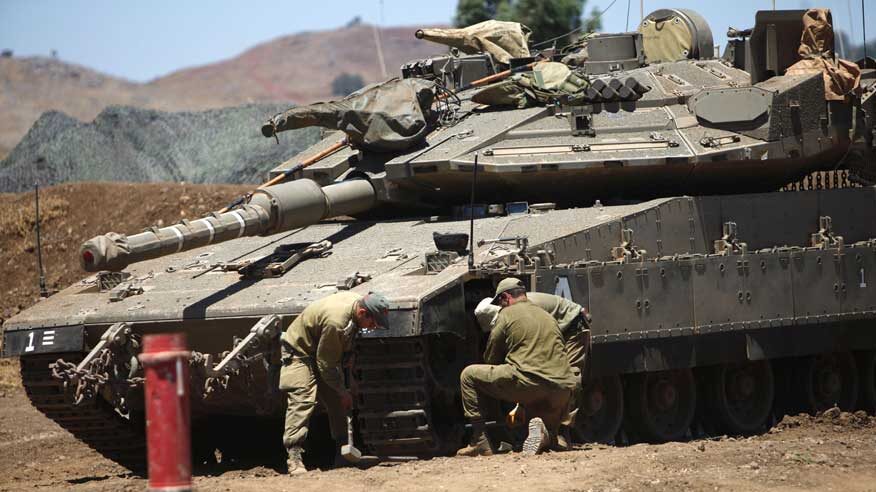
It’s been a year since Bashar Assad fell and Israeli forces moved into Syria’s buffer zone. What officials in Jerusalem described as temporary has become permanent — nine military posts, daily patrols, and checkpoints that control when farmers can work their land.
The justification: preventing threats from taking root near Israel’s border—Iranian proxies, jihadist groups, Turkish weapons. But talk to people in Quneitra’s villages, and you hear a different story. The threats Israel warns about don’t exist here, residents say. What does exist: land seizures, blocked roads, olive groves they can’t reach.
In Damascus, the new government has done what Israeli officials once said mattered: breaking with Iran, seizing Hezbollah weapons, changing school curricula, and engaging with Washington. Syria’s president visited the White House. More than a million refugees have returned home.
None of it changed anything in Quneitra.
The main road from Al-Hamidiyah to Khan Arnabah takes 10 minutes. It’s been closed for months. The alternative, an agricultural road full of potholes, takes 45.
Four months ago, Al-Mustafa’s daughter had a childbirth complication. “Because the road was closed, she had to stay overnight in Khan Arnabah,” he says. “The road wasn’t safe, and there were no emergency services at night. We can’t get Al-Jawlan National Hospital to send an ambulance.”
Those lands were how we made a living. Today, we’re prohibited from grazing there and forced to graze near our homes in very narrow areas.
Around 1,000 dunams of land that belonged to the village are now inside closed Israeli military zones. “Those lands were how we made a living,” Al-Mustafa says. “Today, we’re prohibited from grazing there and forced to graze near our homes in very narrow areas.”
The Red Cross distributes aid every 40 days. “If it weren’t for that, a lot of us wouldn’t make it,” he says. “Because of these harsh conditions, many residents are thinking of leaving for Damascus, looking for work to feed their children and pay rent.”
Muammar Khairallah owns 200 olive trees on a slope in Al-Isha. He hasn’t touched them since June. You can only move during daylight now—strict orders. This year’s harvest was terrible. Farmers couldn’t water the trees or treat them for pests.
“We were only allowed to harvest the olive trees near the lower part of the slope, and nothing beyond that,” he says.
His land isn’t even part of the official buffer zone. “Our land is not part of the buffer zone, yet the Israeli army has gone far beyond it and taken our property,” he told The Media Line. “There are no terrorist groups among us, no outsiders like they claim, no Hezbollah members, and no Iranian militias. We’re all relatives and extended family members, known to one another as farmers and livestock owners.”
Give the gift of hope
We practice what we preach:
accurate, fearless journalism. But we can't do it alone.
- On the ground in Gaza, Syria, Israel, Egypt, Pakistan, and more
- Our program trained more than 100 journalists
- Calling out fake news and reporting real facts
- On the ground in Gaza, Syria, Israel, Egypt, Pakistan, and more
- Our program trained more than 100 journalists
- Calling out fake news and reporting real facts
Join us.
Support The Media Line. Save democracy.
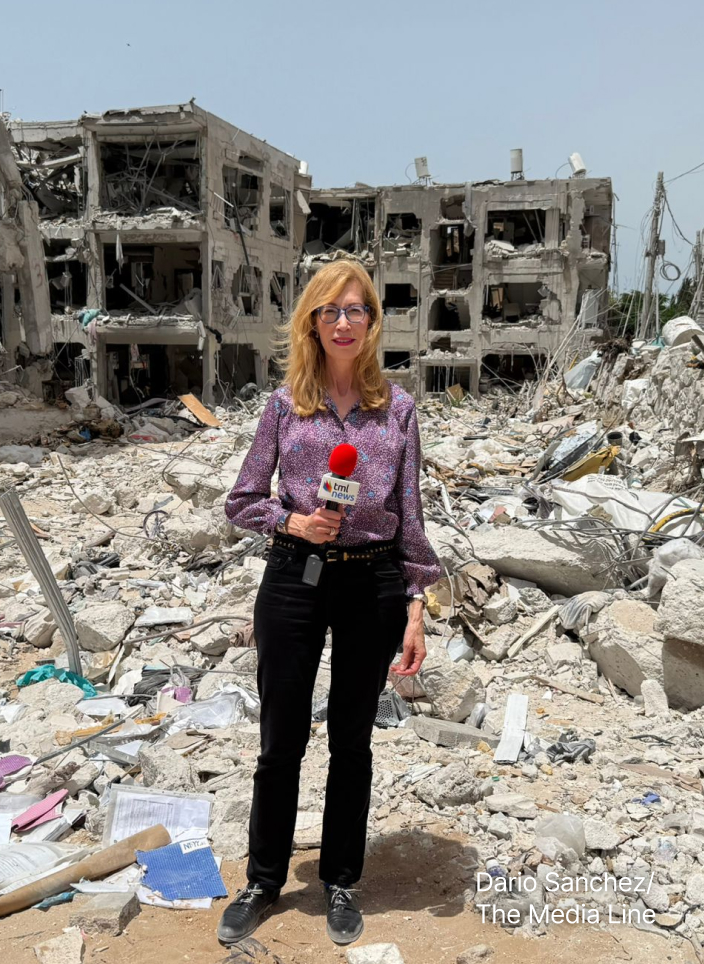
Late at night, Israeli forces come through for inspections. Sometimes they shell the hills nearby. “They fire live ammunition from Tal al-Ahmar al-Gharbi toward the farms on the upper slopes to intimidate us,” he says.
“There used to be three Hezbollah guys in Al-Isha and 10 in Al-Asbah,” Khairallah says. “They left for Egypt and Lebanon. Now there’s no Hezbollah, no Iranian militias anywhere along this border.”
There used to be three Hezbollah guys in Al-Isha and 10 in Al-Asbah. They left for Egypt and Lebanon. Now there’s no Hezbollah, no Iranian militias anywhere along this border.
Abu Adi Al-Tahan has watched the pattern shift in Kudna. What used to be occasional became constant. “It’s become impossible to live with,” he says. “It’s not just raiding homes and blocking roads anymore. Now they’re shooting live rounds at civilians.”
The patrols come through every day, Al-Mustafa says, the same time, same intensity, since Dec. 8. Between then and the end of May, monitors counted 34 security incidents across Quneitra governorate.
The contrasts between life in Quneitra and Syria’s political transformation are stark. In Damascus, the al-Sharaa government has taken steps Israeli officials once said would reduce security concerns—and more.
In January, Damascus seized a weapons shipment destined for Hezbollah forces in Lebanon near the Serghaya border area, including assault rifles, rocket-propelled grenades, and ammunition, according to Syria’s state-run SANA news agency. A senior Syrian official said the seizure demonstrated Syria’s commitment to limiting Iran’s influence.
The government has broken systematically with Assad-era alignments. Al-Sharaa became the first Syrian head of state to attend a UN General Assembly session in almost six decades in September. In November, he became the first Syrian leader to visit the White House in decades. More than 1 million Syrian refugees have returned home since Assad’s fall, according to UN figures.
In the education sector, changes have been comprehensive. Mohammad Ahmad Al-Ramadan, 52, a retired teacher who served as principal of schools in Al-Hamidiyah from 2000 to 2022, said curricula for history, geography, and religious studies have been changed, and the subject of national education, a cornerstone of Ba’athist ideology, has been absent since Dec. 8.
Claims about Islamist educational institutions in Quneitra are unfounded, Al-Ramadan said. “Al-Wahi Al-Sharif schools do not exist in Quneitra; there is only one school located in the Mezzeh area of Damascus,” he said. “There are no religious schools in Quneitra, except for one Sharia school in Khan Arnabah, which is affiliated with the Ministry of Awqaf in Damascus. This school is about 25 years old and was established in 2000.”
Ibtisam Al-Alimi, a social studies teacher at Al-Muadhamiyah Secondary School, said no such schools exist in Quneitra.
Schools across the governorate lack heating, desks, and basic amenities, Al-Ramadan said. Israel destroyed five schools in Rasem Al-Rawadi on Dec. 8, the same day it entered the buffer zone.
Israeli security officials say Damascus’ changes don’t address the core risk: a weakened state unable to enforce security guarantees along the border.
The Institute for National Security Studies argues Israel must prepare for multiple scenarios, including renewed instability. The 1974 disengagement regime wasn’t designed for gray-zone threats involving militias and fragmented authority.
Israeli officials frame the buffer zone operation as preventive, shaping conditions before new power centers consolidate.
Israeli officials have also increasingly pointed to Turkey as a complicating factor in Syria’s post-Assad landscape. Lt. Col. Sarit Zehavi, founder of the Alma Research and Education Center and a former IDF intelligence officer, told The Media Line that Israeli forces entered the buffer zone to prevent the area from becoming a staging ground for multiple actors.
“The feeling is that the area that we entered, if we were not there, could have become an area where everybody is operating, including Iran’s proxies and including jihadist Sunni players,” she said. “This area was used during the civil war by all players. It was not a buffer zone for many years.”
She described Israeli operations as an ongoing effort. “This is a process that we are doing step by step, every day, to clear those areas of terrorist activity. It’s not something that you can do within a month,” she said.
The main fear is that Turkish weapons will eventually threaten us from this border
Zehavi identified Turkey’s military-industrial reach as a longer-term concern. “The main fear is that Turkish weapons will eventually threaten us from this border,” she said. “The Turkish ideology, as we see today, is to create hegemony in Syria after they assisted al-Sharaa to take over Syria.”
She argued that the 1974 disengagement framework is no longer viable. “In my point of view, 1974 is irrelevant,” she said. “For many years, at least since the civil war started, it never protected us.”
On whether Israel seeks to keep Syria permanently weak, Zehavi distinguished between state failure and military capacity: “Syria as a failed state. I don’t think this is an Israeli interest, because as long as it is a failed state, you have many players that we have to deal with,” she said. “Keeping Syria weak militarily and making sure that the new Syrian army is not having advanced weapons? Of course, I agree.”
Her organization published an assessment in December 2025 warning that Dar Al-Wahi Al-Sharif schools have expanded from Idlib to more than 70 schools across Syria within one year. “He is investing in elementary schools with ISIS [Islamic State] curricula,” Zehavi said. “This means millions of students in Syria are now being educated according to al-Qaida ideology.”
Since Dec. 8, the Israel Defense Forces has established at least nine military posts on Syrian territory, including control of the Mount Hermon peak. Defense Minister Israel Katz has declared that Israel would not withdraw “even by a millimeter” from positions seized.
Israel’s security establishment now focuses on managing potential future threats rather than identifying current enemy positions.
Residents say Israeli claims about hostile groups don’t match what’s on the ground. “After the regime fell, there’s no Hezbollah, no Iranian militias anywhere along this border,” Khairallah said.
