‘Sánchez Has Wrapped Himself in the Flag of the Ayatollahs’: Spain’s Iran Rift Exposes Deepening Tensions With US and NATO
Prime Minister Pedro Sánchez’s refusal to authorize key US-linked bases for Iran-related operations has triggered backlash from Washington, Israel, and his domestic critics
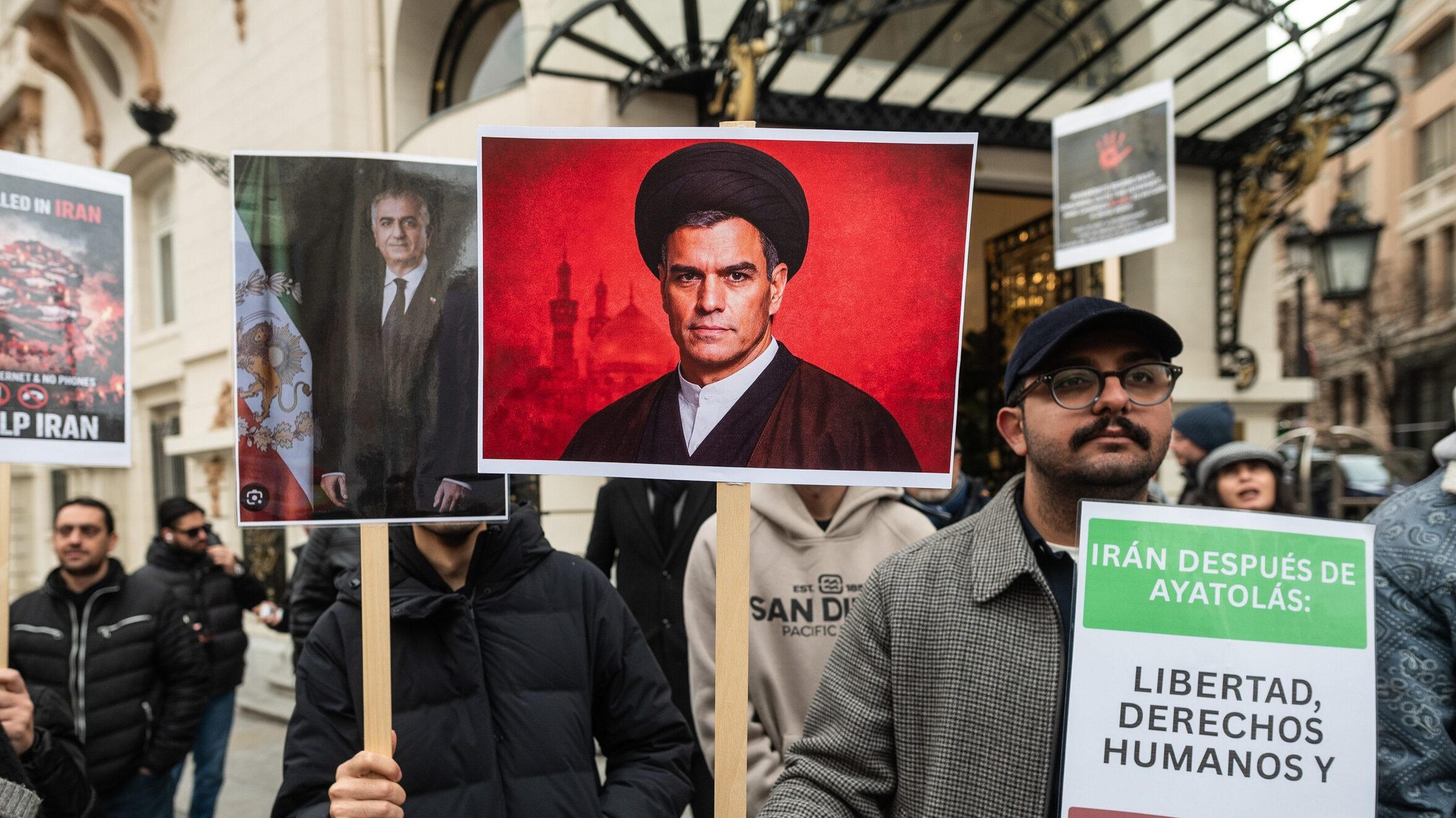
“Sánchez has wrapped himself in the flag of the ayatollahs just as he wrapped himself in the flag of Hamas after October 7.” With that accusation, Jorge Buxadé, head of the Vox delegation in the European Parliament, sharply criticized the Spanish government’s response to the war with Iran. Speaking to The Media Line, Buxadé argued that Prime Minister Pedro Sánchez is positioning Spain against its Western allies at a moment when the conflict with Tehran has exposed growing divisions inside NATO and across Europe.
The position of Spain is not the same as the position of Sánchez
“The position of Spain is not the same as the position of Sánchez,” Buxadé said.
The reactions came after Sánchez refused to authorize the use of two military installations in southern Spain; Rota naval base and Morón air base, for operations connected to the war with Iran. Both bases host US forces and for decades have served as logistical hubs for American military activity in the Mediterranean and the Middle East. Their use is overseen by specific bilateral treaties between Spain and the United States, meaning the Spanish government must approve their involvement in specific missions. The Sánchez government publicly refused to grant that authorization.
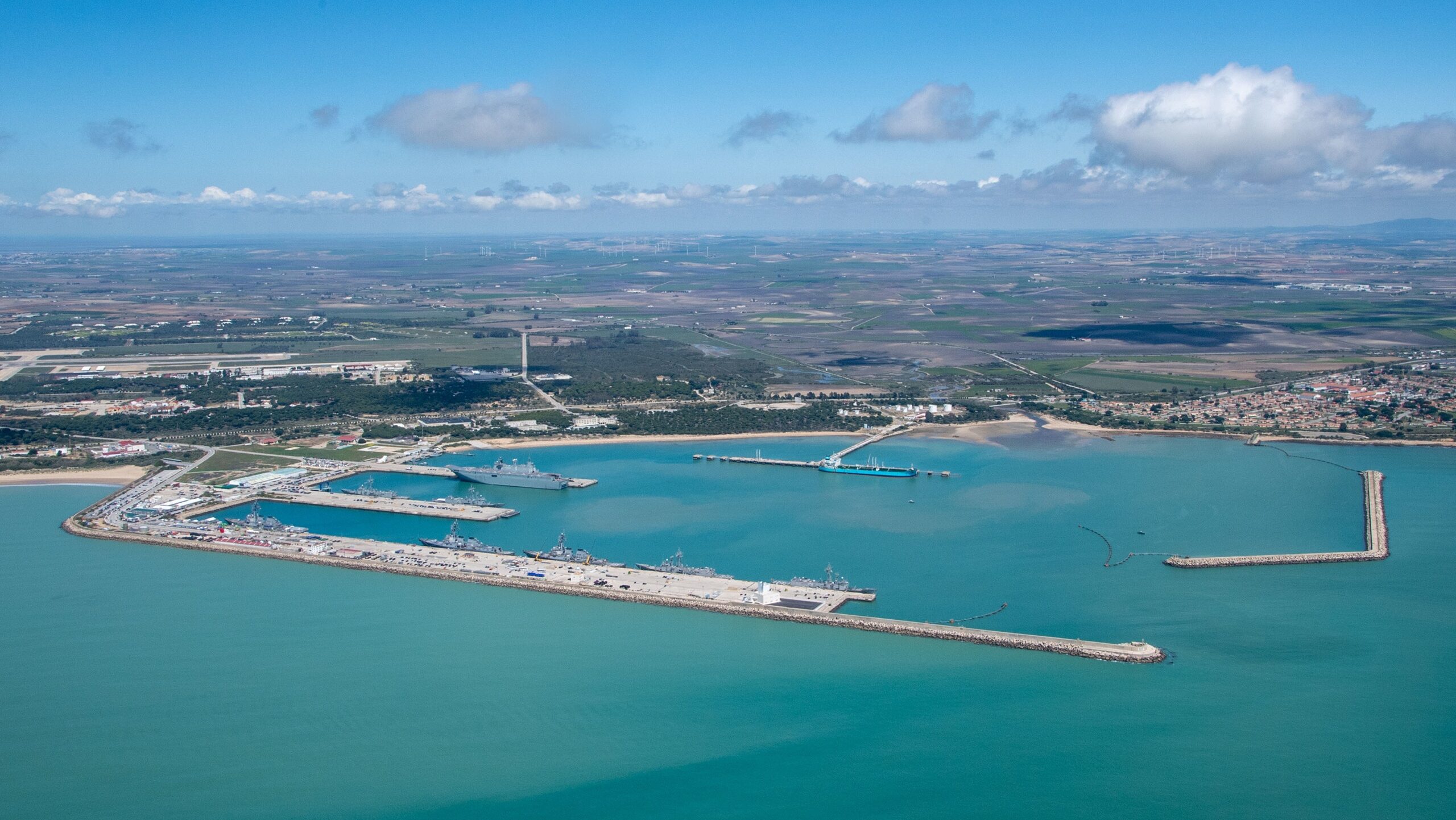
Aerial photo of Naval Station Rota, Spain, April 6, 2022. (Chief Mass Communication Specialist Nathan Carpenter/US Navy)
The decision immediately drew criticism from Washington. President Donald Trump suggested the dispute could carry economic consequences for Spain. “We may cut off trade with Spain,” Trump said when asked about Madrid’s position. “I don’t know what Spain’s doing. They’ve been very bad to NATO. They get protected, they don’t want to pay their fair share, and they’ve been that way for many years. They’re not cooperating at all. Spain? I think they’ve been very bad. Very bad. Not good at all.”
Recently, Spain announced their decision to fully withdraw its ambassador from Tel Aviv and to downgrade its diplomatic representation in Israel. The step doesn’t fully sever diplomatic relations, but sends a clear political signal.
Israel’s foreign minister, Gideon Sa’ar, responded publicly, criticizing Sánchez in a series of posts on X. “In January, they took Maduro away from Sánchez,” Sa’ar wrote. “Now they have taken Khamenei away from him. What will poor Sánchez do now?”
En enero le quitaron a @sanchezcastejon a Maduro.
Ahora le han quitado a Jameneí.
¿Qué hará ahora el pobre Sánchez? pic.twitter.com/lcJkXCHtPz— Gideon Sa'ar | גדעון סער (@gidonsaar) March 3, 2026
In another message, Sa’ar pointed to statements from militant groups praising Madrid’s position. “First, Hamas thanked Sánchez. Then the Houthis thanked Sánchez. Now Iran thanks Sánchez,” he wrote. “Is that what standing on the right side of history looks like?”
Give the gift of hope
We practice what we preach:
accurate, fearless journalism. But we can't do it alone.
- On the ground in Gaza, Syria, Israel, Egypt, Pakistan, and more
- Our program trained more than 100 journalists
- Calling out fake news and reporting real facts
- On the ground in Gaza, Syria, Israel, Egypt, Pakistan, and more
- Our program trained more than 100 journalists
- Calling out fake news and reporting real facts
Join us.
Support The Media Line. Save democracy.
Primero Hamas les agradecen a Sánchez.
Después los Huthis le agradecieron a Sánchez.
Ahora Irán le agradecen.
Eso es estar en el “lado correcto” de la historia? pic.twitter.com/9moC6A3L1X— Gideon Sa'ar | גדעון סער (@gidonsaar) March 2, 2026
The dispute has also revived an older debate inside Spain about Iranian media influence in the country. One of the most visible examples has been HispanTV, a Spanish-language television network operated by Iran’s state broadcaster. The channel began broadcasting in 2011 as part of Tehran’s effort to reach audiences in Spain and Latin America.
The network became controversial in Spain when Pablo Iglesias, later Spain’s second deputy prime minister, hosted the political talk show Fort Apache on the Iranian-funded channel from 2013 to 2019 before entering government.
At the time, Iglesias defended his work with the station and criticized attempts to restrict its broadcasting in Spain. “What worries them is not human rights,” he said when the channel faced regulatory pressure, arguing that the issue was the “progressive line” of many of its programs.
Critics in Spain have long argued that the chapter illustrates how Tehran has tried to expand its political and media reach in Europe through Spanish-language platforms. Supporters of Iglesias have rejected that characterization, saying his participation in the channel was part of a broader media career before entering politics.
But the connection has repeatedly resurfaced in political debates, particularly during periods of tension between Iran and Western governments.
For Buxadé, the controversy reflects what he described as a broader shift in Spain’s foreign policy. “There are two fundamental reasons,” he told The Media Line. “First, to cover up the systemic corruption scandals affecting his [Sánchez] government and the Socialist Party. And second, to try to capture the vote of the communist and far-left electorate in Spain.”
According to Buxadé, the strategy may carry domestic political advantages but risks damaging Spain’s standing with its allies. “If Spain’s international position was already weakened, this is a tremendous blow,” he said. “Especially in relations with the United States and within NATO.”
He acknowledged that Spain’s armed forces will continue to fulfill their international duties despite the political dispute. “Our armed forces must remain ready to honor their obligations,” he said. “The problem is that Sánchez says one thing publicly while doing another.”
Buxadé also suggested that Spain’s foreign policy stance could shift significantly depending on developments inside the country’s domestic political landscape. According to him, the durability of Sánchez’s position depends heavily on the balance of power in Spain’s parliament and on whether opposition parties decide to withdraw their support for the government.
“If the Partido Popular decides to stop supporting Sánchez in key votes, the entire political situation in Spain could change,” Buxadé said. “That would open the door to a different foreign policy and a different relationship with our allies.”
Spain should be aligned with the democratic world
In his view, such a shift could alter Madrid’s approach to both NATO cooperation and its posture toward the conflict with Iran. “Spain should be aligned with the democratic world,” he said. “Our alliances are clear, and our strategic interests are clear. What we are seeing now is a political decision by Sánchez, not a national consensus.”
What Pedro Sánchez is doing right now is activating one of the most iconic slogans in Spanish democratic politics: ‘No to war.’
Jesús M. Pérez Triana, a Spanish geopolitical analyst specializing in defense and security issues, said the decision corresponds to a political strategy that has shaped Spanish public opinion for decades. “What Pedro Sánchez is doing right now is activating one of the most iconic slogans in Spanish democratic politics: ‘No to war,’” Pérez Triana told The Media Line.
The phrase carries strong historical weight in Spain. The Iraq war in 2003 triggered massive protests across the country and became one of the defining political moments of Spain’s post-Franco democratic era. “In 2003, the opposition to the Iraq war reached extraordinary levels,” Pérez Triana said. “Polls showed that about 93% of the population opposed the war in one way or another.”
That experience left a deep mark on Spain’s political culture. “Opposing war has been politically profitable in Spain for decades,” he said.
Pérez Triana also pointed to broader historical factors shaping Spain’s perception of international security. Unlike many other European countries, Spain did not experience the devastation of the world wars.
“Spain did not participate directly in those conflicts,” he said. “Because of that, Spanish society never developed the same perception of external military threats that exists in other European states.” He emphasized that bilateral agreements rather than NATO structures govern the controversy surrounding the American bases. “The agreements regulating those bases date back to 1953,” Pérez Triana said. “They were signed long before Spain joined NATO.”
At the same time, he suggested that the diplomatic confrontation might have been avoided with a more discreet approach. “Spain could have publicly opposed the war while quietly allowing certain logistical operations,” he said. “There are no bombers flying from Spain. These bases mainly support transport aircraft and refueling missions.”
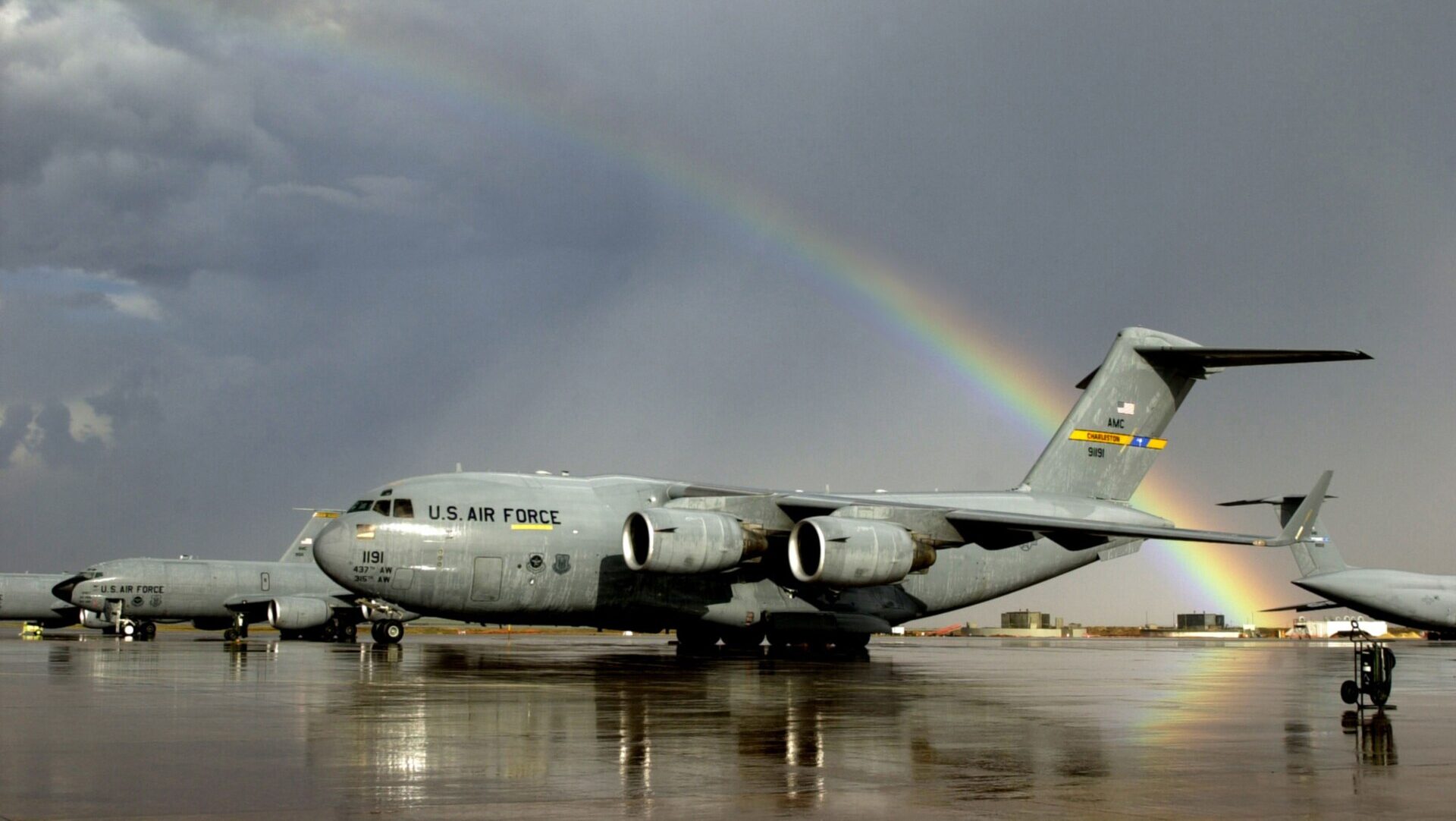
Following a sudden downpour, a rainbow arcs over a line of US Air Force aircraft on Morón Air Base, Spain Oct. 12, 2001. (Staff Sgt. Pamela J. Farlin/US Air Force)
Sánchez has decided to start a televised political clash between Madrid, Washington, and Jerusalem. President Trump’s threats about possible trade retaliation have introduced an economic dimension that could further complicate relations between the two NATO allies if tensions persist.
The exchange of criticism in recent days has already revealed how sharply Western allies can diverge over the war with Iran—and how quickly those disagreements can spill into the broader politics of the transatlantic alliance and, perhaps, how far Iranian influence can reach.
