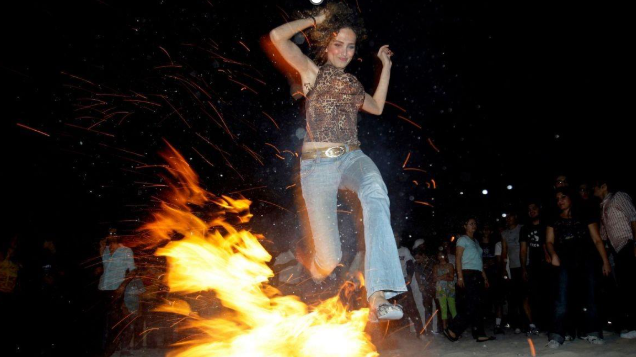
The Bonfire of Defiance: Iran’s Youth Head Into the Streets Tuesday Night
The opposition has issued its most forceful call yet for mass participation in Chaharshanbe Suri 2026, which is expected to be the first direct confrontation between Iran's youth and the wartime Islamic regime since the January crackdown
On Tuesday night, March 17, Iranians will pour into the streets to celebrate Chaharshanbe Suri (The Persian Fire Festival), an ancient ritual in which bonfires blaze, and flames are leapt over to burn away the hardships of the passing year and welcome the arrival of Nowruz, the Persian New Year. It is a ceremony that, in recent decades, has routinely erupted into running clashes between defiant young Iranians and regime security forces.
But this year is different. With the opposition issuing its most forceful call yet for mass participation, Chaharshanbe Suri 2026 is expected to become something far more charged: the first direct confrontation between Iran’s youth and its wartime Islamic regime since the January 8 and 9 uprising and the brutal crackdown that extinguished it in blood.
Exiled Iranian Crown Prince Reza Pahlavi, one of the opposition’s leading figures whose supporters include elements of the far right, released a video message calling for Chaharshanbe Suri to be celebrated with “national fervor,” and appealing to Donald Trump and Benjamin Netanyahu to “not allow the Islamic Republic to use violence against the people during this national ceremony.”
Among his own supporters, this message has been interpreted as a direct call to take to the streets and light bonfires. Other opposition forces—including Kurdish and ethnic minority groups, student and left-wing activists, feminist women’s organizations, and supporters of the Mojahedin-e Khalq—will also undoubtedly seize the opportunity presented by a millennia-old national ritual to return to the streets.

Reza Pahlavi, the leader of monarchists, has called on his supporters to take to the streets on Tuesday night to light bonfires. (Screenshot: Instagram)
In a separate, earlier message addressed to his self-styled “Javidan Guard,” Reza Pahlavi told its members: “I told you that help was coming, and now it has arrived,” a reference to the US-Israeli military strikes. He called on them to “exhaust and weaken the Islamic Republic’s apparatus of repression” in order to pave the way for the regime’s final collapse under the aerial bombardment being carried out by Israel and the United States.
The Javidan Guard is widely regarded as the royalist movement’s equivalent of the Mojahedin-e Khalq’s so-called “resistance units,” engaging in what are described as psychological operations. Its formation—built largely through social media recruitment—has proven an effective vehicle for amplifying Reza Pahlavi’s profile inside Iran. For the first time in 47 years, explicitly royalist slogans, including chants declaring “This is the last battle,” “The Pahlavis are returning,” were heard at the January protests.
Meanwhile, the Mojahedin-e Khalq has claimed that a number of its members and supporters were killed during the clashes of the January uprising, and published a list of their names.
It was previously reported that individuals identifying themselves with organized royalist groups operating under the Javidan Guard banner played a role in one or two prior incidents, including an attack on Nobel Peace Prize laureate Narges Mohammadi at a memorial ceremony for Khosrow Alikordi, a lawyer who died under suspicious circumstances, held on December 12 in Mashhad. Many believe that agents who had infiltrated the Javidan Guard and Pahlavi’s supporters were responsible for the attack.
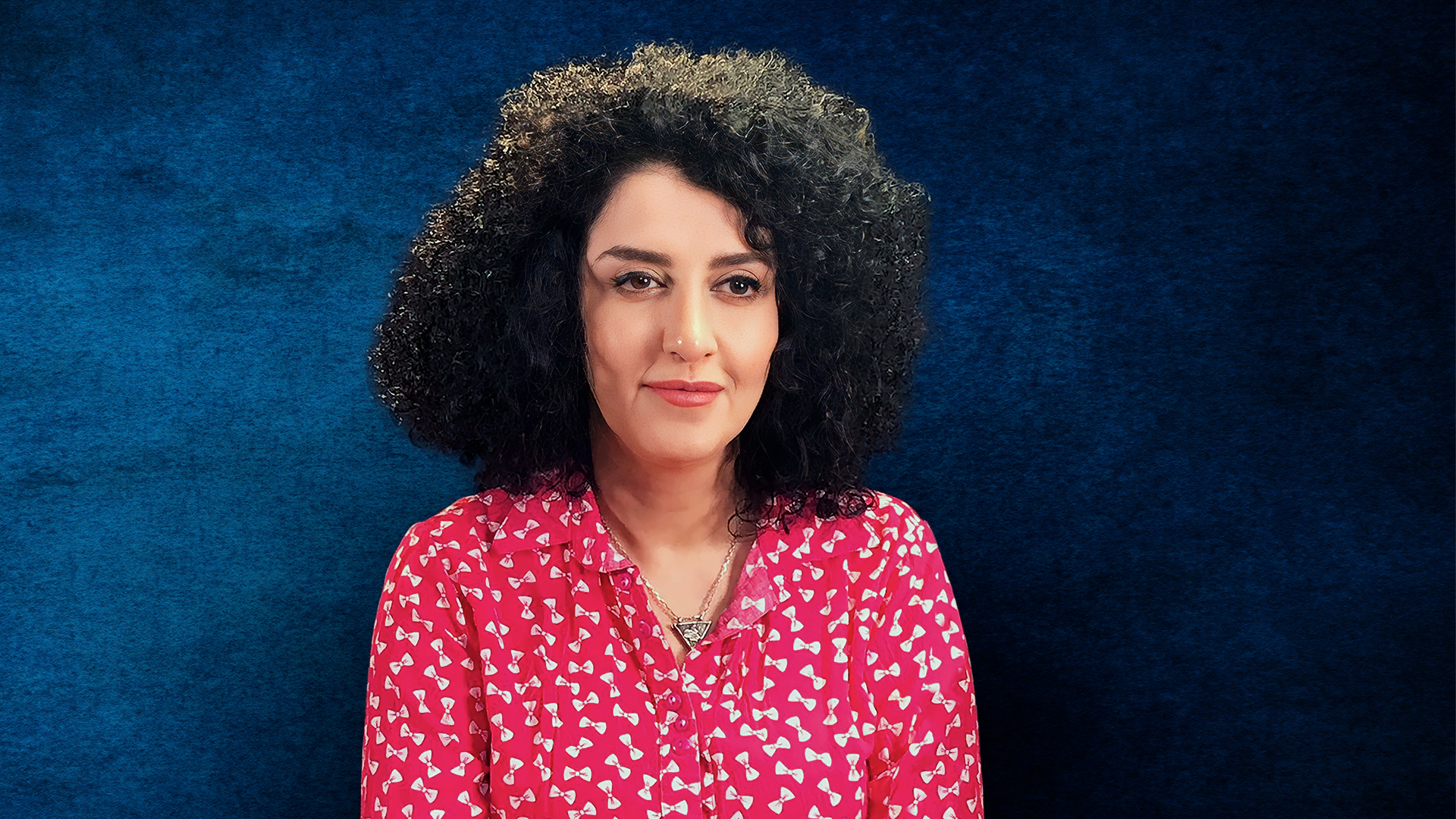
Narges Mohammadi, the Nobel Peace Prize laureate and one of the most prominent faces of the protest movement inside the country, after being imprisoned for months, has once again been sentenced to another term of imprisonment (Voice of America)
Nevertheless, most royalists openly praised the chants directed against leftists at the event and supported efforts to throw stones and attack the prominent political activist, whom they view as a key street leader of the protest movement and a political rival of Reza Pahlavi. At the conclusion of that same ceremony, Mohammadi was arrested along with several other prominent women activists in a brutal assault by Islamic Revolutionary Guard Corps (IRGC) intelligence operatives and taken to prison, with no news of her whereabouts for some time thereafter.
Prior to January, the Islamic Republic’s security and intelligence apparatus had not treated royalist propaganda activity on social media as a serious threat, and many of their supporters freely published images of Iran’s former royal family on their personal accounts without concern. This had been particularly true since Reza Pahlavi withdrew from a coalition of political opposition figures several months after the 2022 Woman, Life, Freedom uprising—a move that, more than any other single development, deepened divisions within the anti-regime opposition.
Nevertheless, it is now clear that in the wake of the January uprising, Reza Pahlavi, aided substantially by Persian-language media outlets abroad, has emerged as a prominent figure within the opposition. His supporters inside the country are now in a position to challenge the military government under wartime conditions through this latest call to mark Chaharshanbe Suri.
A student in Tehran told The Media Line: “It is obvious that Reza Pahlavi’s supporters have succeeded over the past few months in building a network, and during the January 8 and 9 protests, they managed to impose their own slogans on the crowd. This shows that other groups were less effective in competing with them for leadership of the crowd, and the Persian-language media abroad played a significant role in amplifying those royalist slogans.”
Give the gift of hope
We practice what we preach:
accurate, fearless journalism. But we can't do it alone.
- On the ground in Gaza, Syria, Israel, Egypt, Pakistan, and more
- Our program trained more than 100 journalists
- Calling out fake news and reporting real facts
- On the ground in Gaza, Syria, Israel, Egypt, Pakistan, and more
- Our program trained more than 100 journalists
- Calling out fake news and reporting real facts
Join us.
Support The Media Line. Save democracy.
The student continued, “On the ground, they managed to direct people in an organized manner. That said, when we came under live fire, it no longer mattered to anyone who supported Reza Pahlavi and who opposed him; we were all in the street, fighting the same enemy in front of us.”
There are others, however, who oppose Reza Pahlavi’s approach, particularly his appeal for US and Israeli “humanitarian” military intervention, arguing that it is incompatible with the principles of political struggle, that it has imposed the conditions of war on the country, and that it has led to the intensification of repression against opponents of the regime.
Journalist Mehrdad Farahmand argues that the Javidan Guard has in practice become a fifth column for Israel on the Iranian battlefield, and that it is reasonable to assume Israel founded the organization, with its “organization, direction and command” falling under Israeli control when operationally necessary.
He also states that during the suppression of the January protests, the mass defections from the security forces that Reza Pahlavi had claimed would materialize were nowhere to be seen, and that despite President Trump’s repeated calls on Iranian military personnel to surrender, no such cases have yet been observed.
Farahmand, a veteran journalist who previously worked at BBC Persian, also believes that severe clashes may occur during Chaharshanbe Suri, and that if the Javidan Guard is indeed armed and organized, its intervention could raise the possibility that, unlike the January uprising, this time “the protesters may gain the upper hand,” particularly in smaller towns with tribal structures where weapons are already in civilian hands.
However, he cautions that the situation is far from straightforward, and that the assumption that protesters—aided by the Javidan Guard and Israeli air cover—could bring down the regime through a nationwide uprising risks becoming a serious miscalculation.
Some opposition figures have also criticized Reza Pahlavi’s conduct around the January 8 and 9 calls, accusing him of selling the people false hope. They allege that with the support of Iran International TV, which has effectively become his principal media amplifier, watched by large audiences inside Iran due to its round-the-clock coverage and considerable financial resources, he promised that tens of thousands of security force defectors would join and support the demonstrations.
In practice, the regime massacred protesters over two days. Critics have also challenged the silence of royalist-affiliated media outlets regarding the massacre on that Thursday and Friday, arguing that despite having obtained evidence of the killings in the days prior, they withheld that information until Sunday, January 11, the conclusion of Reza Pahlavi’s second call to protest, with some suggesting the figures were deliberately inflated in order to influence President Trump’s decision to launch a military strike on Iran.
This latest call by Reza Pahlavi has also generated anxiety among some opposition activists and prominent public figures, who have urged people not to turn Chaharshanbe Suri, under these circumstances, into an unequal battle against the wounded but still lethal forces of the IRGC, the Basij, and the police, particularly given the regime’s explicit and unambiguous threats to kill protesters in the streets.
Aysan Taher, a human rights activist, told TML: “What I see for chahrshanbe soorid is, one side trying to preserve his father’s rule and another trying to reclaim his father’s crown.” She believes these power struggles could turn into a “sea of blood” and that a real revolution must come from within, through the will of the people, not through bombs, foreign intervention, or intelligence agencies.
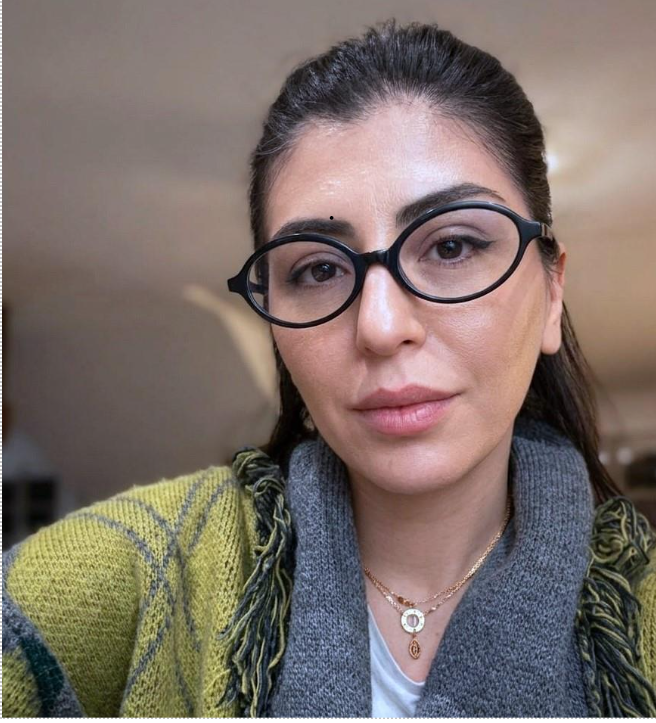
Aysan Taher says that calls for street protests under such circumstances could be extremely dangerous and turn into “a sea of blood.” (The Media Line)
Taher sees the pathway through a “coalition built among republican forces, civil society, intellectuals, workers, and social groups.” This process could lead to the overthrow of the regime.
President Trump said on Monday that Iranian protesters are in a dangerous situation and that the regime will shoot them if they gather in public. Iran’s police chief Ahmad-Reza Radan has in recent days threatened that any protesters taking to the streets will be treated as enemy combatants and that shoot-to-kill orders have been issued. An IRGC commander stated on live Islamic Republic television that execution orders have been issued for anyone protesting in the streets.
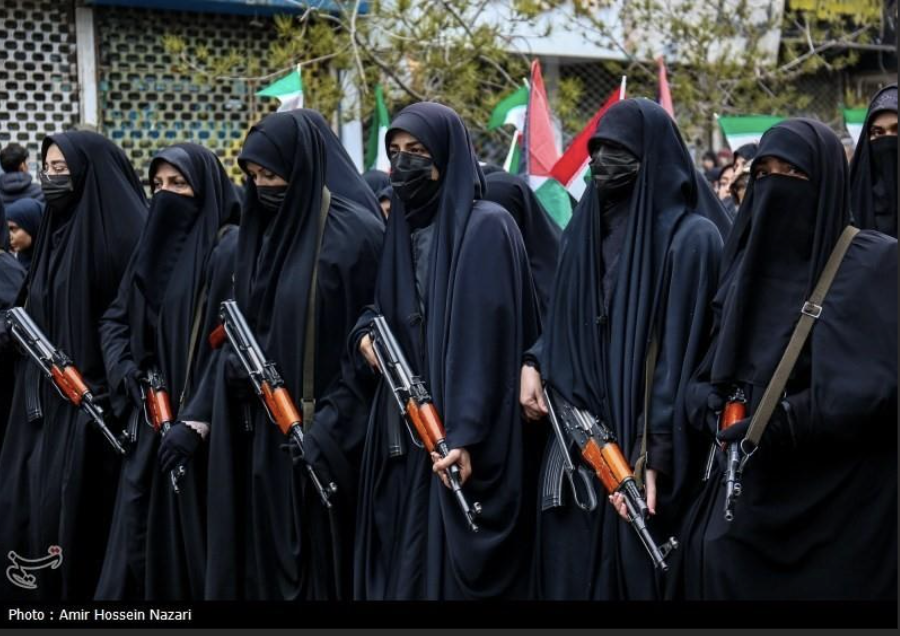
The regime has armed the Basij and its supporters, and some of them even appeared at the Quds Day with weapons in an apparent attempt to intimidate protesters. (Amir Hossein Nazari/Tasnim)
On Tuesday, just hours before the Chaharshanbe Suri celebrations were due to begin, Israel announced that it had killed Ali Larijani, the secretary of Iran’s Supreme National Security Council, who had been the government’s main coordinator in recent days, along with his deputy. It also said it had killed Gholamreza Soleimani, the head of the IRGC’s Basij, and his deputy. At the same time, videos showing Israeli strikes on checkpoints in Tehran circulated on social media.
Anchal Vohra, a Middle East analyst, told The Media Line that targeting and killing senior regime figures could have different consequences. Such strikes could encourage protesters to take to the streets while also carrying a heavy cost, since they could come under attack. She said the situation remains extremely sensitive, fluid, and dangerous. She added that if the airstrikes decrease, protesters on the ground may be able to find greater coordination and solidarity, and opposition forces may be pushed into greater action against the regime.
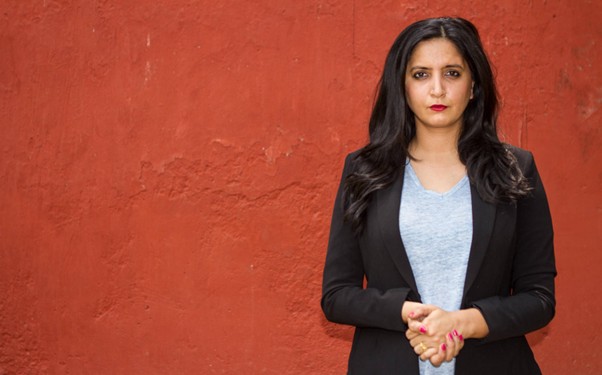
Anchal Vohra, a Middle East analyst, says that the killing of senior regime figures at this stage could have different consequences and may encourage protesters to return to the streets. (Courtesy Anchal Vohra)
The IRGC, Basij, plainclothes agents, police, and proxy forces, backed by the army, security, and intelligence institutions, killed thousands of people in Iran’s streets on January 8 and 9. Human rights organizations say they hold the names of nearly 7,000 victims, and some accounts put the true death toll at as many as 10,000, unprecedented in Iran’s modern history.
Iran International TV, however, reported a figure of 32,000, which some argue was inflated in order to influence Trump’s decision to launch a military strike. Since that time, internet access in Iran has been almost entirely cut, with connectivity severed for approximately 40 percent of the days in the new calendar year in a country with more than 80 million internet users. International telephone connections have once again been severed.
Chaharshanbe Suri traces its origins to the ancient Iranian tradition of venerating fire — and by extension, light and the sun, a practice that found formal expression in Zoroastrianism, which became the official state religion of the two principal dynasties that ruled Iran prior to the Arab Muslim conquest. In the pre-Islamic tradition, a great bonfire was lit on the eve of the New Year; later, additional rituals such as leaping over the flames were added.
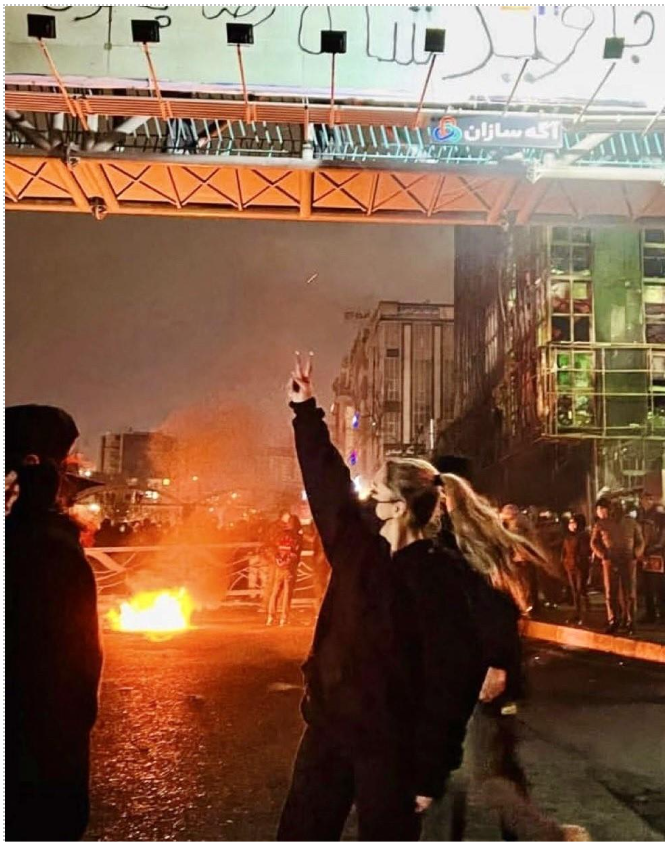
Many Iranians with internet access via Starlink say they plan to celebrate Chaharshanbe Suri more “grandly” this year, raising fears of serious clashes. The photo is from the bloody January protests. (Social media)
Observed on the eve of the last Tuesday of the solar year, the occasion is marked by lighting bonfires, leaping over them, and collective celebration, rites intended to burn away the misfortunes of the passing year and usher in a fresh beginning with the arrival of Nowruz and the coming of spring.
Over the past quarter century, Chaharshanbe Suri in Iran has evolved into an annual confrontation between young people and Basij and police forces, with clashes in certain districts of Tehran—particularly in the east of the city—continuing past midnight, typically accompanied by the throwing of firecrackers and loud explosive devices.
Related story: IRGC Threatens To Kill Iranian Protesters
IRGC-affiliated Telegram channels have warned the public that any lighting of fires in the street, any demonstration or public celebration while the war continues, and while they are still in mourning for the slain leader, will be met with a severe response.
The judiciary announced on Monday evening that lighting fires and setting off firecrackers during Chaharshanbe Suri is prohibited, and that violators will be imprisoned.
The regime’s fear of renewed street protests is so profound that, amid an internet shutdown and the blocking of all messaging apps, it has taken the unprecedented step of filtering even Iran’s homegrown domestic messaging platforms.
Nevertheless, some of those inside Iran with access to the internet via Starlink say they intend to celebrate Chaharshanbe Suri this year “more magnificently” than ever before.
