US Strategy Is To ‘Confuse the Iranians,’ Says Analyst, as Tehran Announces Talks Have Reached ‘Guiding Principles’
Indirect negotiations in Geneva paired enrichment limits and sanctions relief proposals with rising military signaling across the region
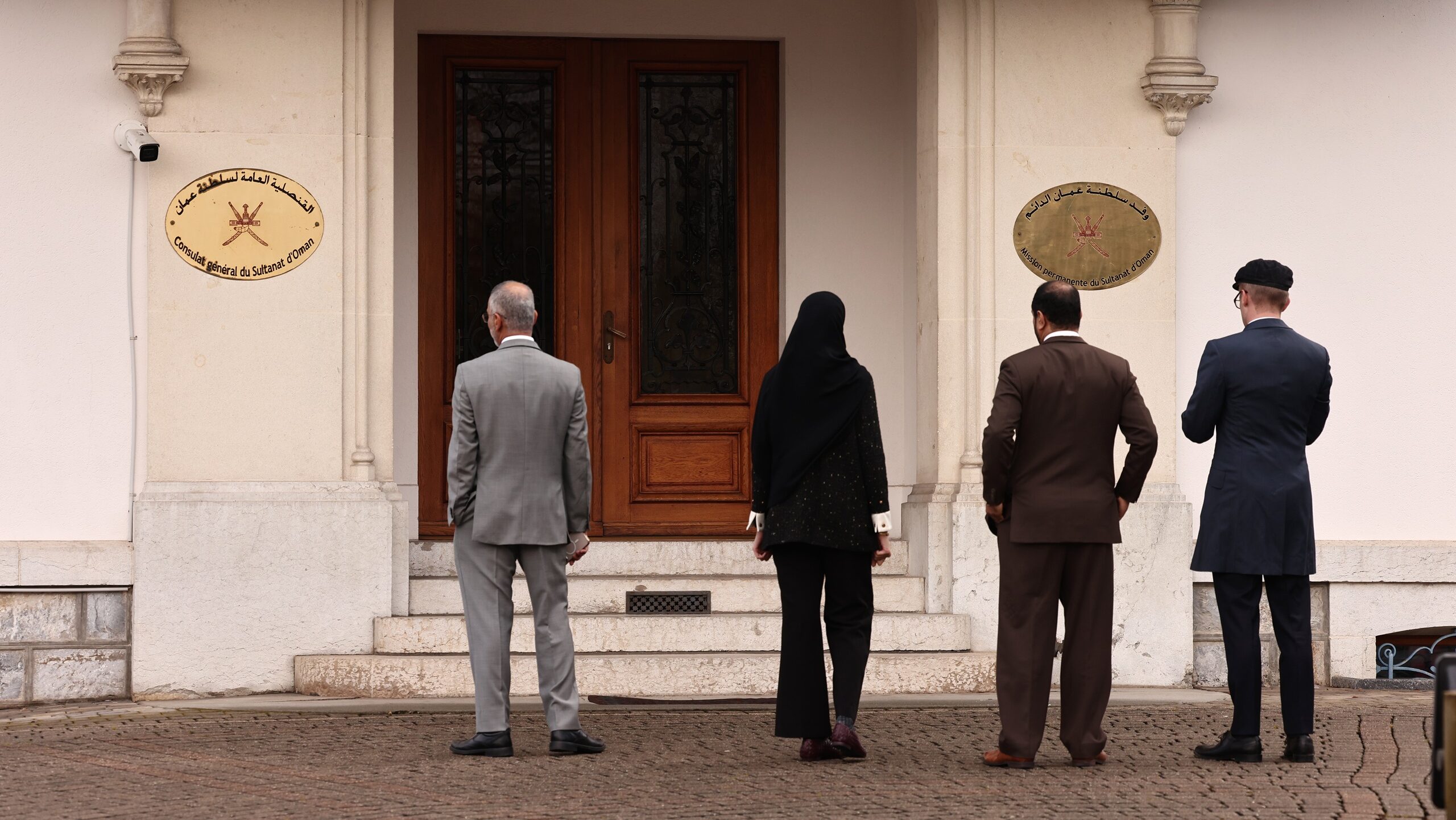
Iranian Foreign Minister Abbas Araghchi said Tuesday that Tehran and Washington reached an understanding on “guiding principles” during a second round of indirect nuclear talks in Geneva, offering the clearest indication yet that negotiations may be moving toward a framework even as military signaling intensifies across the region.
The talks concluded after roughly four hours, following earlier negotiations in Oman. Officials discussed uranium enrichment limits, inspections, and sanctions relief, while Araghchi cautioned that the understanding does not constitute a final agreement and that major gaps remain.
The diplomatic track unfolded alongside escalation. Iran conducted live-fire military exercises Tuesday in the Strait of Hormuz and issued retaliatory warnings, while the US reinforced regional deployments and maintained strike signaling.
The negotiations came only days after President Donald Trump hosted Israeli Prime Minister Benjamin Netanyahu in Washington—a meeting that produced few operational announcements but has become central to interpreting whether Washington is preparing a diplomatic outcome or positioning for military action if talks collapse.
Publicly, the visit yielded almost no operational details. President Trump spoke broadly about sanctions pressure and consequences against Iran; Netanyahu emphasized Iran as Israel’s central regional threat. The conversation also veered into Israeli domestic politics, including speculation that Netanyahu—currently on trial on corruption charges—may be seeking US pressure on President Isaac Herzog to grant him a pardon.
For Israeli security analyst Kobi Michael, a researcher at the Institute for National Security Studies and the Misgav Institute, the absence of clarity was the point.
Both President Trump and Prime Minister Netanyahu wanted deliberately to keep ambiguity—to leave things blurred. The purpose is to confuse the Iranians and not let them understand whether there is daylight between them or what decision will eventually be taken
Michael explained the logic of the meeting. “Both President Trump and Prime Minister Netanyahu wanted deliberately to keep ambiguity—to leave things blurred. The purpose is to confuse the Iranians and not let them understand whether there is daylight between them or what decision will eventually be taken,” he told The Media Line.
He described why the leaders avoided clear answers. “If they answer directly, they expose intentions. If they refuse to answer, conclusions will be drawn. They were concerned about falling into a trap—therefore, they preferred to keep ambiguity,” he said.
Michael framed the meeting as coercive diplomacy rather than decision-making. “The Iranians are under huge pressure with the regime at its lowest point, and this is good because it may push them to make substantial concessions through negotiation, which is preferable for President Trump,” he noted.
He connected Netanyahu’s visit to the escalation timeline—particularly the consequences if talks fail. Israel, he said, must be ready for a scenario in which diplomacy collapses but Washington hesitates. “If negotiations fail and the Americans decide not to strike, Israel will have to attack on its own. But Israel will need both international and domestic legitimacy,” he said.
Michael also stressed the operational risk. “In case the Americans attack Iran, the first target for Iranian retaliation will be Israel—and Israel, like US bases in the region, needs to be protected and to be equipped accordingly,” he noted.
From that perspective, the meeting functioned less as coordination and more as preparation time. “Netanyahu needs more time to be better prepared for both scenarios—defensively and offensively, so he probably asked President Trump to wait a bit more,” he said.
Give the gift of hope
We practice what we preach:
accurate, fearless journalism. But we can't do it alone.
- On the ground in Gaza, Syria, Israel, Egypt, Pakistan, and more
- Our program trained more than 100 journalists
- Calling out fake news and reporting real facts
- On the ground in Gaza, Syria, Israel, Egypt, Pakistan, and more
- Our program trained more than 100 journalists
- Calling out fake news and reporting real facts
Join us.
Support The Media Line. Save democracy.
The meeting itself was primarily a photo op. Strategy like this is not conducted in person by heads of state.
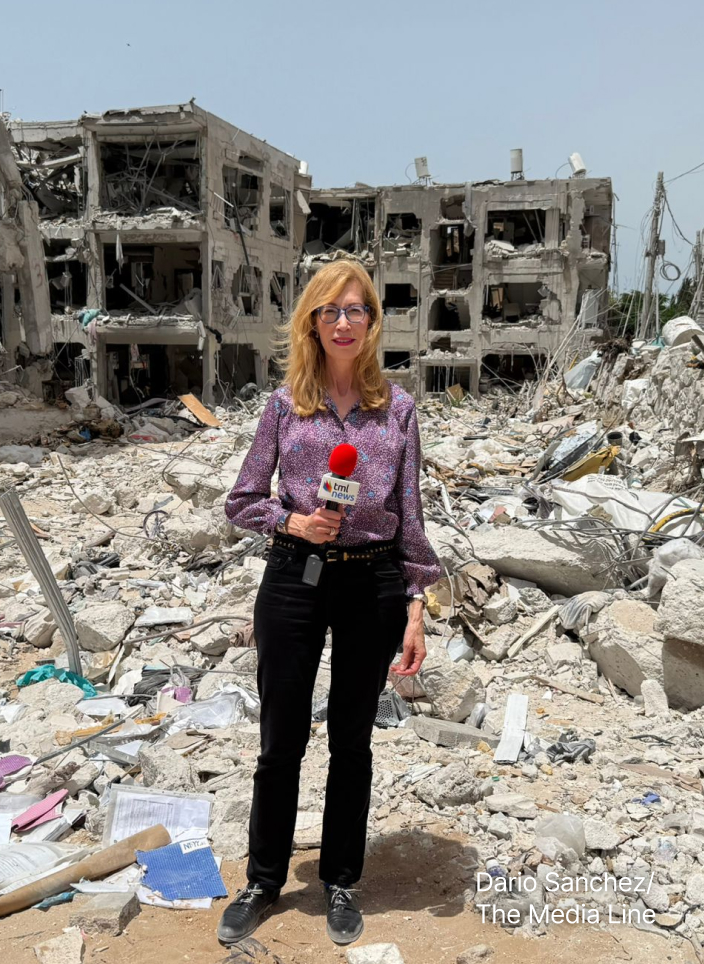
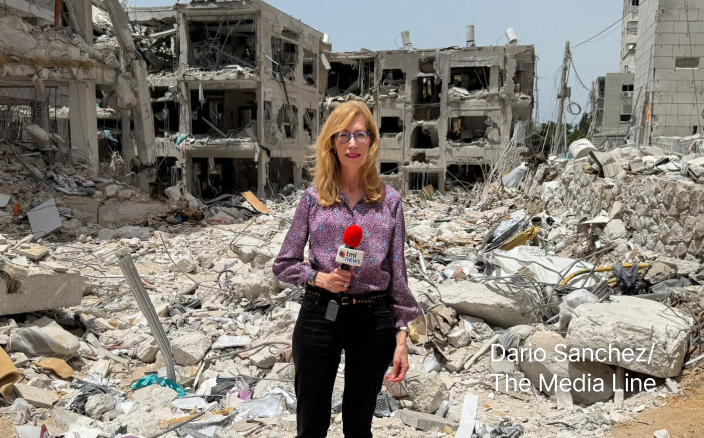
Steven Terner, a US political analyst at Terner Consulting, saw the same meeting through a domestic political lens rather than strategic planning. “The meeting itself was primarily a photo op. Strategy like this is not conducted in person by heads of state,” he told The Media Line.
Terner argued that the mutual visibility was the goal. “Netanyahu and Trump benefit from being seen with one another. This is an attempt to salvage political legitimacy,” he noted.
He added that Netanyahu gains at home from the optics. “For Netanyahu, this meeting presents him at home as a leader, especially in front of his political opposition—as the person respected by the president of the United States in a low public moment for him—while for Trump, Netanyahu serves as an ‘ego boost’ in a moment of weak domestic and foreign support,” he said.
Asked about the pardon reference during the visit, Terner said: “Trump says things at inappropriate times and in front of inappropriate audiences. It undermines American influence and reliability in geopolitics, since it mentioned an unrelated issue related to another country.”
Michael said the idea had circulated publicly but remained speculative. “There is a conspiracy theory that says Netanyahu wanted to ask President Trump to pressure about the pardon. … I’m not there,” he said.
Sanctions rhetoric resurfaced during the visit and again ahead of the Geneva talks.
Terner connected the approach to earlier cycles. “Economic sanctions brought Iran to the negotiating table and led to the JCPOA,” he said, referring to the Joint Comprehensive Plan of Action, the 2015 nuclear deal negotiated between Iran and the P5+1 countries. “That agreement was abandoned and replaced with ‘maximum pressure’ without a defined goal,” he added.
He questioned the credibility of renewed threats. “Increasing sanctions again may incentivize negotiation, but there is little reason to believe either side would negotiate in good faith, or that Trump’s administration won’t pull another agreement after this,” he said.
Military dynamics now shape the negotiations as much as diplomacy does.
The United States has expanded its presence while warning Iran of consequences if talks fail, and Iran has responded with exercises, threats, and new ballistic missile capabilities.
Michael described the military planning in detail. “If diplomacy fails, it will not be only a kinetic strike. It will be a combination of kinetic strike, cyber strike, cognitive warfare, and special operations,” he said.
He added that President Trump is preparing for a worst-case scenario. “President Trump prefers the diplomatic path, but he prepares for the worst-case scenario and will turn to the military path since, as we are talking, US assets keep moving toward the region,” he said.
Terner read the same posture differently. “Diplomatic outreach at this point is mostly an attempt to buy time, though there is the potential for breakthroughs, whether intentional or not,” he noted.
Reactions outside Washington and Jerusalem diverge along strategic lines.
Gulf countries appear to be on the same page as Washington. “Both Gulf states and the Netanyahu administration have been aligned on Iran,” Terner said.
Terner pointed to a different European stance. “Europe is anxious about renewed kinetic conflict and has generally little patience for both Trump and Netanyahu,” he said.
In Geneva, US and Iranian officials also discussed technical limits—enrichment levels, inspections, and sanctions relief.
Iran has been asked by the US to keep ballistic missiles limited to [a range of] 1,000 kilometers … and enrich uranium to at most 3.67%, and the enriched stockpile should be removed from Iran
Michael outlined potential compromise formulas that he said are on the table. “Iran has been asked by the US to keep ballistic missiles limited to [a range of] 1,000 kilometers, in order not to be able to reach Israel or key assets in the region, and enrich uranium to at most 3.67%, and the enriched stockpile should be removed from Iran and moved abroad, in return for some sanctions relief,” he said.
He added: “The higher probability is that we will face a military strike, since this regime will not accept these terms.”
Diplomacy and deterrence are unfolding simultaneously between Geneva and Washington. Whether the emerging “guiding principles” signal a path toward agreement—or simply a pause before confrontation—will likely become clear in the next round of negotiations, not during them.
