
‘We Can Eat Without Humiliation’: Syrians Respond to US Sanctions Shift
President Trump’s order marks a new chapter in Syria policy, but concerns about accountability and reform persist
[Damascus] US President Donald Trump signed an executive order on Monday ending the general sanctions program on Syria, a dramatic reversal of more than two decades of pressure on the country. The move, announced by the US Department of the Treasury, aims to support a stable and unified Syria while maintaining sanctions on individuals and entities accused of human rights violations, terrorism, drug trafficking, or involvement in chemical weapons. It marks a significant shift in American policy in the Middle East, raising questions about the future direction of US engagement in the region.
According to the text of the executive order, “the conditions that led to the imposition of sanctions on Syria have changed over the past six months.” That shift is linked to the political transition in Damascus, where Ahmed al‑Sharaa was appointed head of government following the end of Bashar Assad’s rule. The announcement reflects a calculated differentiation between the Syrian state, which the US now views as a potentially viable institution, and the former regime, which Washington holds responsible for destabilizing the country and the broader region.
Although officially titled “Ending the Sanctions Program on Syria,” the order does not fully lift all restrictions. Several executive orders issued between 2004 and 2011 were rescinded, but sanctions remain in place against Bashar Assad and his inner circle, individuals connected to serious rights violations, persons involved in drug trafficking, members of the Islamic State group and their associates, Iranian proxies, and those tied to chemical weapons development or use. The decision underscores the US position that while it is willing to engage with a post-Assad Syria, it will not extend that engagement to actors deemed responsible for the country’s past atrocities.
Mixed Regional Reactions to a High-Stakes Move
The Syrian government welcomed the announcement, framing it as the beginning of a new chapter in bilateral relations. Foreign Minister Asaad al-Shaibani issued a statement on platform X, describing the decision as “a significant turning point that will push Syria toward prosperity and stability.” He emphasized Syria’s readiness to engage in international efforts aimed at restoring security and peace, especially now that the Assad era has formally ended.
Many analysts view the US decision as a strategic recalibration aimed at aligning with regional realities. Al‑Sharaa, a technocrat with limited political baggage, has been met with cautious support from Western and Arab governments alike. His appointment coincides with Syria’s return to the Arab League, waning Russian support due to Moscow’s focus on Ukraine, and growing international interest in finding a transitional model that allows Syria to reenter the global fold. Domestically, the timing of the decision also aligns with President Trump’s reelection strategy, reinforcing his image as a leader capable of pragmatically resolving entrenched global crises.
Give the gift of hope
We practice what we preach:
accurate, fearless journalism. But we can't do it alone.
- On the ground in Gaza, Syria, Israel, Egypt, Pakistan, and more
- Our program trained more than 100 journalists
- Calling out fake news and reporting real facts
- On the ground in Gaza, Syria, Israel, Egypt, Pakistan, and more
- Our program trained more than 100 journalists
- Calling out fake news and reporting real facts
Join us.
Support The Media Line. Save democracy.
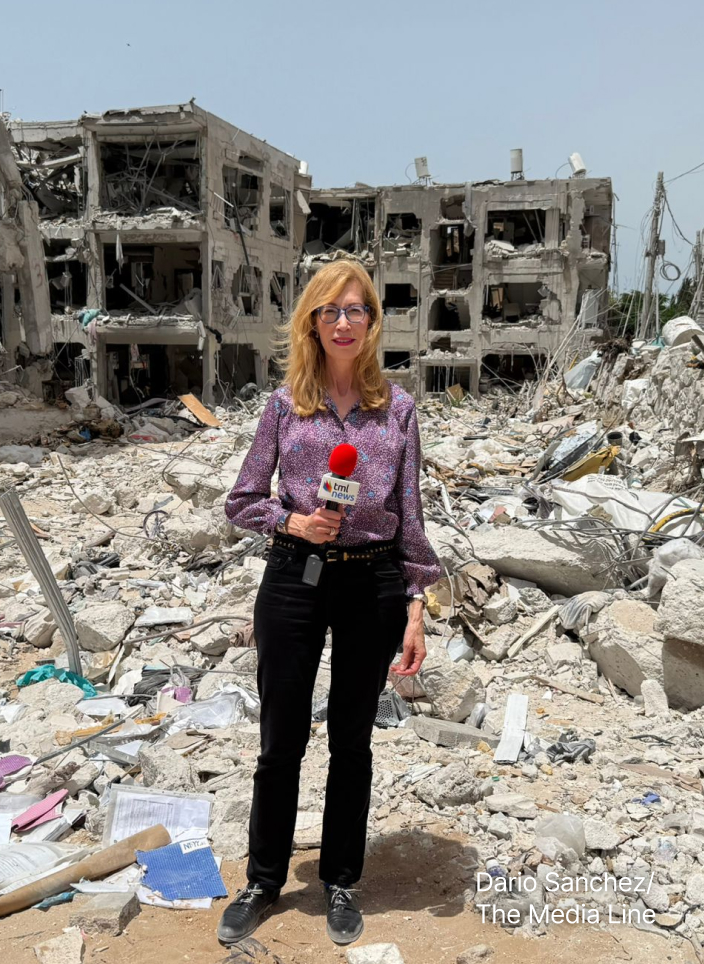
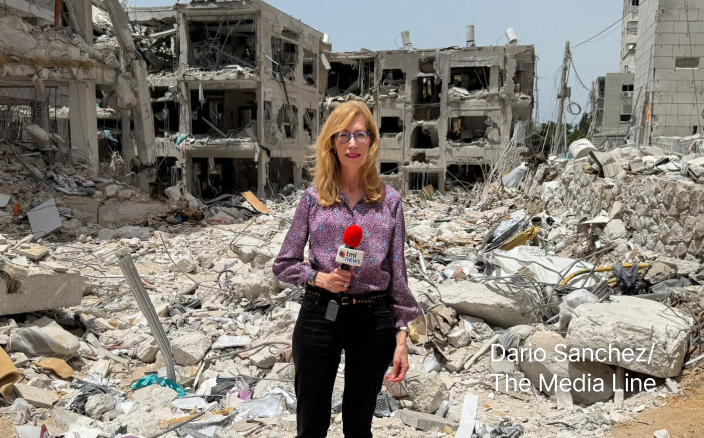
With Assad’s departure, US officials hope to engage a new government that is not implicated in war crimes or large-scale abuses. The easing of sanctions could accelerate improvements in living conditions, streamline humanitarian work, and create space for economic recovery. It also provides an opportunity to initiate a national reconciliation process, while supporting the establishment of more representative transitional institutions. What was once seen as normalization with Assad is now presented as conditional engagement with a new political leadership that Washington believes can be monitored and held accountable.
Syria needs investment and developmental partnerships that can only come within a stable legal and political environment
Still, skepticism remains. Some fear the al‑Sharaa government may perpetuate Assad-era policies under a different name. Without strong accountability and oversight mechanisms, foreign investment and reconstruction funds could be diverted back into the same corrupt networks that devastated the country. Others warn that lifting sanctions without a parallel judicial process risks conveying the impression of an international pardon. Critics argue that it could damage trust in the credibility of Syria’s political transition.
Opposition within the United States has been vocal. Several members of Congress demanded guarantees that the change in Syria is genuine and not merely symbolic. Human rights organizations warned that Assad’s departure does not necessarily mean that the repressive security apparatus has been dismantled. Some foreign policy experts view the move as premature, while Washington’s Syrian lobby fears that the transition could amount to superficial change masquerading as reform.
Reactions from Syrians themselves reflect this cautious hopefulness. Dr. Layla al‑Homsi, a researcher in political and economic affairs, told The Media Line, “The importance of lifting the sanctions cannot be understated, but it’s not the end. Syria needs investment and developmental partnerships that can only come within a stable legal and political environment.”
Assad is gone, yes, but the more important question is: Has the security apparatus fallen?
Dr. Obeida Saadoun, a professor of international relations, expressed concern that the roots of repression might still be intact. “Assad is gone, yes, but the more important question is: Has the security apparatus fallen? The Americans know that lifting sanctions must be accompanied by strict monitoring of reforms,” he said.
If lifting sanctions means we can eat and drink without humiliation, that’s enough
Ordinary citizens echoed a similar mix of optimism and suspicion. Razan, a 35-year-old office worker in Damascus, said, “If lifting sanctions means we can eat and drink without humiliation, that’s enough. But I fear, as usual, the corrupt will benefit before anything reaches us.”
Mustafa, a 41-year-old displaced man from Aleppo’s countryside, added, “As long as the people who destroyed us haven’t been held accountable, I don’t believe anything has changed. Assad is gone? Okay, but where is the accountability? Where is the justice?”
While the lifting of general sanctions opens the door to renewed engagement and possible recovery, the future depends on what comes next inside Syria. International observers emphasize the importance of transitional justice, comprehensive reform of the country’s security institutions, inclusive political participation, and transparency from the new government. The fall of Assad has created an opportunity, but real transformation will only come with international monitoring and an internal break from the oppressive legacy that defined Syria’s recent past.
