New Tel Aviv University Study Targets PTSD Flashbacks by Rewriting Memory
Researchers at Tel Aviv University report early evidence that a noninvasive brain-stimulation protocol can reduce intrusive traumatic memories in people with post-traumatic stress disorder (PTSD), a finding drawing attention in Israel after the October 7 attacks and the Iron Swords War increased concern about trauma among civilians and security personnel. The team tested the approach by reactivating a traumatic memory first, then applying stimulation at the precise point when the memory is temporarily more modifiable.
The study, published in the journal Brain Stimulation, was conducted in the labs of Prof. Nitzan Censor and Yair Bar-Haim at Tel Aviv University and led by doctoral students Or Dezachyo and Noga Yair, with collaborators including Prof. Ido Tavor and Prof. Daniel Pine of the US National Institute of Mental Health.
Give the gift of hope
We practice what we preach:
accurate, fearless journalism. But we can't do it alone.
- On the ground in Gaza, Syria, Israel, Egypt, Pakistan, and more
- Our program trained more than 100 journalists
- Calling out fake news and reporting real facts
- On the ground in Gaza, Syria, Israel, Egypt, Pakistan, and more
- Our program trained more than 100 journalists
- Calling out fake news and reporting real facts
Join us.
Support The Media Line. Save democracy.


PTSD affects millions worldwide, and existing talk therapy and medication do not work well for everyone; many patients continue to experience flashbacks and intrusive thoughts for years. Instead of focusing only on coping with symptoms, the Tel Aviv University group aimed at the memory system itself.
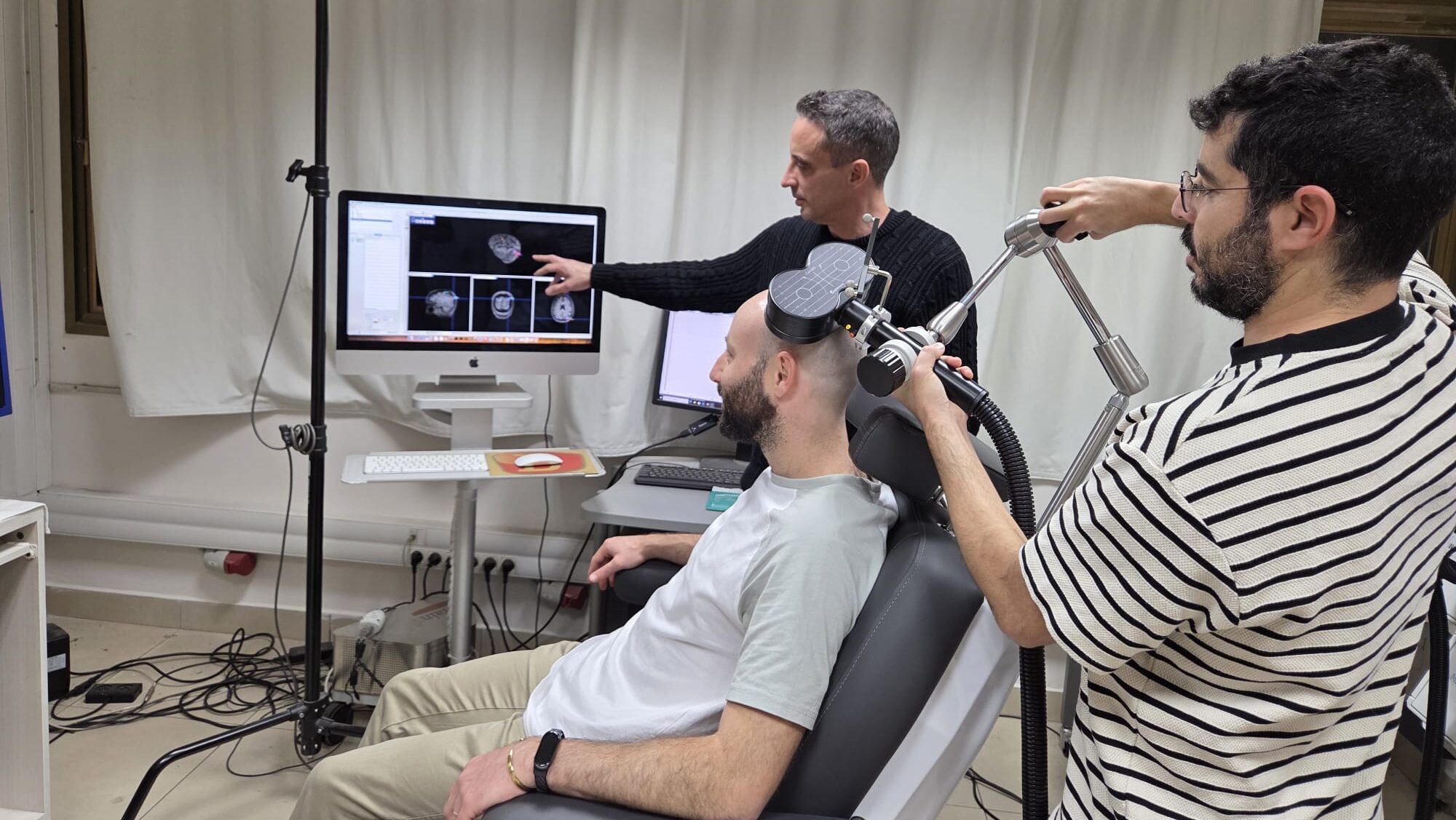
Because the hippocampus sits deep in the brain, the researchers did not stimulate it directly. They used functional magnetic resonance imaging (fMRI) to map each participant’s brain network, identified surface regions connected to the hippocampus, and then applied transcranial magnetic stimulation (TMS) to those targets.
Ten adults with PTSD completed five weekly sessions. According to the findings, participants showed a sharp drop in the frequency and intensity of intrusive memories, and brain scans showed reduced connectivity between the hippocampus and the stimulated regions.
Censor said the approach aims to intervene “in a targeted manner, in the brain mechanism of memory itself — at the moment when it ‘reopens’ and becomes amenable to change.” He added, “It is important to emphasize that these are still very early results.” A larger controlled trial is underway.
