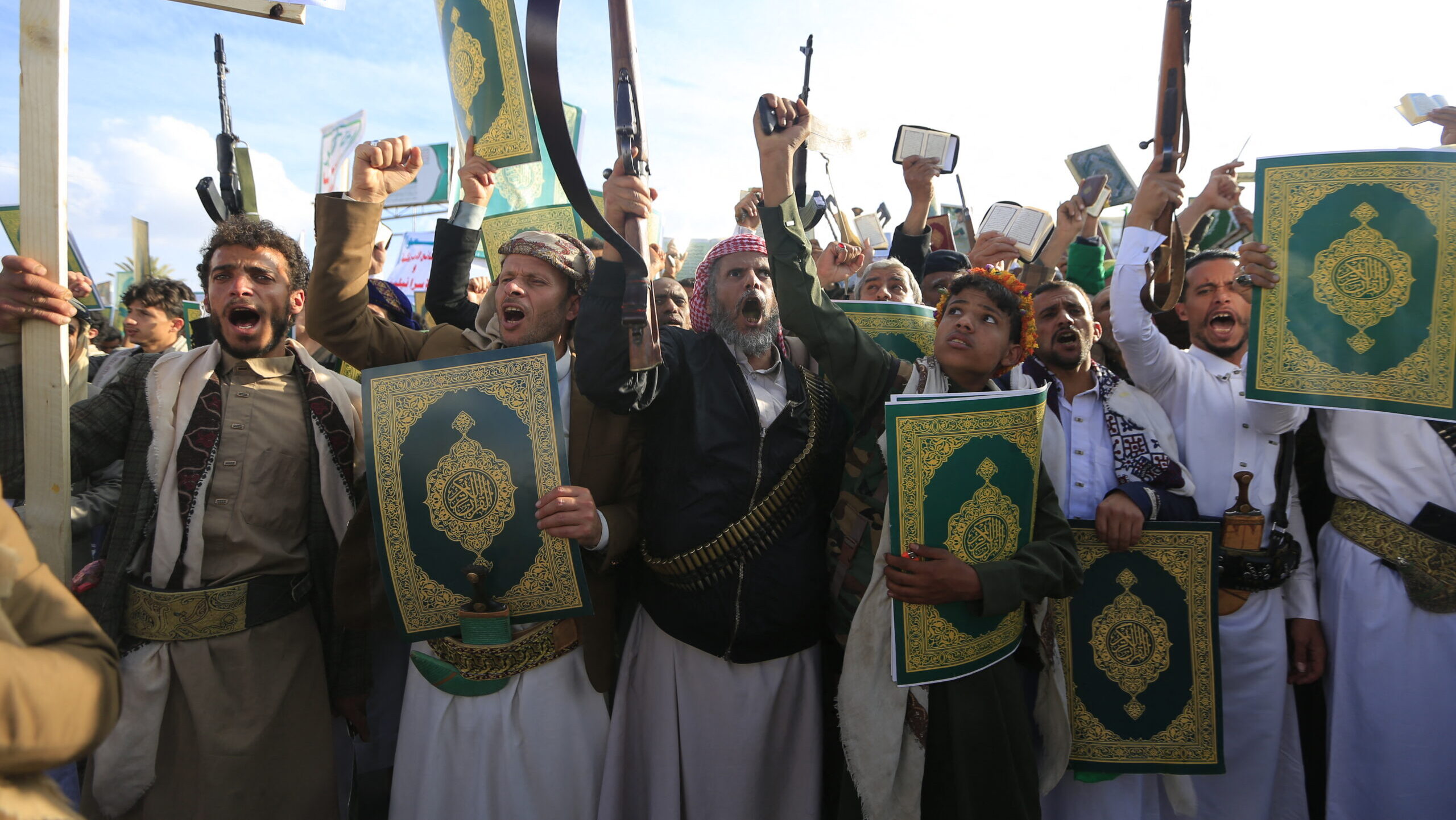
Yemenis Watch Iran’s Street Protests for a Break in the Houthi Grip
In Sanaa, where war has become routine and the currency collapse feels personal, a new question is circulating: could protests in Iran loosen the Houthis’ hold on northern Yemen? Khaled Al-Ansi reports that many Yemenis no longer view demonstrations in Tehran as someone else’s domestic drama. They see a possible lever—maybe the only one—that could change the balance in a conflict shaped by outside money, weapons, and political cover.
A qualitative opinion survey by The Media Line, based on 40 academics and journalists living in Houthi-controlled areas of Sana’a, Amran, and Dhamar, points to a striking tilt. Thirty-two participants—80%—backed the protests in Iran, framing them as a legitimate effort to reclaim a “hijacked state.” Several drew a direct line between Iranians trying to take back their country and Yemenis longing to do the same, arguing that Tehran’s influence is the gatekeeper of Yemen’s stalled politics.
Give the gift of hope
We practice what we preach:
accurate, fearless journalism. But we can't do it alone.
- On the ground in Gaza, Syria, Israel, Egypt, Pakistan, and more
- Our program trained more than 100 journalists
- Calling out fake news and reporting real facts
- On the ground in Gaza, Syria, Israel, Egypt, Pakistan, and more
- Our program trained more than 100 journalists
- Calling out fake news and reporting real facts
Join us.
Support The Media Line. Save democracy.
The piece also leans on hard numbers. A UN Security Council Panel of Experts report (S/2024/731) documents a Houthi “war economy” fed by smuggled Iranian oil and gas moved with falsified origin certificates. Customs revenues at Houthi-controlled ports were estimated at roughly $4 billion from 2022 to 2024—money respondents say could have gone to unpaid workers instead of strengthening armed capacity.
Even the hopeful take comes with warnings. About 12.5% of respondents feared an Iran collapse could ignite a wider regional blowback, with Yemen stuck paying the bill again. And a Clingendael policy brief adds a reality check: the Houthis aren’t simple puppets; they’ve built meaningful autonomy even as ties with Tehran deepened.
Read the full article—Al-Ansi captures how Yemenis are translating Iran’s unrest into their own political math.
