Saudi Arabia Turns to Pakistan After Iranian Missile and Drone Strikes
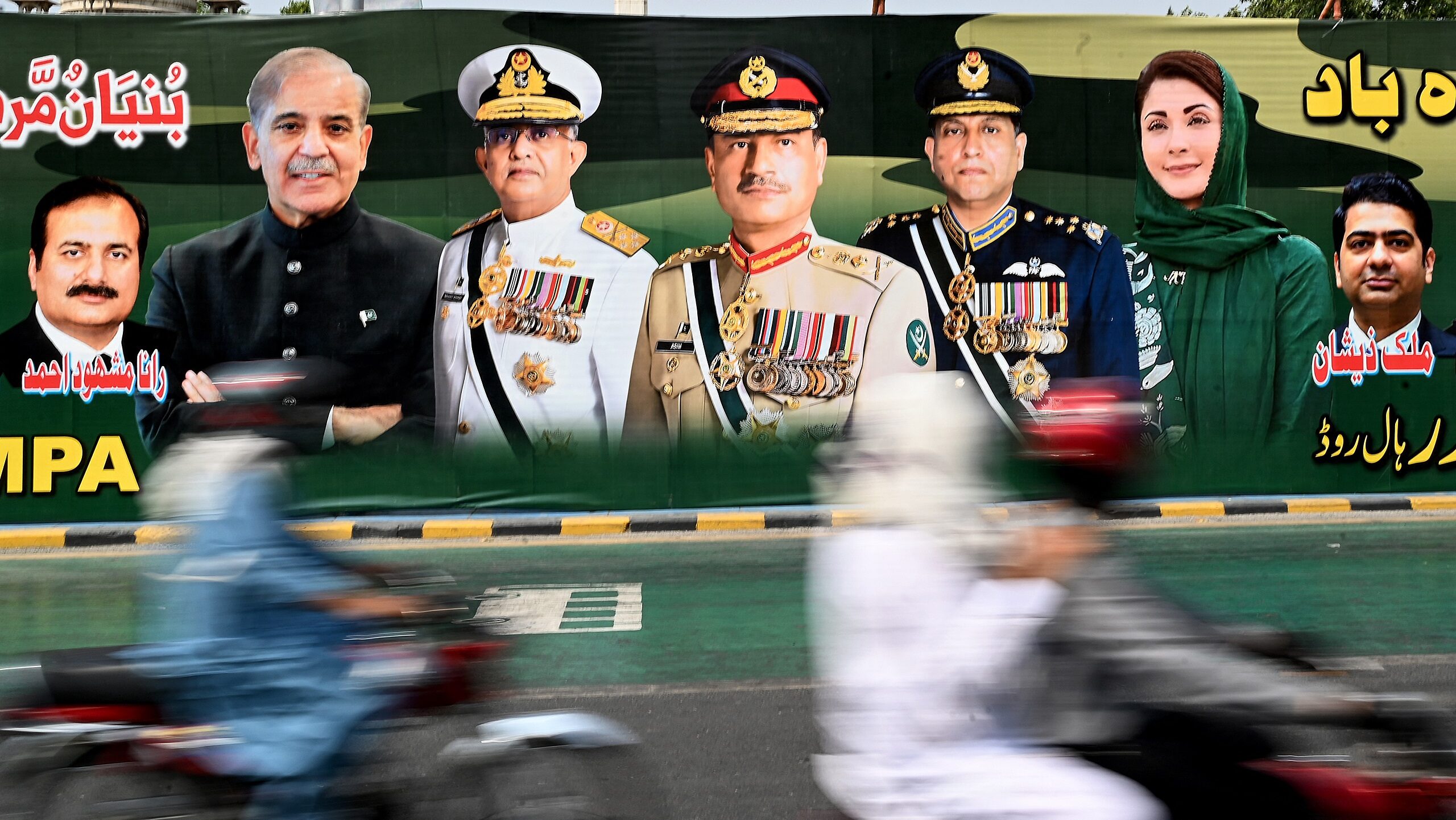
Pakistan’s Chief of Defense Forces, Field Marshal Asim Munir, paid an emergency visit to Riyadh, where he held meetings with the Saudi defense minister, Prince Khalid bin Salman.
According to the media wing of the Pakistan Army, Inter-Services Public Relations (ISPR), “Both leaders discussed the seriousness of the security situation arising from Iranian drone and missile attacks on Saudi Arabia and deliberated on joint measures to counter them within the framework of their strategic mutual defense agreement.”
ISPR further stated, “It was emphasized that unprovoked aggression undermines efforts for regional security and stability and cancels options for peaceful settlement of disputes.”
According to ISPR, both sides also expressed hope that Iran would exercise prudence to avoid miscalculations and be amenable to a peaceful settlement of the crisis.
Bin Salman, on Saturday, wrote on his X: “We discussed Iranian attacks on the Kingdom and the measures needed to halt them within the framework of our Joint Strategic Defense Agreement. We stressed that such actions undermine regional security and stability and expressed hope that the Iranian side will exercise wisdom and avoid miscalculation.”
Give the gift of hope
We practice what we preach:
accurate, fearless journalism. But we can't do it alone.
- On the ground in Gaza, Syria, Israel, Egypt, Pakistan, and more
- Our program trained more than 100 journalists
- Calling out fake news and reporting real facts
- On the ground in Gaza, Syria, Israel, Egypt, Pakistan, and more
- Our program trained more than 100 journalists
- Calling out fake news and reporting real facts
Join us.
Support The Media Line. Save democracy.

Last year, Pakistan and Saudi Arabia signed a strategic mutual defense agreement to coordinate defense and security. Under the terms, any external aggression against one country would be considered aggression against both.
A senior Saudi diplomat, Dr. Ali Awadh Asseri, has claimed that “Pakistan would be prepared to deploy up to 100,000 troops if requested by Crown Prince Mohammed bin Salman.”
Asseri, who served as Saudi Arabia’s ambassador to Pakistan from 2001 to 2009, made the remarks during a podcast that has circulated widely on social media.
He stated, “This is my personal experience. If Saudi Arabia ever needs a nuclear or non-nuclear air force, Pakistan will not desert us.”
With a history of extensive engagement in various conflict and security settings, Pakistan maintains one of the globe’s most battle-hardened and operationally experienced armed forces.
Its nuclear capability adds a powerful strategic dimension to its partnerships, although the defense pact’s text does not explicitly mention any nuclear component.
In the current conflict in the Middle East, Pakistan brings multiple challenges.
On one hand, there is the neighboring Muslim country, Iran. On the other hand, Pakistan has a defense agreement with Saudi Arabia and maintains friendly ties with Gulf countries, including Qatar.
These countries have supported Pakistan during its dire economic situation.
While Pakistan strongly condemned Israel’s attacks on Iran, Prime Minister Shehbaz Sharif, following Iran’s attacks on US bases in Saudi Arabia, assured Riyadh that Pakistan would be a loyal ally.
