
Called ‘Lone Soldiers’ but Far From Alone: Thousands Fill Tel Aviv for Postwar Errands Day
After two years of conflict and recovery, thousands of lone soldiers from 70 countries describe resilience, belonging, and the quiet networks that sustain them far from home
Speaking about how his enlistment affected his family during the Israel Defense Forces (IDF) annual Errands Day in Tel Aviv, Soldier A, a 19-year-old from Florida serving in Nahal’s 931st Battalion, said his mother struggled most with worry and uncertainty about his choice. “My mom is stressed out. … I’m the first combat soldier in my family.” He added that both parents ultimately supported him because they knew this was what he wanted to do, and told The Media Line that his decision “felt immediate” after the October 7 attacks. “I didn’t feel it was right to stay in the US where it’s nice and safe,” he said, explaining that he felt compelled to join Israelis “working so hard to keep everybody safe.”
As he and thousands of others made their way through the cavernous halls of the event, the scale of the gathering became clear. For the first time since the Iron Swords War, lone soldiers—immigrants or volunteers serving in the IDF without immediate family in Israel—streamed into Tel Aviv for Errands Day (Yom Siddurim), filling the venue with a mix of uniforms, accents, and handwritten lists of bureaucratic tasks. Many had enlisted during wartime and were experiencing the event for the first time. What they found was more than a logistical operation. It was one of the few spaces in which young immigrants serving without immediate family could address practical necessities, reconnect with peers, and speak openly about life in Israel after two difficult years.
Amid Israel’s prolonged war footing and an intensifying national debate over military service, the role and treatment of lone soldiers have drawn increasing public scrutiny.
You won’t find a moment where no one is there to help
Despite the distance from home, Soldier A described a strong sense of integration into Israeli society. “People help out even without knowing I’m a lone soldier,” he said. “I go somewhere in uniform, and people just help. I definitely feel appreciated.” The greatest misconception abroad, he added, is the idea of loneliness. Friends regularly invite him for Shabbat meals, his commanders step in whenever he needs something, and people around him understand how hard it is to leave home and start over in a new country. For that reason, he said, “You won’t find a moment where no one is there to help.”
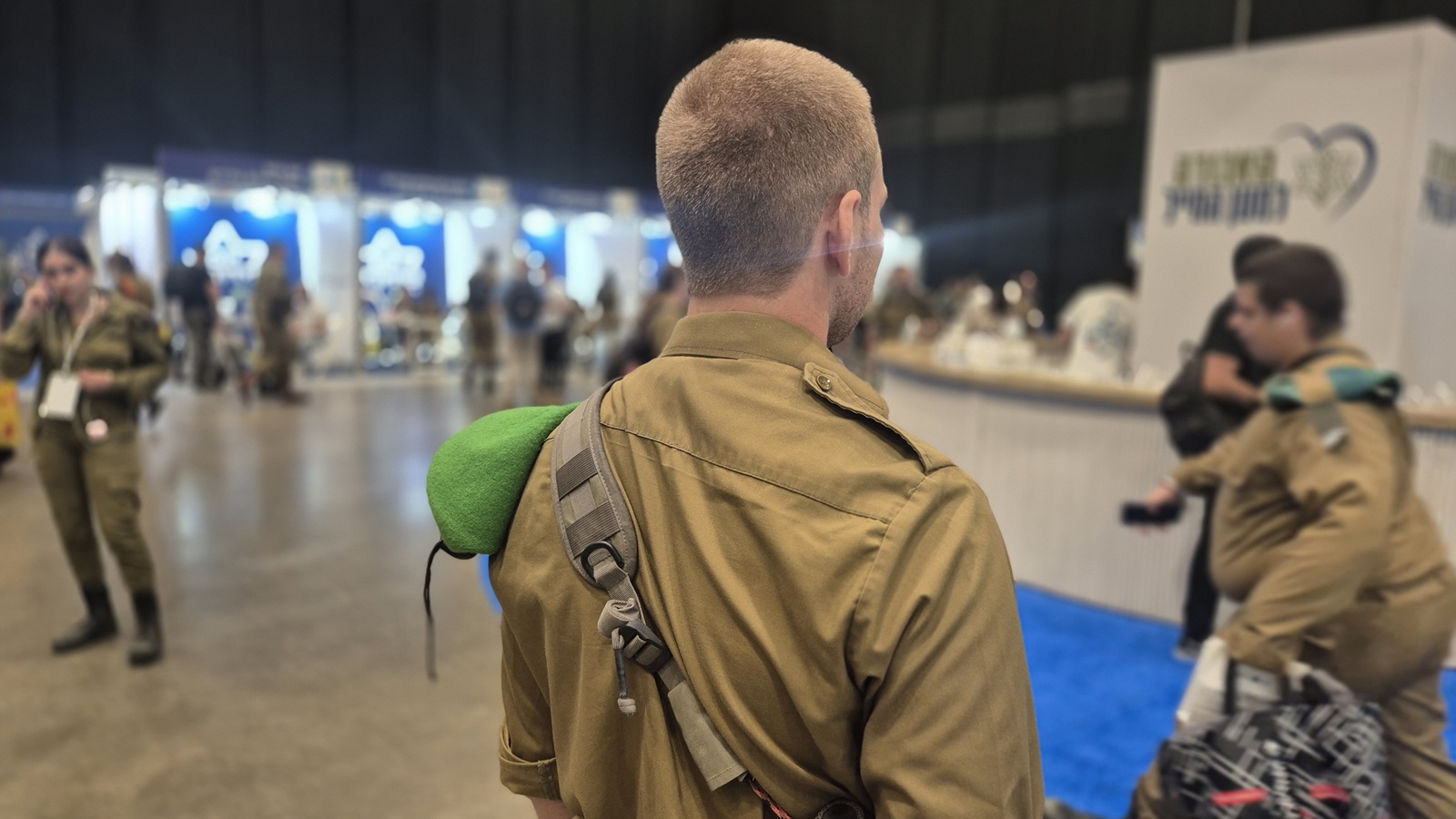
Soldier A, IDF Errands Day for lone soldiers, Nov. 13, 2025, in Tel Aviv, Israel. (Gabriel Colodro/The Media Line)
The country needed bodies. They needed fighters.
Not far away, Soldier Z, who grew up in Atlanta and immigrated to Israel in 2024, told The Media Line that the decision to enlist came directly from the war. “If the war didn’t happen, I probably wouldn’t have made aliyah,” he said, using the Hebrew term for immigrating to Israel. He explained that his health, background, and familiarity with military life made him feel he had an obligation to step forward and serve at a time of crisis, saying, “The country needed bodies. They needed fighters.”
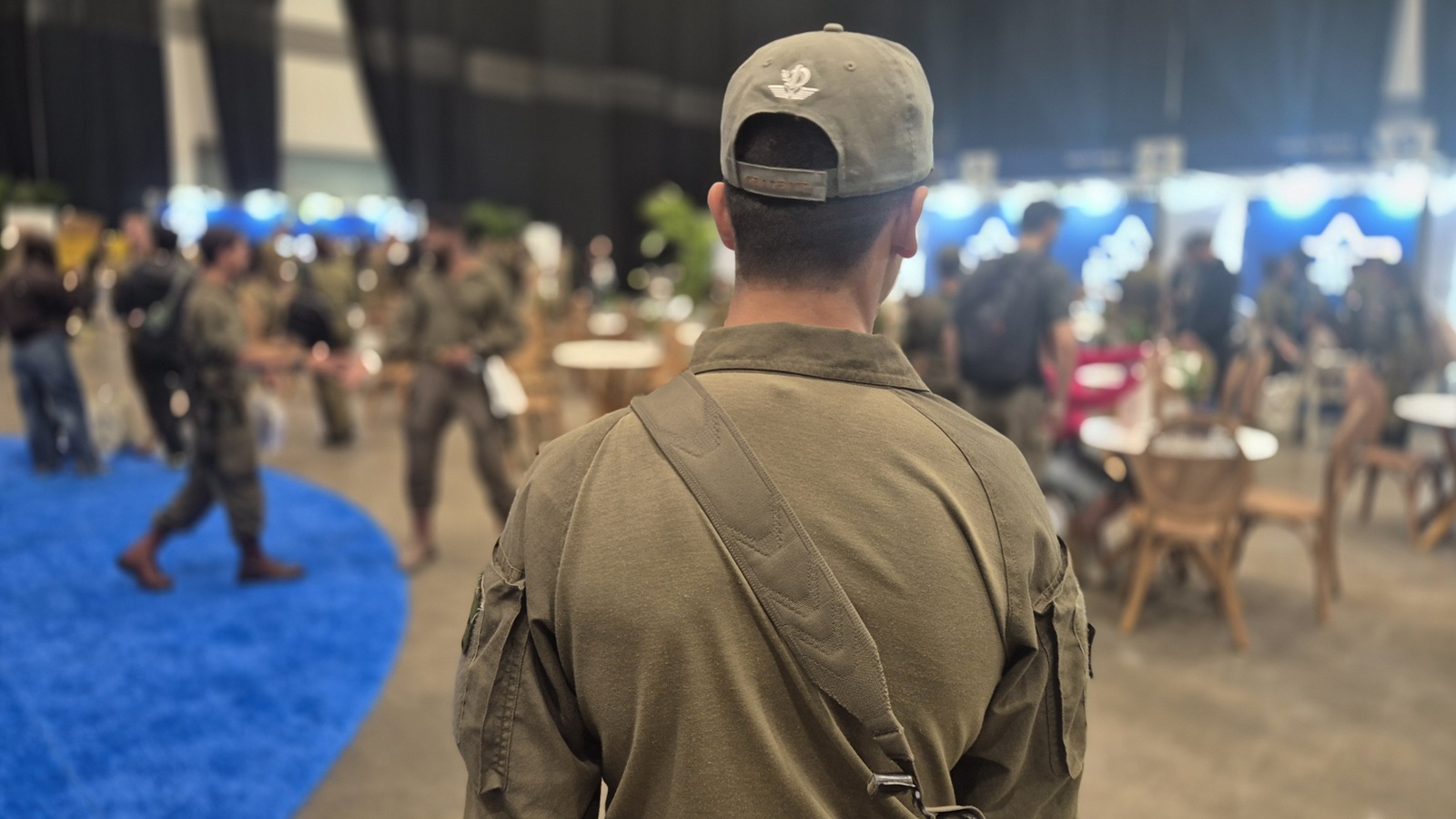
Soldier Z, IDF Errands Day for lone soldiers, Nov. 13, 2025, in Tel Aviv, Israel. (Gabriel Colodro/The Media Line)
His parents initially struggled with his determination to serve in a combat unit and pushed him to consider safer options. “The first thing they said was: can you join intelligence? Does it have to be combat?” he recalled with a smile. “They don’t understand why I wanted to be a fighter so badly, but they’re very supportive. They’re proud.”
Give the gift of hope
We practice what we preach:
accurate, fearless journalism. But we can't do it alone.
- On the ground in Gaza, Syria, Israel, Egypt, Pakistan, and more
- Our program trained more than 100 journalists
- Calling out fake news and reporting real facts
- On the ground in Gaza, Syria, Israel, Egypt, Pakistan, and more
- Our program trained more than 100 journalists
- Calling out fake news and reporting real facts
Join us.
Support The Media Line. Save democracy.


For him, the strongest anchor throughout this period has been Israeli society itself. “Technically, you’re a lone soldier, my mom and dad aren’t here, but is anyone really alone in Israel?” he said. “The community behind your back is strong. Parents of other soldiers will drive me home, buy me lunch. They don’t even know me. They just want to help.”
Organizers said the scale of that support was unmistakable across the crowded halls. Errands Day was organized by the Friends of the Israel Defense Forces (FIDF) and the Nefesh B’Nefesh Lone Soldiers Program, in partnership with the IDF Manpower Directorate and the Association for Israel’s Soldiers. It brought together more than 4,000 participants from 70 countries. Soldiers moved between dozens of stations staffed by the Interior and Transport ministries, the Population and Immigration Authority, the National Insurance Institute, foreign embassies, and volunteers offering uniform repair, legal guidance, and mental health referrals.
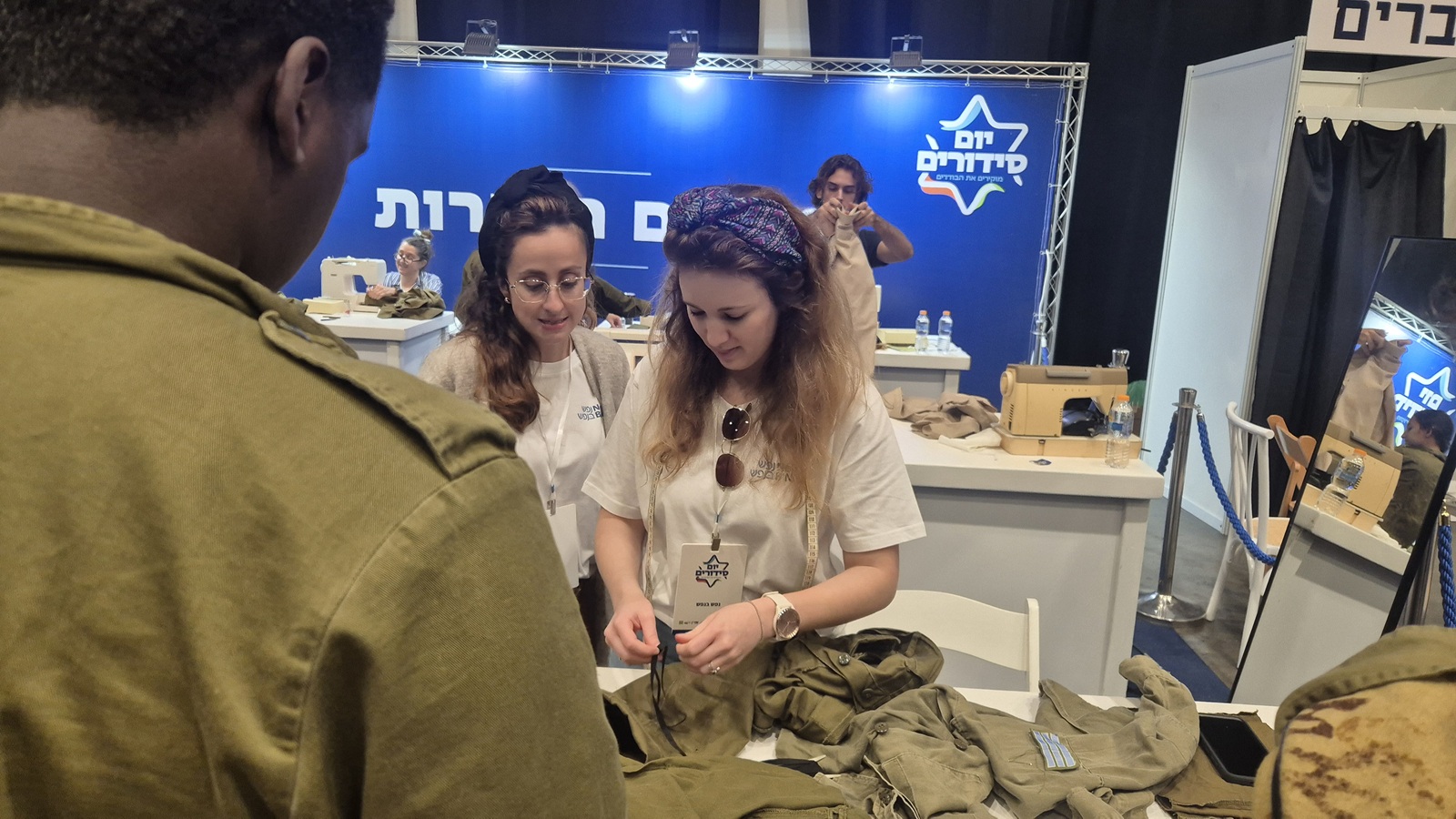
A uniform repair station, IDF Errands Day for lone soldiers, Nov. 13, 2025, in Tel Aviv, Israel. (Gabriel Colodro/The Media Line)
From the military’s perspective, Errands Day is part celebration and part necessity in a system that relies heavily on young immigrants. Roni M., speaking on behalf of the IDF, told The Media Line that the army’s support structure includes dedicated personnel embedded in every unit. She said the army and its partner organizations offer ongoing bureaucratic support days every few months so that lone soldiers can take care of paperwork and entitlements, stressing that “every lone soldier gets additional guidance. … The Lone Soldier Center makes sure that they get all of their rights, all of their benefits,” she said.
At the Ministry of Transport, staff operated one of the busiest areas, offering on-site license conversions for hundreds of foreign-born recruits. Minister Miri Regev, walking through the lines of soldiers awaiting driving exams and photo stations, told The Media Line the day was “full of love,” adding: “We see soldiers from Argentina, France, the US, Ethiopia, South Africa, young people who left their families to enlist during extremely difficult years. Today, we raise their spirits and show them we appreciate them.”

Minister of Transportation Miri Regev visits a haircutting station on IDF Errands Day for lone soldiers, Nov. 13, 2025, in Tel Aviv, Israel. (Gabriel Colodro/The Media Line)
Some officials on hand, though, drew attention to the gaps that remain. Former Immigration and Absorption Minister Pnina Tameno focused on needs she believes Israel has yet to address fully. “We need to know how to envelope them, to be here for them, to salute them, not just in words,” she told The Media Line. She stressed two urgent issues: support for bereaved lone-soldier families living abroad and better care systems for wounded lone soldiers returning to empty apartments. “Some come home after injuries and there’s no mother or father to cry with them,” she said. “We need platforms that are more protective, more appropriate for their needs.”
Opposition lawmaker Moshe Tur-Paz, himself a former lone soldier, offered a broader view of the system’s strengths and strains. Speaking with The Media Line, he said that the enlistment surge during wartime should prompt deeper consideration of what happens after service. He warned that the structured safety net available during service—housing, stipends, and institutional backing—falls away once a soldier leaves the army, noting that “many finish the army and suddenly they are alone.”
He said that Israel’s communal culture should be translated into more concrete policies and programs for lone soldiers, arguing that “Israel is one of the most community-oriented societies in the world,” and that existing awareness has not yet been matched by strong enough support systems. He called for expanded assistance in housing, language-appropriate mental health services, and community adoption models that pair lone soldiers with families or kibbutzim.
The founders of Nefesh B’Nefesh, Rabbi Yehoshua Fass and Tony Gelbart, reflected on how the organization’s responsibilities have expanded since it began working with lone soldiers. Gelbart told The Media Line that the program now serves lone soldiers from 72 countries. “You walk around this room and hear all the different accents, all the different languages,” he said. “It’s emotional, it’s intense, all united for the same purpose of strengthening the Jewish people in their homeland.” Fass highlighted their recent efforts to recruit medical professionals from abroad, citing nationwide shortages that predate the war. “It’s been incredibly inspiring and extremely successful,” he said, noting that the model for Errands Day has informed other national-service programs.
Throughout the afternoon, the atmosphere remained practical but warm as soldiers moved from station to station. Groups of soldiers tried new uniforms, tested new boots, received haircuts, or bumped into friends from training. Near the seamstress station, volunteers repaired torn pockets and adjusted shoulders on jackets worn through months of reserve duty. At the embassy rows, consular staff assisted dual citizens with passport renewals and notarized documents needed for family matters abroad.
The emotional weight of the day surfaced most clearly in the soldiers’ reflections once their errands were finished. Soldier A said that what he needed most at times was simply time. “There’s a lot of stuff I need to get done at home, bank things, documents, and sometimes it’s not possible. Especially in combat, it’s hard to get the day off.” He said the Errands Day model “could be improved,” but called the effort significant.
In the end, you’ll know you made a difference
Reflecting on his service, Soldier Z said that the army forces you to accept that you are one small part of something much larger and to endure trials that can be extremely tough, but that “in the end, you’ll know you made a difference.”
As evening approached, soldiers lingered after collecting their documents and gear, some seated on the floor in circles, others leaning over tables with volunteers who refused to pack up early. There was no ceremony or closing announcement, just a slow and steady dispersal into the Tel Aviv dusk.

Nefesh B’Nefesh volunteers greet lone soldiers on IDF Errands Day, Nov. 13, 2025, in Tel Aviv, Israel. (Bar Bino/Nefesh B’Nefesh)
For many, the day may not erase the hardships of serving far from home. But it did something quieter: it made the networks surrounding them visible. In the words of one soldier who declined to be interviewed formally, “You see everyone here, the army, the ministries, families, volunteers, and you know you’re not doing this alone.”
