
Opposition Walkout Marks Modi’s Knesset Visit as Protocol Dispute Erupts in Plenum
Lawmakers leave during Speaker Amir Ohana’s remarks over absence of Supreme Court president, returning later to hear Indian Prime Minister Narendra Modi address the Knesset
The Knesset session held during Indian Prime Minister Narendra Modi’s visit opened with a visible rupture in the chamber, as opposition lawmakers stood and left the plenum while Knesset Speaker Amir Ohana was speaking. They later returned for Modi’s address.
That walkout was coordinated in advance and framed as a protest over parliamentary conduct—not the visiting leader or Israel’s ties with India.
At the center of the clash was the speaker’s decision not to invite Justice Yitzhak Amit, the president of the Supreme Court, to the ceremonial session. Opposition parties argued that at comparable state occasions, the head of the judiciary has been present and that excluding the position departs from established practice.
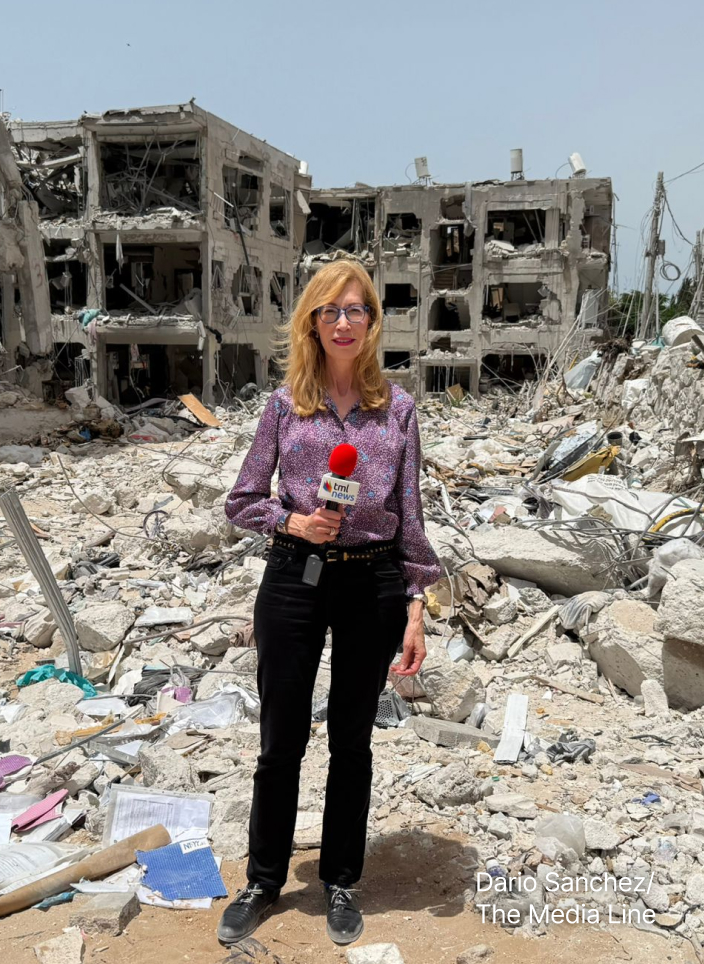
Yesh Atid lawmaker Yasmin Fridman told The Media Line that the decision to boycott was collective. “Since protocol requires inviting the president of the Supreme Court, and this Knesset refuses to observe the appropriate rules, we, Yesh Atid and the entire opposition, decided to boycott the speech of the speaker of the Knesset and the speech of the prime minister,” she said. “We will return to hear the speech of the prime minister of India.”
Give the gift of hope
We practice what we preach:
accurate, fearless journalism. But we can't do it alone.
- On the ground in Gaza, Syria, Israel, Egypt, Pakistan, and more
- Our program trained more than 100 journalists
- Calling out fake news and reporting real facts
- On the ground in Gaza, Syria, Israel, Egypt, Pakistan, and more
- Our program trained more than 100 journalists
- Calling out fake news and reporting real facts
Join us.
Support The Media Line. Save democracy.

Fridman described the current Knesset in blunt terms. “It is time that the rules of the Knesset be respected. This Knesset has completely gone off the rails. It is trampling members of Knesset. It is trampling all of us. We need to return and stand our ground,” she said.
Opposition Leader Yair Lapid drew a distinction between protest and diplomacy. “We are not boycotting the plenum. We are being boycotted,” Lapid said at his faction meeting. “India is one of the most important countries in the world. It is vital that the Knesset of Israel be there. We want to be there, and we need to be there.”
He said he had warned the prime minister in advance. “What Ohana knows is that by not inviting the president of the Supreme Court, he does not allow us to be there,” he said. “This turns it into a Knesset of half the country.” He urged that the situation be corrected so the event would reflect the entire legislature.
National Unity leader Benny Gantz signaled conditional participation. “We will come,” he said when asked about the session. “Let’s see whether he invites him or not.” His comments suggested the opposition’s stance was tied directly to restoring what it considers proper protocol.
Yisrael Beitenu chairman Avigdor Liberman aimed his criticism at the speaker. “The one who constantly plays with boycotts is the speaker of the Knesset,” Liberman said, arguing that the role is meant to represent all lawmakers in state matters. He added that he hoped the decision would be reconsidered.
In Hadash-Ta’al, Member of Knesset Ahmad Tibi confirmed the matter had been discussed among opposition leaders. “You will know very close to the event how the opposition will act,” he said, dismissing what he described as efforts to create a staged show of attendance as “ridiculous.”
Opposition figures stressed that Israel’s relationship with India remains beyond dispute. By leaving during the speaker’s remarks and returning for Modi’s address, they sought to make clear their protest was directed inward—at the management of the Knesset session itself.
