Russia Warns That Afghanistan Hosts up to 23,000 Terrorist Fighters, Citing Regional Spillover Risk
Regional security officials say cross-border threats could intensify for Central Asia and Pakistan as armed groups expand their footprint
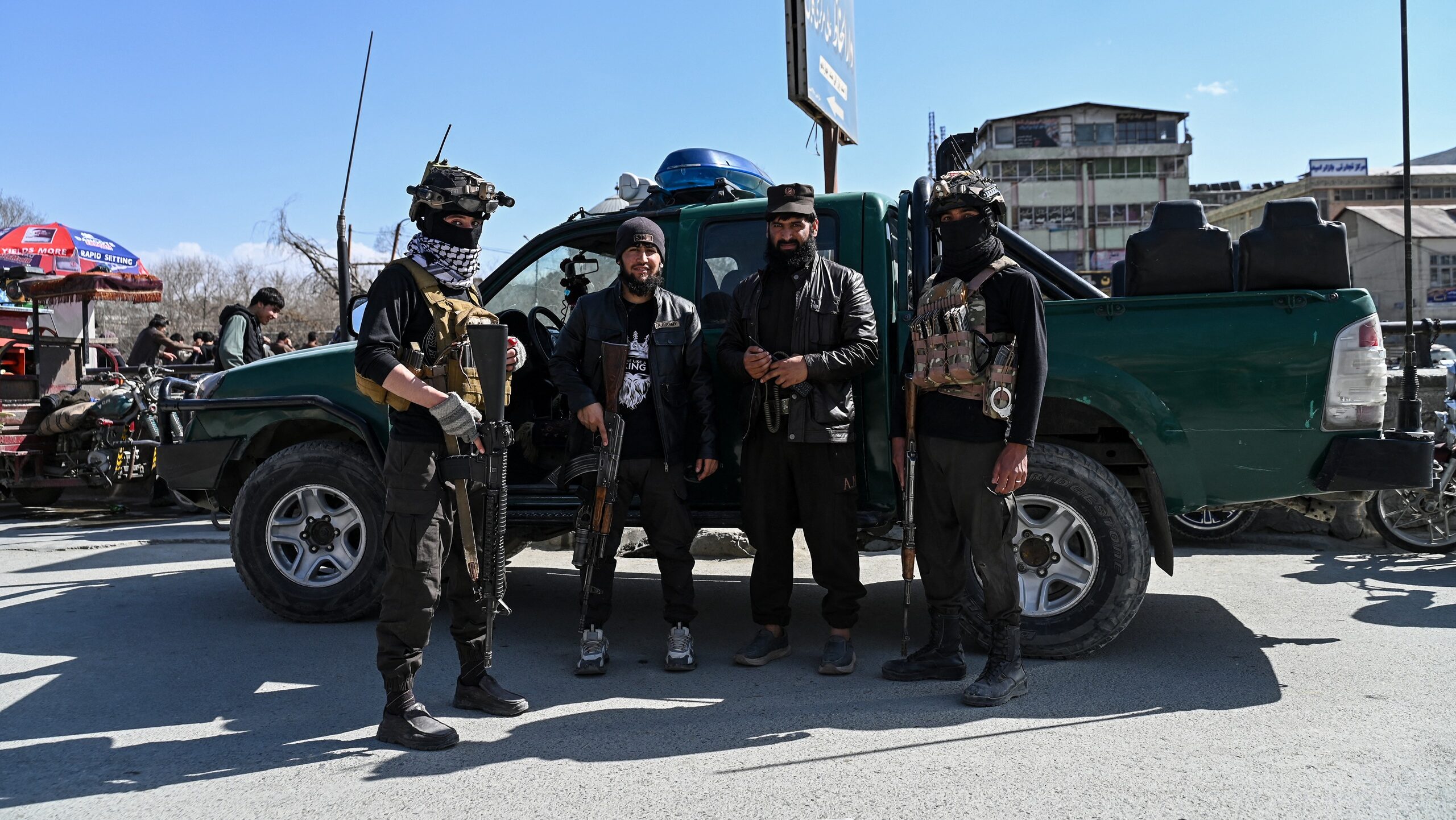
[ISLAMABAD] The Russian Ministry of Foreign Affairs, in its latest report on Afghanistan’s military and political situation, said the country remains complex and unstable, with terrorist networks representing the main source of unrest, as reported by media outlets including the South Asia Terrorism Portal and Russian news agency, Interfax.
The report estimates that between 20,000 and 23,000 fighters belonging to international terrorist groups are active in Afghanistan, more than half of whom are foreign nationals, underscoring the continuing threat to regional security.
As cited by these media outlets, the ministry stated that these groups include Islamic State-Khorasan Province (IS-KP) with around 3,000 fighters; Tehrik-e-Taliban Pakistan (TTP) with 5,000 to 7,000; al-Qaida with 400 to 1,500; the East Turkestan Islamic Movement, also known as the Turkestan Islamic Party, with 300 to 1,200; the Islamic Movement of Uzbekistan, a separate Central Asian jihadist group, with 150 to 500; and Jamaat Ansarullah with 150 to 250 members.
The ministry noted that the TTP continues to operate mainly in Afghanistan’s southeast and eastern regions, from where it launches attacks into Pakistan, further straining relations between the neighboring countries.
The report also underscores the presence of IS-KP training facilities and sleeper cells across several areas. While the group is not seen as an immediate challenge to the Taliban authorities, its operations are said to affect perceptions of the Taliban’s ability to ensure national security.
On the narcotics front, Afghanistan remains a major producer, despite Taliban efforts to curb poppy cultivation. While opium cultivation reportedly dropped by around 20% in 2025, methamphetamine production has surged.
It is noteworthy that Russia is the sole nation to have officially acknowledged the Taliban’s rule.
Before the Russian Foreign Ministry’s alarming report, Andrey Serdyukov, chief of the Joint Staff of the Collective Security Treaty Organization (CSTO), also said on Feb. 13, 2026, that numerous international extremist and terrorist groups remain active in Afghanistan.
He warned that their activities pose a broader threat to regional stability, particularly for Central Asian states bordering Afghanistan.
His remarks reflected growing concern within the Russia-led security bloc that networks of armed groups based in Afghanistan could destabilize neighboring countries and fuel cross-border insecurity.
Addressing a press conference in Moscow, Andrey Serdyukov said the continued presence and activities of extremist and terrorist groups in Afghanistan pose a direct threat to regional security and risk spreading instability to neighboring countries.
Meanwhile, Sergei Shoigu, secretary of Russia’s Security Council, identified the Tajikistan–Afghanistan border as a major security flashpoint for member states of the CSTO, reflecting fears that cross-border activity by armed groups could destabilize the wider region.
The CSTO, based in Moscow, is a Russia-led military alliance comprising Russia, Belarus, Armenia, Kazakhstan, Kyrgyzstan, and Tajikistan, focused on addressing regional security threats in Central Asia, including potential spill-over from Afghanistan.
The Taliban have rejected the Russian Foreign Ministry claims of 20,000 to 23,000 members of international armed groups active in Afghanistan.
Give the gift of hope
We practice what we preach:
accurate, fearless journalism. But we can't do it alone.
- On the ground in Gaza, Syria, Israel, Egypt, Pakistan, and more
- Our program trained more than 100 journalists
- Calling out fake news and reporting real facts
- On the ground in Gaza, Syria, Israel, Egypt, Pakistan, and more
- Our program trained more than 100 journalists
- Calling out fake news and reporting real facts
Join us.
Support The Media Line. Save democracy.
Taliban spokesperson Zabihullah Mujahid dismissed the numbers and their sources as inaccurate, asserting that no such groups are present in the country.
Mujahid, reiterating the regime’s longstanding position, said that Afghanistan is entirely under unified control and foreign groups can’t operate in the country.
Since the Taliban returned to power in 2021, Islamabad has maintained that terrorist incidents in Pakistan have increased significantly, largely due to the presence of the banned TTP leadership on Afghan soil.
Pakistan says it has repeatedly provided the Afghan Taliban leadership with concrete evidence that Afghan territory is being used to carry out attacks inside Pakistan.
However, according to Islamabad, Kabul has not treated these concerns seriously. Pakistani officials argue that this stance has contributed to the escalating tensions that have pushed the two countries toward a state of near confrontation.
Recent reports by credible Russian institutions appear to support Islamabad’s position.
Some analysts believe that Moscow may now reconsider its policy toward the Afghan regime.
In the past, UN bodies such as the Security Council and its monitoring mechanisms, and US institutions such as the State Department, US Central Command, and United States Institute of Peace, had also repeatedly warned about this emerging threat, but Russia did not give much weight to those assessments. This time, however, following reports issued by its own institutions, Moscow may seriously review its approach.
Dr. Andrew Korybko, a Moscow-based scholar and geopolitical analyst, told The Media Line that “Russia became the first country to officially recognize the Taliban’s restored rule over Afghanistan in order to develop more meaningful mineral, connectivity, and security cooperation.”
Russia became the first country to officially recognize the Taliban’s restored rule over Afghanistan in order to develop more meaningful mineral, connectivity, and security cooperation
He said “minerals” refers to Afghanistan’s rare earth resources, while “connectivity” points to Russian plans to position Afghanistan as a transit state linking Russia with South Asia via Central Asia and Afghanistan.
Understandably, none of these ambitious plans could come to fruition unless the security situation improves, namely through the elimination of foreign terrorists and the de-radicalization and reintegration of domestic ones—if they’re not eliminated in battle first
“Understandably, none of these ambitious plans could come to fruition unless the security situation improves, namely through the elimination of foreign terrorists and the de-radicalization and reintegration of domestic ones—if they’re not eliminated in battle first,” Korybko said.
He argued that the “Russian Foreign Ministry’s latest report was not meant to discredit the Taliban. Its purpose was to highlight the challenges the Taliban faces in controlling such groups.”
At the same time, Korybko noted that reports suggested the Taliban might support the TTP and could have links to the Balochistan Liberation Army, adding that both are terrorist groups that have carried out attacks against neighboring Pakistan.
He emphasized that “this report does indeed lend credence to Pakistan’s claims even if that wasn’t the intent, and the recent Pakistan-Taliban clashes come just before Prime Minister Sharif’s visit to Russia, meaning his talks with Putin will likely touch on these security issues.”
There is a clear shift in relations between Russia and the Afghan Taliban, of which the first indications began to emerge soon after the Taliban was recognized by Moscow. It started with soft public statements, coupled with harsher behind-the-scenes conversations with the Taliban leadership.
Syed Khalid Muhammad, executive director of CommandEleven, a Pakistan-based intelligence, consulting, and research organization that provides geopolitical and threat analysis, and risk assessments, told The Media Line that “There is a clear shift in relations between Russia and the Afghan Taliban, of which the first indications began to emerge soon after the Taliban was recognized by Moscow. It started with soft public statements, coupled with harsher behind-the-scenes conversations with the Taliban leadership.”
He asserted that “not only Russia but also China, another key ally of Kabul, is reconsidering its approach amid the worsening security situation,” and noted that ISIS was linked to the Moscow concert hall attack and the assault on a Chinese restaurant in Kabul, while Beijing also warned Kabul following attacks on Chinese workers at mining sites.
According to Muhammad, these incidents, along with a UN Security Council monitoring report stating that the Taliban were sheltering more than 21 terrorist groups, proved decisive and pushed both countries to rethink their overall strategies.
He further maintained that the Islamic State group branches maintain affiliations and training camps across Afghanistan, from the north to the southeast.
Muhammad added that despite past endorsements of the Taliban’s counter-terrorism efforts, Russia now questions their effectiveness against IS-KP.
Mohsin Durrani, an Islamabad-based expert on regional security affairs, told The Media Line that “The recent assessment by the Russian Foreign Ministry highlights persistent threats despite Russia’s recognition of the Taliban regime in July 2025.”
He said that Moscow’s findings aligned with Pakistan’s longstanding claims that Afghan territory served as a haven for armed groups, adding that recognizing this shared threat could encourage regional actors to prioritize coordinated security efforts.
Durrani noted that the assessment underscores continuing regional security challenges and reflects a more pragmatic, less idealistic relationship between Moscow and Kabul, one shaped by engagement but tempered by concerns over security shortcomings.
He further argued that for Pakistan, the report offers external validation of its calls for concrete action against cross-border terrorism, which could help build multilateral pressure to dismantle safe havens and influence broader regional stability strategies.
According to Durrani, a genuine recalibration of Russia’s policy toward conditional support may foster stronger regional cooperation.
He maintained that prioritizing counterterrorism over unconditional accommodation would help build trust, reduce spill-over risks, and support Pakistan’s efforts to achieve lasting peace through verified enforcement measures.
