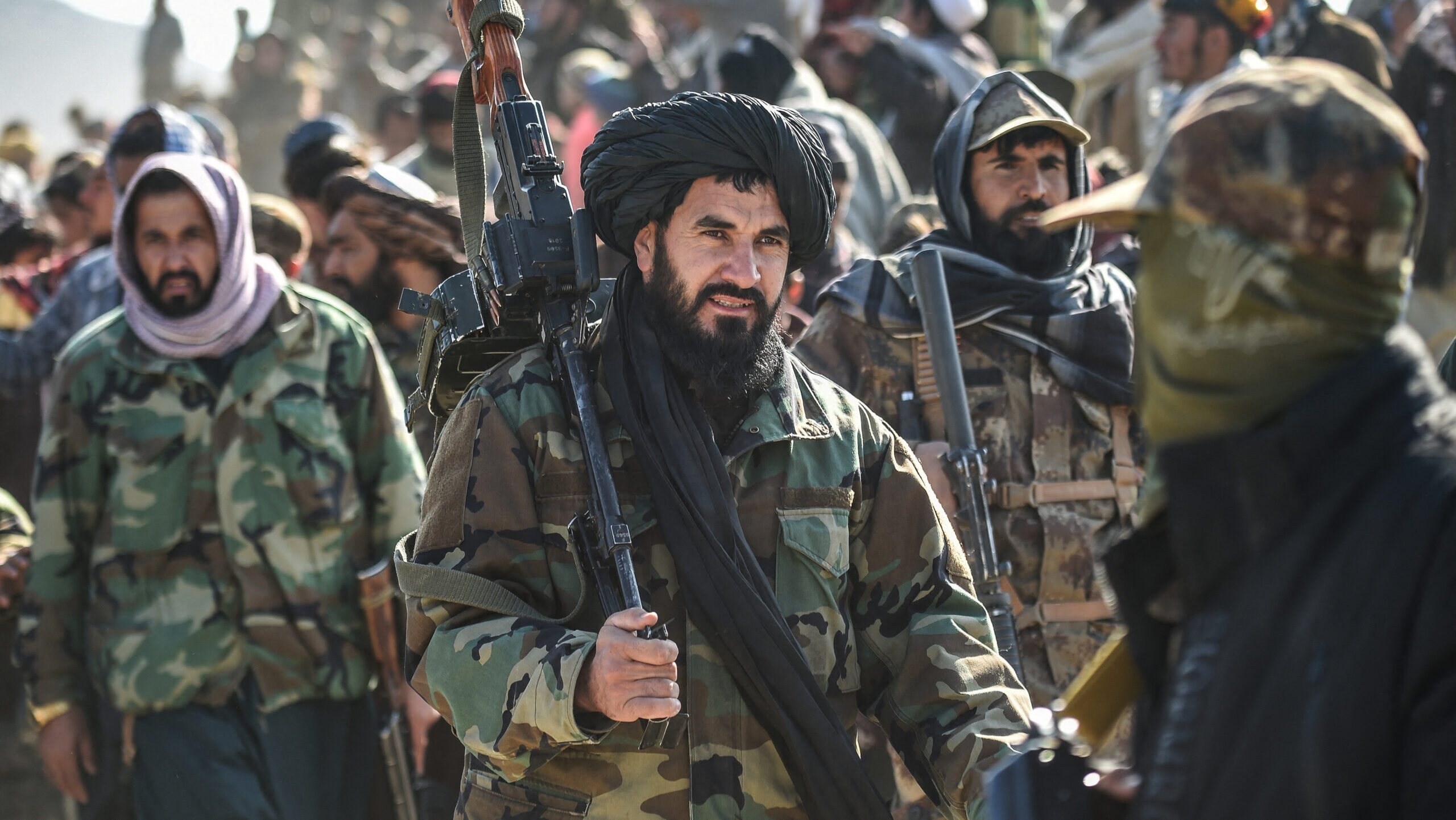
Afghanistan Ranks Among World’s Least Peaceful Countries in 2025 Global Peace Index
According to the Institute for Economics and Peace’s (IEP) latest report, Afghanistan remains “one of the most insecure and least peaceful countries in the world,” ranking 158th out of 163 nations in the 2025 Global Peace Index.
The report highlights that despite reductions in large-scale conflict since the Taliban takeover in 2021, “violence and insecurity have not been fully eliminated. Weak governance, limited state capacity, and widespread access to arms continue to undermine societal safety and challenge the country’s stability.”
Only a small number of countries—including Russia, Ukraine, Sudan, the Democratic Republic of Congo, and Yemen—rank below Afghanistan. Each is grappling with active conflict, humanitarian emergencies, and deep political instability that disrupts daily life and severely constrains investment and development.
The Institute for Economics and Peace is an independent global think tank based in Sydney, Australia, that develops metrics to analyze peace, conflict, and security worldwide. It produces the Global Peace Index and the Global Terrorism Index to assess the economic and social impacts of violence.
While Afghanistan has dropped out of the top five most terrorism-impacted countries, now ranking ninth in the Global Terrorism Index, the organization cautions that “terrorism remains a serious concern, and security gains are fragile.”
The IEP highlights the persistent threat from extremist groups, particularly Islamic State-Khorasan (IS-K) which “remain capable of launching high-casualty attacks and challenging authority across key regions.”
Give the gift of hope
We practice what we preach:
accurate, fearless journalism. But we can't do it alone.
- On the ground in Gaza, Syria, Israel, Egypt, Pakistan, and more
- Our program trained more than 100 journalists
- Calling out fake news and reporting real facts
- On the ground in Gaza, Syria, Israel, Egypt, Pakistan, and more
- Our program trained more than 100 journalists
- Calling out fake news and reporting real facts
Join us.
Support The Media Line. Save democracy.
Localized insurgencies and sporadic attacks continue to create an atmosphere of uncertainty, affecting civilian life and limiting the ability of the state to provide consistent security.
The report specifically highlights restrictions on civil liberties, stating that “political and societal exclusion directly impede long-term stability,” and notes that marginalized populations, particularly women, face systemic barriers that threaten both social cohesion and future governance reforms.
The IEP notes that these dynamics demonstrate the importance of regional cooperation and sustained international engagement to prevent instability from spilling over into neighboring states.
Despite the challenges, the IEP notes modest improvements, including localized declines in conflict-related deaths and terrorist activity. However, it warns that Afghanistan remains a country emerging from decades of conflict, with fragile security gains, limited peace prospects and instability that continues to shape regional geopolitics in South and Central Asia.
According to the IEP, without such measures, Afghanistan risks continued cycles of violence, limited governance capacity, and persistent regional tension, emphasizing that the stakes for both domestic and neighboring security remain extremely high.
The report concludes with a call for comprehensive efforts to stabilize the country: “Lasting peace will require both internal reforms and sustained regional and international engagement.”
Afghanistan remains among the world’s top four countries of origin for international refugees.
By mid-2024, more than half of all refugees registered with the UN High Commissioner for Refugees originated from Afghanistan, Syria, Ukraine, and Venezuela.
Meanwhile, rising tensions between the Taliban and neighboring countries, including Iran and Pakistan, have triggered large-scale expulsions of Afghan migrants.
