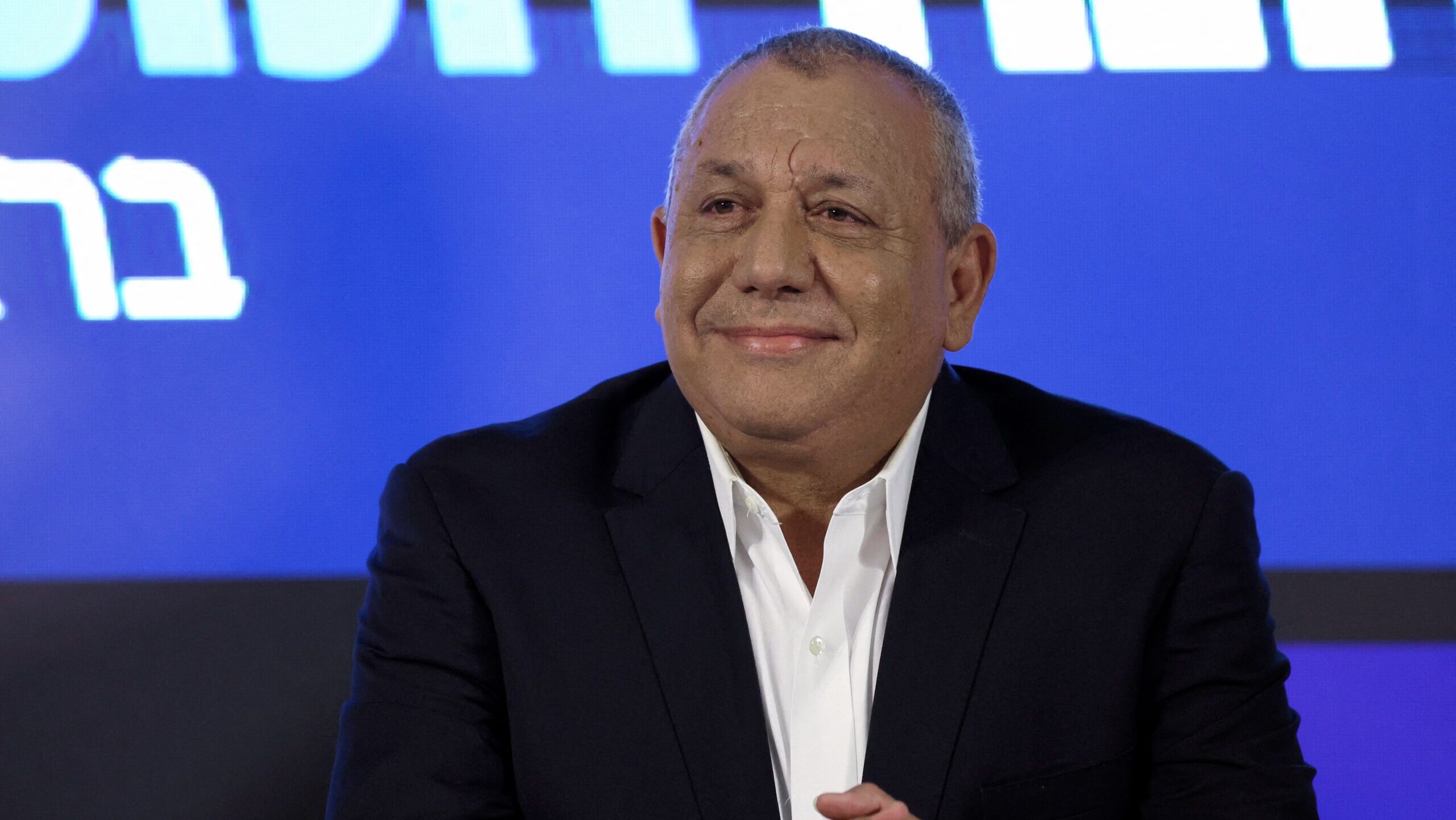
Eisenkot Said To Push Lapid-Bennett Alliance Aimed at Toppling Likud
A proposed opposition mega-slate bringing together Gadi Eisenkot, Yair Lapid and Naftali Bennett could reshape Israel’s electoral map and potentially overtake Likud as the largest party in the next Knesset, according to a report aired Tuesday by Channel 12.
The television report said Eisenkot, the former IDF chief of staff who now leads the Yashar! party, has urged both Lapid and Bennett to abandon parallel recruitment efforts and instead form a single joint list. Eisenkot reportedly believes such an alliance could secure around 40 seats in the 120-member Knesset if elections were held later this year.
Channel 12 said both Bennett and Lapid have separately sought to bring Eisenkot onto their respective slates. Eisenkot, however, is said to favor a broader consolidation that would pool their electoral strength before deciding who would ultimately lead the ticket. According to the report, the leadership question would be deferred until closer to election day and determined by polling data showing which candidate has the strongest chance of defeating Prime Minister Benjamin Netanyahu.
Give the gift of hope
We practice what we preach:
accurate, fearless journalism. But we can't do it alone.
- On the ground in Gaza, Syria, Israel, Egypt, Pakistan, and more
- Our program trained more than 100 journalists
- Calling out fake news and reporting real facts
- On the ground in Gaza, Syria, Israel, Egypt, Pakistan, and more
- Our program trained more than 100 journalists
- Calling out fake news and reporting real facts
Join us.
Support The Media Line. Save democracy.


Recent surveys cited in the report show Bennett’s still-unnamed party polling at roughly 22 to 24 seats, Eisenkot’s party at about 9 to 11 seats, and Lapid’s Yesh Atid at 7 to 9 seats. Analysts cautioned that a merger could produce less than a simple arithmetic gain, as some right-leaning voters drawn to Bennett may be reluctant to back a list that includes Lapid.
The report, which did not cite sources, said Eisenkot also proposed drafting a shared principles document that could be endorsed by additional parties, including Yisrael Beytenu on the secular right and the left-wing Democrats. None of the three politicians has publicly confirmed or denied the report.
The discussion comes as opposition parties continue to struggle to demonstrate a clear path to forming a government. Recent television polling has suggested that neither Netanyahu’s current bloc nor the existing opposition alignment would command a governing majority if elections were held now.
The Channel 12 report coincided with a renewed public challenge from Bennett, who called on Netanyahu to face him in a televised debate at any time and location. Speaking at an event in Karmiel, Bennett said his aim was not personal humiliation but replacing the prime minister through a broad-based electoral victory that avoids sidelining potential allies.
Israel has not held a televised debate between leading prime ministerial contenders since 1996, when Netanyahu defeated Shimon Peres, and such debates have largely disappeared as incumbents and front-runners have come to view them as politically risky.
