IRGC Strikes Positions of Anti-Regime Kurdish Groups
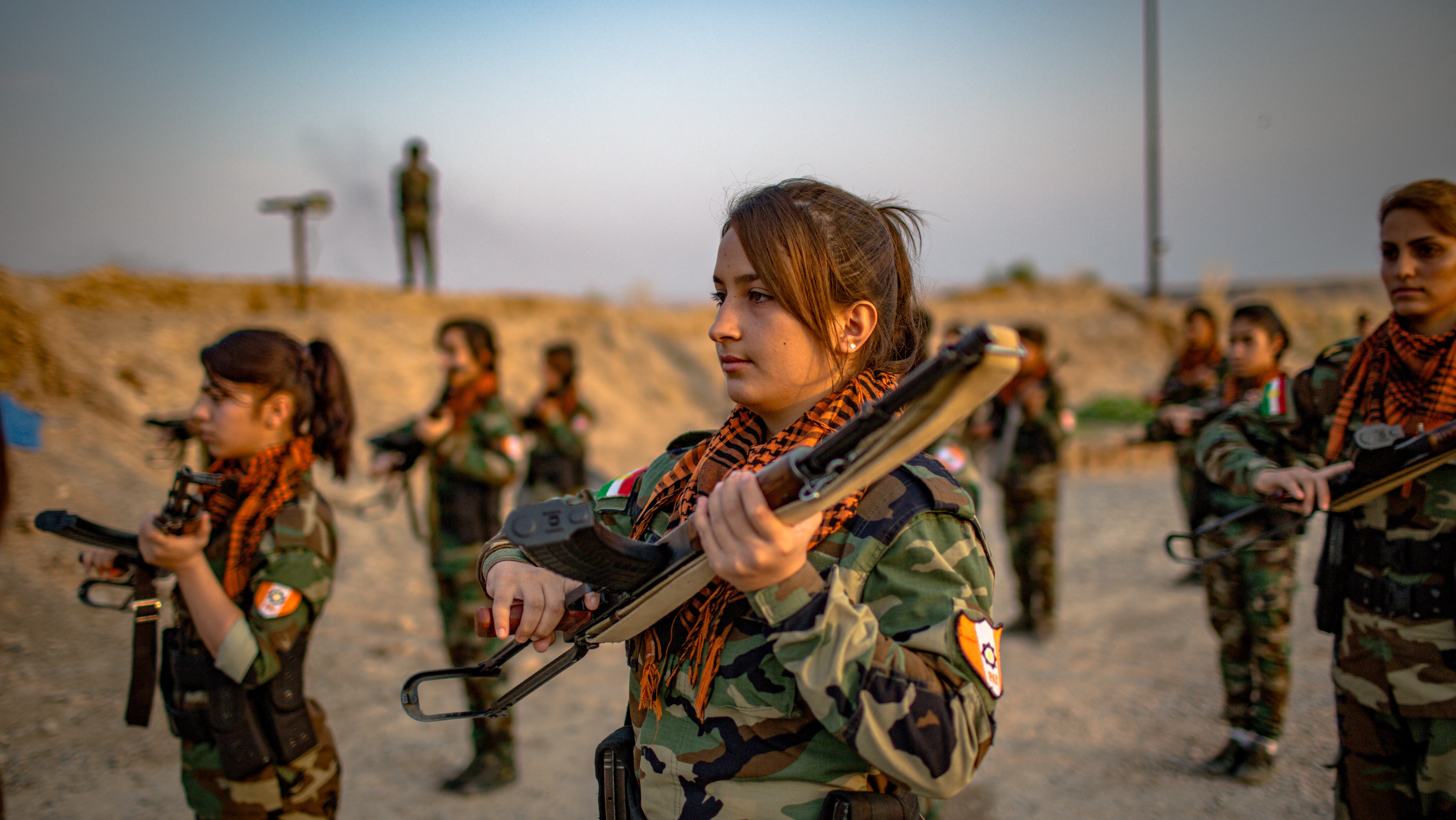
As activity among Kurdish groups opposed to the Islamic Republic has increased, five Kurdish parties have formed a coalition to wage an armed struggle against the regime in Iran. In response, the Islamic Revolutionary Guard Corps (IRGC) launched another round of attacks on opposition Kurdish bases on Tuesday afternoon.
According to a statement by the Kurdistan Democratic Party on Monday, the IRGC also targeted the camp of the Kurdistan Democratic Party of Iran (KDPI) in the town of Koy Sanjaq in Erbil, Iraq, using three drones. Rudaw, a Kurdistan news outlet, reported that the same camp—where the families of KDPI members live—was also hit by missiles.
Tasnim News Agency reported on Tuesday evening that the IRGC had again struck positions of Kurdish opposition parties in the Kurdistan Region, claiming these parties were “planning infiltration and action against the country.”
“Following a targeted intelligence operation,” Tasmin reported that the sites were “powerfully destroyed” by the launch of 30 drones. Hours later, the agency reported that after the IRGC Ground Force entered the fight, it fired dozens of drones at what it described as a “US base in Erbil,” and carried out “several rounds” of strikes that “destroyed the deployment locations” of Kurdish opposition groups in “northern Iraq.”
However, the claim of an attack on a US military base in Erbil has not been confirmed by any other media outlet. This comes as many IRGC command centers, including those linked to the Ground Force, have been targeted over the past four days by US and Israeli strikes.
Give the gift of hope
We practice what we preach:
accurate, fearless journalism. But we can't do it alone.
- On the ground in Gaza, Syria, Israel, Egypt, Pakistan, and more
- Our program trained more than 100 journalists
- Calling out fake news and reporting real facts
- On the ground in Gaza, Syria, Israel, Egypt, Pakistan, and more
- Our program trained more than 100 journalists
- Calling out fake news and reporting real facts
Join us.
Support The Media Line. Save democracy.
It has been reported that US President Donald Trump spoke by phone on Sunday with the leaders of the two main Kurdish factions in Iraq, Masoud Barzani, the leader of the Kurdistan Democratic Party, and Bafel Talabani, the leader of the Patriotic Union of Kurdistan, to discuss the US-Israeli war against the Islamic Republic.
Axios has reported that these calls followed months of lobbying by Israeli Prime Minister Benjamin Netanyahu to encourage greater US engagement and coordination with leaders of the Kurdistan Region. The Wall Street Journal has also reported that the US president is considering support for Kurdish opposition forces against the Islamic Republic.
Many Iranian Kurdish parties have for years maintained relatively close ties with Israel, and the Kurdistan Free Life Party (PJAK)—one of the five Kurdish forces that recently formed a united front against the Islamic Republic—has publicly stated that if Iran’s freedom depends on cooperation with Israel, it would welcome it.
Peyman Viyan, one of PJAK’s two leaders and widely described as the only female leader among Iran’s Kurdish parties, has said in one interview that PJAK currently has no relationship with the United States or Israel. In an interview referenced by Israel’s Channel 12, however, she suggested that a free Iran could emerge through cooperation between Iranians and Israel.
Meanwhile, Abdullah Mohtadi, the secretary-general of the Komala Party of Iranian Kurdistan, recently met with members of the US Congress during a trip to Washington. Kurdish parties—which command sizable armed peshmerga forces—appear to have gained greater relevance in US and Israeli policymaking at a time when both countries are at war with Iran’s regime.
Almost all Iranian Kurdish parties call for autonomy for Iranian Kurdistan as well as freedom for Iran. Recently, however, exiled Crown Prince and opposition figure abroad, Reza Pahlavi, responded in harsh terms to the five-party Kurdish coalition, speaking of “suppression by the army,” remarks that drew widespread criticism.
On Tuesday, he issued a video message revising his earlier message and said he supports ending discrimination against Iran’s ethnic groups, including Kurds.
In recent weeks, Kurdish opposition groups have repeatedly clashed with the IRGC, and the Islamic Republic has responded by launching missiles at their bases. Since Sunday, however, Tehran has dramatically intensified missile and drone strikes against the bases and camps of Iranian Kurdish parties in Iraq.
On Monday, Kurdistan Region Prime Minister Masrour Barzani, without naming the IRGC, warned against the continuation of missile and drone attacks on, describing them as “terrorist attacks,” and called on Iraq’s federal government to intervene.
