Protests Spread Across Syria’s Coast and Homs as Public Anger Mounts
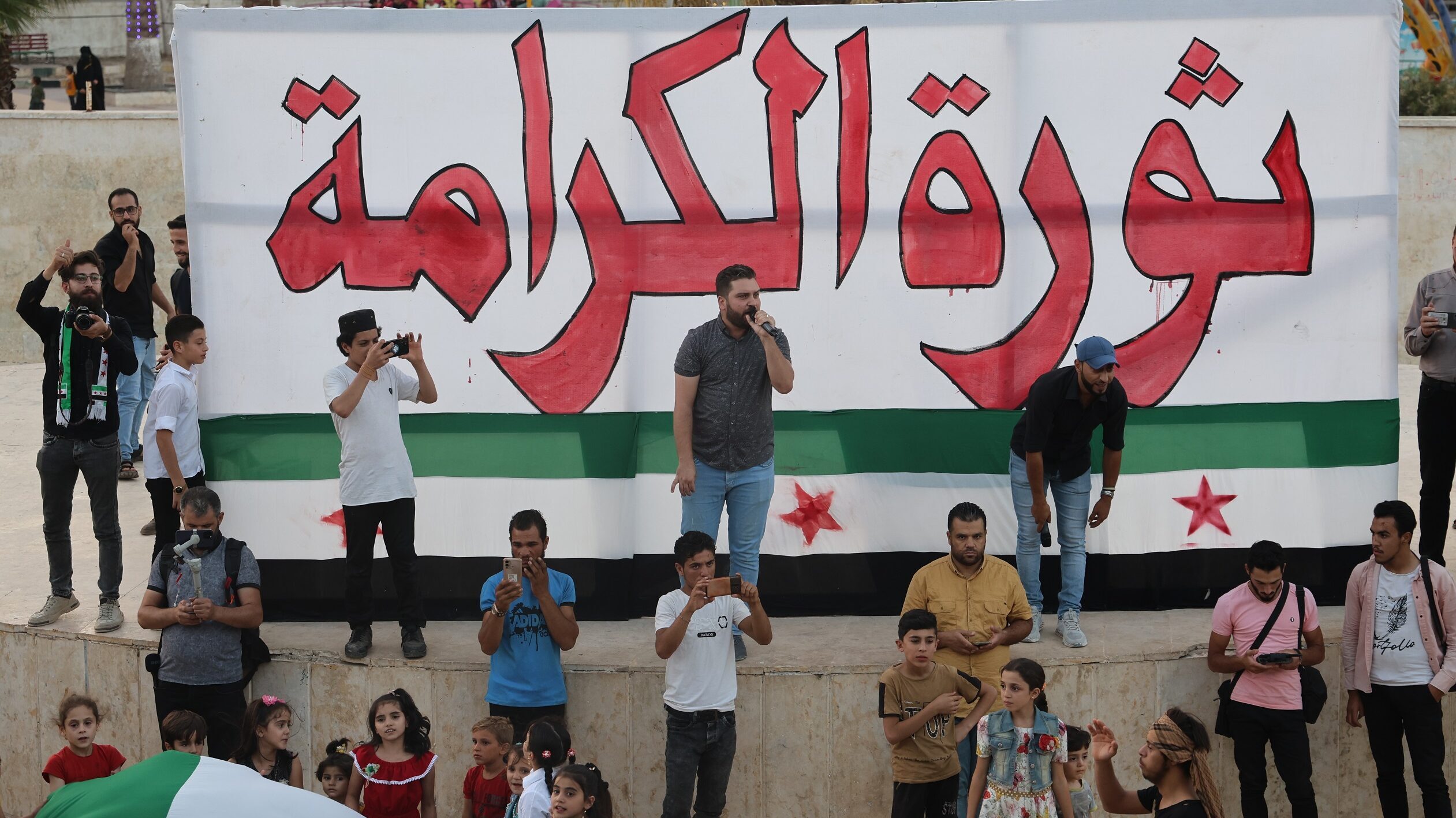
Cities in Syria’s coastal region and in the Homs Governorate are experiencing rising tension after widespread protests broke out in areas previously considered loyal to former Syrian leader Bashar Assad’s regime. The demonstrations took place alongside a heavy deployment of internal security forces in Latakia, Jableh, and several neighborhoods of Homs city, prompting reactions from both the public and government officials. Protesters were also responding to an Israeli operation in the southern Syrian village of Beit Jinn, which local activists said added to the anger already building in these communities.
The protests began at the Agriculture Roundabout in Latakia, then spread to the Azhari, Amara, and Thawra roundabouts in Jableh, eventually reaching the Zahraa neighborhood in Homs. Demonstrators chanted slogans demanding an end to “injustice,” “random killings,” and calling for the release of detainees, along with appeals to hold the security bodies responsible for abuses. At a demonstration in Homs, protesters chanted, “Hey Zionists, listen, listen. The Syrian people will not kneel. This is for God.”
Eyewitnesses told The Media Line that security forces were deployed in large numbers along major roads, especially near the Jableh Bridge and the ring road around the city, and that side streets were closed to keep protesters from moving between neighborhoods.
One participant in the Latakia demonstrations, a 50-year-old government employee, told The Media Line that the protest “is not aimed at the state but at the mismanagement within certain agencies.”
He continued: “What we want is respect for the law. We need institutions that protect us rather than become a burden. This country is our home, for all of us, and we have the right to object when mistakes are made.”
He said the appearance of protests along the coast “does not represent a revolt against a political or national position,” but is instead an effort to correct the course within areas that have served as a main pillar of the state in recent years.
Give the gift of hope
We practice what we preach:
accurate, fearless journalism. But we can't do it alone.
- On the ground in Gaza, Syria, Israel, Egypt, Pakistan, and more
- Our program trained more than 100 journalists
- Calling out fake news and reporting real facts
- On the ground in Gaza, Syria, Israel, Egypt, Pakistan, and more
- Our program trained more than 100 journalists
- Calling out fake news and reporting real facts
Join us.
Support The Media Line. Save democracy.


Another protester from Jableh, a university student, told The Media Line that the younger generation “paid a heavy price during the years of war,” and that it was now time to voice their questions openly.
He said, “Hundreds of our young people were killed, and now we are treated as nothing more than numbers. We want transparency, we want our rights, and we want to live as other peoples do.”
He added that the presence of women at several protest sites “sent a message that the tension is no longer limited to one segment of society.”
A local government source told The Media Line that security forces “acted with restraint” and that their deployment was intended to “prevent friction and maintain public safety.”
The source, who asked not to be named, said, “The government is listening to legitimate demands, but the state will not permit anyone to turn the demonstrations into chaos or use them for political gain.” He added that investigations are underway into several recent incidents that angered the public, emphasizing that the law “will be applied to any offender, whether civilian or security.”
Ahmed Kabi, a protester in Idlib, told The Media Line, “After 14 years of the Syrian revolution, this is the state we are in. We stand with the state and the leadership of a free Syria. And we are with the state in its unity and the integrity of its territories. We condemn the Israeli bombing of Beit Jinn, which leads to worsening of the situation in the region.”
The protests took place alongside a recorded address by Sheikh Ghazal Ghazal, head of the Supreme Alawite Islamic Council in Syria and the Diaspora, in which he urged members of the Alawite community not to allow “disagreements to become a battle for existence.”
He said that “the Alawites handed over their weapons to the state because they trusted it,” and criticized what he described as attempts to “ignite sectarian tensions for narrow interests.”
Analysts say the speech appeared intended to ease mounting worries in areas seen as a core social base for the government, particularly after videos showing security abuses along the coast began circulating.
Amid unusual public anger, tighter security measures, and official efforts to calm the situation, Syria now finds itself at a delicate moment. The protests emerging from areas that had been “quiet” for years carry social, political, and cultural implications that extend beyond the slogans. And although the situation has not escalated into broad clashes, the ongoing tension may push the government to reassess how it manages regions that, until recently, had remained largely untouched by unrest.
