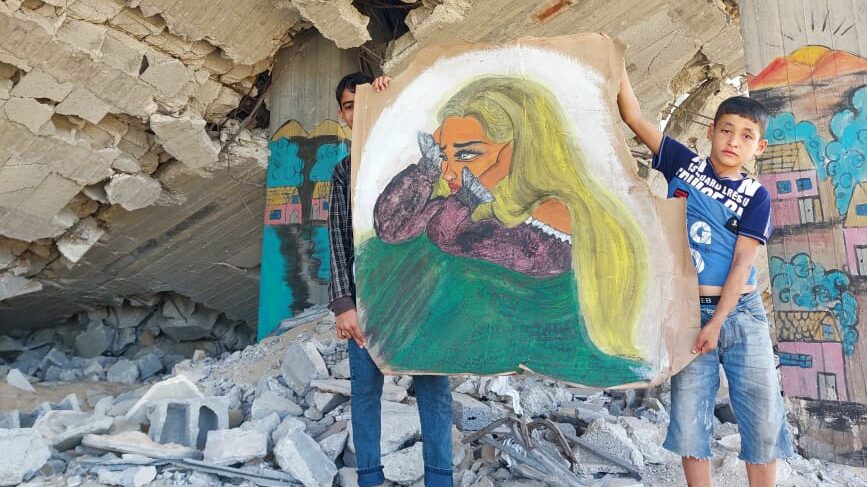
From Bomb Craters to Clay Pots: Gazans Turn Ruins Into Tools and Art
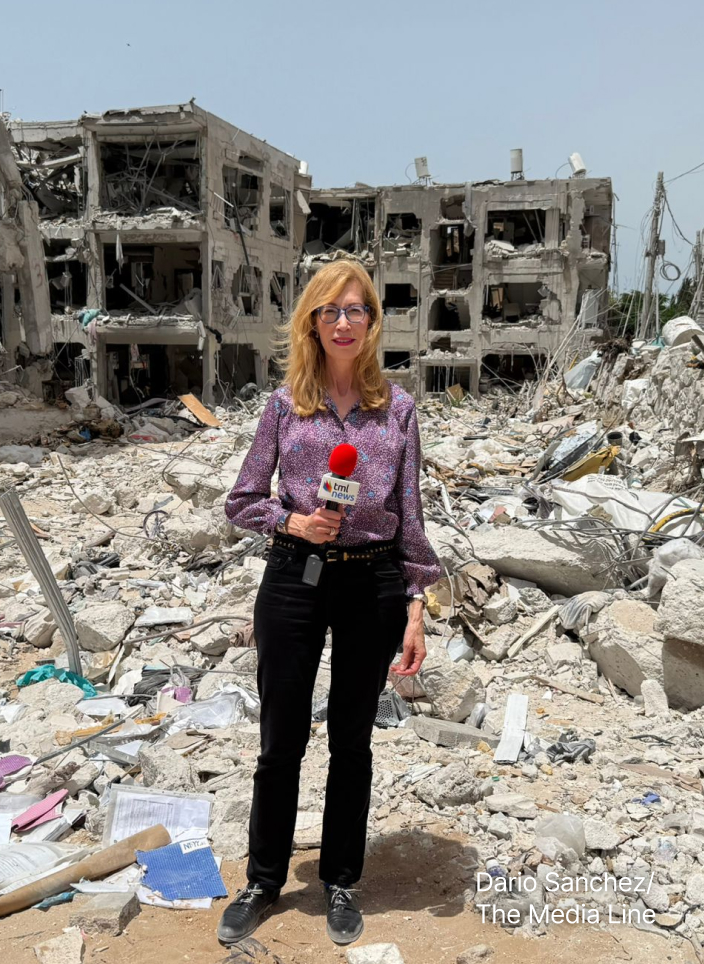
In a Gaza Strip ground down by months of bombardment and displacement, two young creators refuse to let life shrink to hunger, thirst, and queues. In her feature for The Media Line, Giorgia Valente follows potter Jafar Atallah and artist-educator Nada Rajab as they fight to keep dignity, memory, and imagination alive with whatever the war has not yet taken from them.
Atallah once ran a family pottery factory in northern Gaza; it vanished in an instant under Israeli fire. Now displaced to the central Strip, he has rebuilt a tiny workshop by hand, scavenging his raw material from bomb craters. “Today, we obtain clay from the remnants of the Occupation’s missile strikes and from the craters left by the bombs,” he says. With imports strangled and basic goods wiped out, his work has shifted from decorative pieces to bare necessities—plates, cooking pots, water jars—sold for a few dollars at most. “People don’t just need food,” Atallah insists, “they need to live.”
Give the gift of hope
We practice what we preach:
accurate, fearless journalism. But we can't do it alone.
- On the ground in Gaza, Syria, Israel, Egypt, Pakistan, and more
- Our program trained more than 100 journalists
- Calling out fake news and reporting real facts
- On the ground in Gaza, Syria, Israel, Egypt, Pakistan, and more
- Our program trained more than 100 journalists
- Calling out fake news and reporting real facts
Join us.
Support The Media Line. Save democracy.
Rajab, a 22-year-old artist and engineer, has been uprooted more than 25 times. She coordinates “Art from the Rubble,” hauling scraps of fabric, pencils, and homemade pigments into tent camps where children have no safe space and no words for their fear. “I see my artwork as a powerful form of resistance and resilience,” she says. “It is my message to the world that says, ‘I am still alive.’” The children’s drawings move from chaotic lines to scenes of loss and, slowly, to new focus; one boy who had dropped out of school now spends his days drawing and studying. “Art allows the children to breathe again,” Rajab says.
Valente’s full story traces how, in a shattered enclave of more than 2 million people, their hands keep shaping reasons to stay human.
