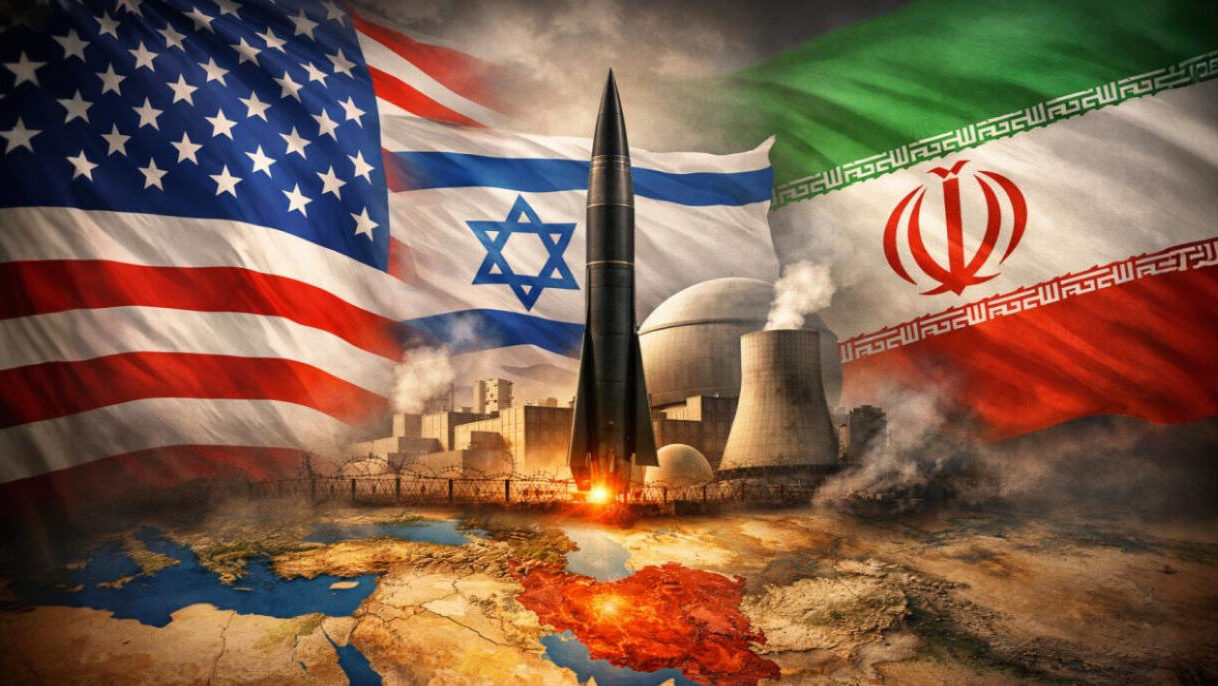
Israel and the US Are Watching Iran on Different Clocks
With 2025 nearing its end, Israel and the United States are staring at the same Iranian intelligence picture—and reading it on different clocks. As I wrote in this explainer, for Jerusalem, proximity turns warning time into minutes: Iranian missiles, plus Iranian-backed forces in Lebanon, Syria, and Iraq, can compress decision-making into a blink. After the Hamas-led October 7, 2023 attack, Israeli strategists have little patience for ambiguity, and missile “exercises” can look like operational preparation for a real strike.
US officials see a wider board. They worry about Iran’s technical progress, yet debate its intent: weaponize now or maintain uncertainty as leverage. They also weigh blowback beyond Israel—US forces in the region, Gulf energy routes, and global markets—while President Donald Trump tries to look firm without sliding into an open-ended war.
Give the gift of hope
We practice what we preach:
accurate, fearless journalism. But we can't do it alone.
- On the ground in Gaza, Syria, Israel, Egypt, Pakistan, and more
- Our program trained more than 100 journalists
- Calling out fake news and reporting real facts
- On the ground in Gaza, Syria, Israel, Egypt, Pakistan, and more
- Our program trained more than 100 journalists
- Calling out fake news and reporting real facts
Join us.
Support The Media Line. Save democracy.
On Capitol Hill, the argument fractures in recognizable ways. Sen. Lindsey Graham urges speed if undisclosed enrichment resumes. Vice President JD Vance frames US actions as narrow, focused on the nuclear issue. Sen. Jim Risch backs Israel’s right to act while drawing a line against US ground troops. Rep. Thomas Massie and several Democrats, including Hakeem Jeffries, Alexandria Ocasio-Cortez, and Sen. Tim Kaine, raise constitutional and escalation alarms.
Tehran rejects missile limits outright, with spokesman Esmaeil Baqaei calling the program nonnegotiable. Inside Israel, Opposition Leader Yair Lapid shares the threat assessment while questioning Prime Minister Benjamin Netanyahu’s judgment.
The piece’s core warning is “desynchronization”: each side acting rationally within its own timeline, yet nudging the region into escalation neither wants. Read my full article for what I hope you’ll find is a crisp breakdown of the clocks, the politics, and the stakes heading into 2026, before the next crisis hits. It’s intended as a guide for readers tracking fast-moving risk.
