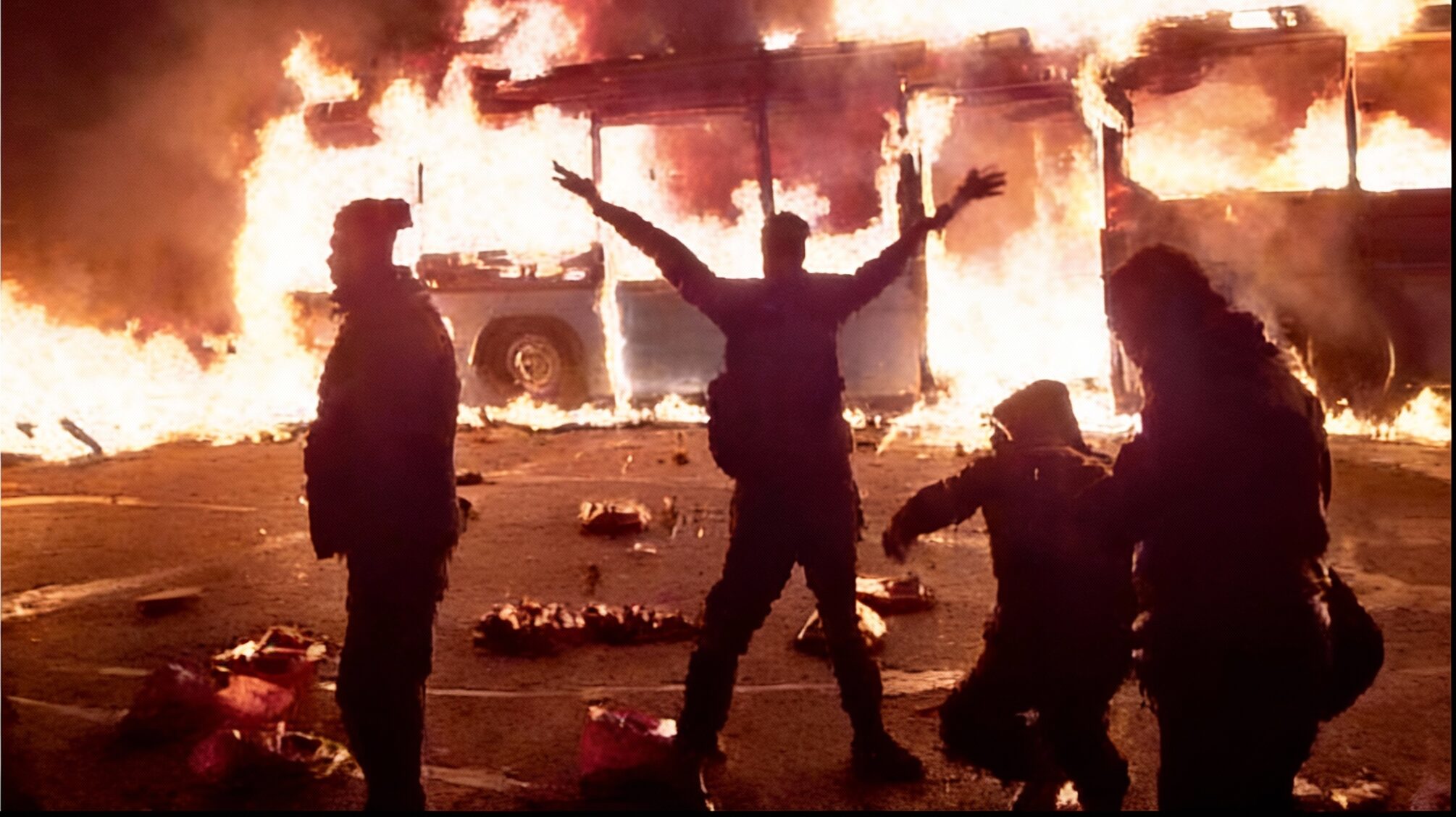
Tehran’s Bloody Night: The Unanswered Questions at Police Station 126
On a night in eastern Tehran, gunfire tore through Tehranpars, and the Islamic Republic’s story of what happened at Police Station 126 still doesn’t add up. In this investigation, Omid Habibinia reconstructs the clash and asks the question many Iranians keep asking: Who was shooting, and why?
State media say officers opened fire only after a planned, three-person armed team attacked the station. Witnesses interviewed by The Media Line describe something else: police, Basij units, Islamic Revolutionary Guard Corps forces, and allied paramilitary troops firing into crowds as tens of thousands poured into the streets. One protester, Amir, says the idea that three attackers could hit a heavily staffed station is “inconceivable.” If civilians fired at all, he argues, it was likely with weapons seized from officers who were overpowered.
Give the gift of hope
We practice what we preach:
accurate, fearless journalism. But we can't do it alone.
- On the ground in Gaza, Syria, Israel, Egypt, Pakistan, and more
- Our program trained more than 100 journalists
- Calling out fake news and reporting real facts
- On the ground in Gaza, Syria, Israel, Egypt, Pakistan, and more
- Our program trained more than 100 journalists
- Calling out fake news and reporting real facts
Join us.
Support The Media Line. Save democracy.
Amir describes snipers posted on rooftops hours in advance, tear gas and pellet fire so thick it blurred visibility, and live rounds coming from multiple directions, including the station roof. Official accounts claim one Basij member and two police officers were killed, plus more casualties and injuries, during an alleged barrage of hundreds of rounds. The logistics raise doubts: How would street-level attackers survive against rooftop positions, surrounding rooftops, and sustained return fire?
The story also sifts competing footage and narratives: clips aired by state broadcaster IRIB, edited video released by Simaye Azadi linked to the Mojahedin-e Khalq, and claims of arrests, border infiltration, and “Rebel Units.” A second witness, Mahtab, calls the episode one of the strangest of the protests and recalls streets strewn with bodies until morning.
Read the full article and watch the video report, then judge the contradictions for yourself—and hear Omid Habibinia’s reporting up close.
