Hamas Turns to Internal Elections as Pressure Mounts on Its Leadership
Growing anger in Gaza reflects frustration with Hamas’ wartime decisions, governance failures, and isolation from the international community
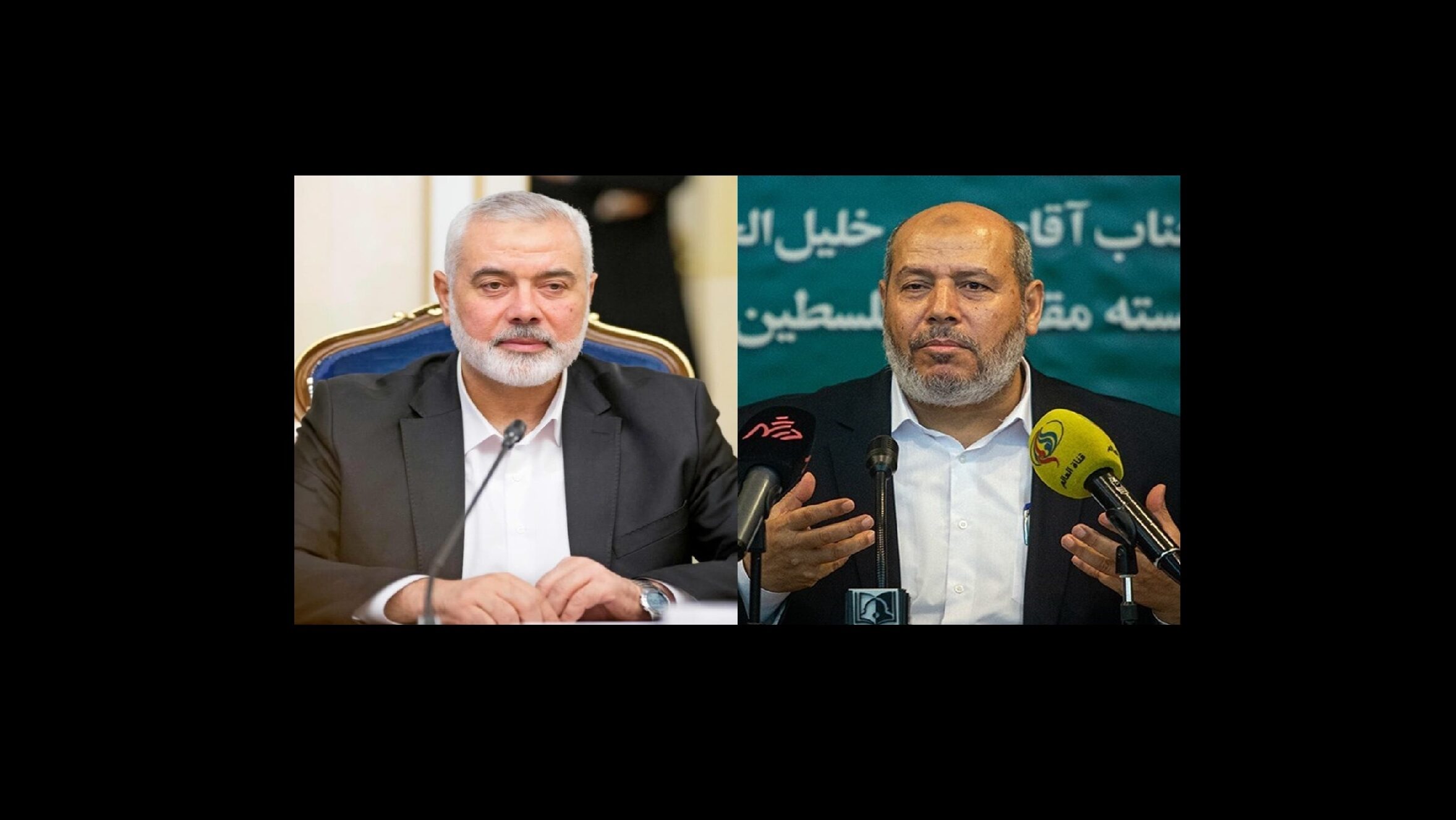
Hamas is set to hold elections for a new political bureau, movement sources say, as it faces unprecedented challenges. The Florida summit between President Donald Trump and Israeli Prime Minister Benjamin Netanyahu has increased pressure on Hamas’ leadership and narrowed its remaining room to maneuver.
The time for decision-making has arrived, yet Hamas may try to use internal elections as a lever to buy time—time that neither President Trump nor Netanyahu appears willing to grant.
During the Gaza war, Israel assassinated several hard-line Hamas leaders. Most were killed in the Gaza Strip. Others were targeted abroad, including Saleh al-Arouri—Hamas’ West Bank chief—and Ismail Haniyeh, who was elected in 2021 as political bureau chief. Israel’s Mossad assassinated al-Arouri in Beirut and Haniyeh in Tehran.
A botched Israeli raid on a compound in Doha reportedly aimed to eliminate Hamas’ entire political bureau, including Khalil al-Hayya, the acting head at the time. The failure not only disrupted ties with Qatar but also infuriated President Trump, whose aide and Hamas emissary, Steve Witkoff, was in direct contact with the movement.
Many of the surviving leaders abroad belong to Hamas’ more pragmatic camp. They favor political accommodation with Israel over open-ended confrontation.
The pre-October 7 status quo will not return—a reality Hamas is learning the hard way. Still, a solid faction led by al-Hayya, a leading contender for the top post, remains fixated on total Islamist victory, echoing Netanyahu’s pursuit of “absolute victory” in Gaza. Neither vision fits reality: Wars produce no winners, only losses and steep costs for all sides.
Hamas is trying to reestablish authority by reopening police stations, deploying security personnel, and regulating public life. Even so, it has not delivered tangible improvements to daily life for Gaza’s population.
Instead, as time passes, public discontent with Hamas is growing—driven not only by what unfolded on and after October 7, but also by the movement’s conduct since it violently seized control of the Gaza Strip from the Palestinian Authority (PA) in June 2007.
“Public sentiment against Hamas is only increasing as we find ourselves dumped and ignored by the whole international community,” said al-Hayya, father of five children, only one of whom survived the two-year war.
Give the gift of hope
We practice what we preach:
accurate, fearless journalism. But we can't do it alone.
- On the ground in Gaza, Syria, Israel, Egypt, Pakistan, and more
- Our program trained more than 100 journalists
- Calling out fake news and reporting real facts
- On the ground in Gaza, Syria, Israel, Egypt, Pakistan, and more
- Our program trained more than 100 journalists
- Calling out fake news and reporting real facts
Join us.
Support The Media Line. Save democracy.
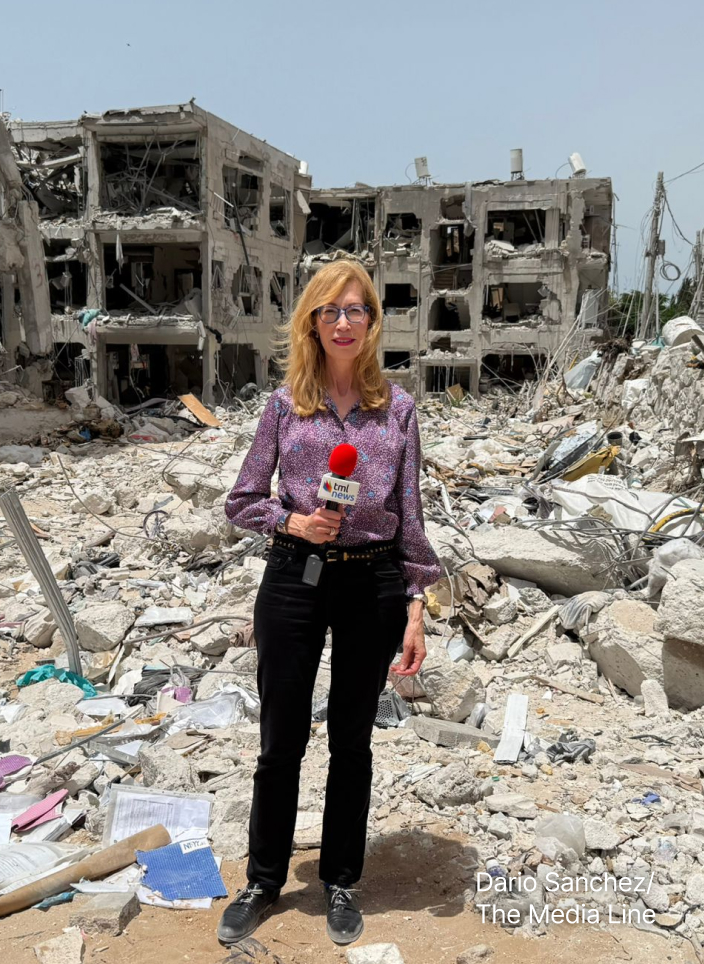
Public sentiment against Hamas is only increasing as we find ourselves dumped and ignored by the whole international community
Al-Hayya said the euphoria many Palestinians felt over Hamas’ October 7 actions soured once it became clear that the movement’s pledge to liberate Palestinians and expel Israelis “occupiers” had devolved into a bid for a seat at the postwar Gaza negotiating table. He insisted the public increasingly views Hamas’ steps as signs of weakness, masked by hawkish rhetoric and defiant threats.
“Hamas has caused an unimaginable frustration among the Palestinian public, mainly in the Gaza Strip, as its actions have all been characterized as an attempt to consolidate its grip on the Gaza Strip rather than protect Palestinian society,” al-Hayya noted. He added that the time has passed when Hamas could mislead people about its plans and how it would carry them out.
In addition to losing four children, al-Hayya said he also lost his brother, a mid-level Hamas field operative. He said he spent the first few months arguing with his brother about how mistaken Hamas was to launch the October 7 attack without considering that hundreds of civilians would also storm the border, attack Israel’s southern border towns, and help create the conditions that led to what followed.
“I told my brother that Hamas should have done things differently, sending only its special unit fighters with their official uniforms and storming Israeli army bases and camps. … My brother said that was the original plan, but when the people heard of how easy it was to storm the border, they rushed to see the part of Palestine that they never had a chance to see before,” he said.
For many Palestinians in Gaza, the debate over Hamas’ actions has become irrelevant. Catastrophe has already befallen them. Many still search for a beam of hope amid stormy weather and heavy rains that have destroyed hundreds of tents, leaving hundreds of thousands of displaced Palestinians soaked and unbearably cold. Some have become increasingly convinced that Hamas bears no less responsibility for what they describe as a second Palestinian Nakba—Arabic for “catastrophe”—in October 2023 than Israel bears for the 1948 Nakba, when 750,000 Palestinians were forced, in their view, to leave Palestine in the year Israel was proclaimed.
Confusion is not limited to ordinary Palestinians in Gaza. Hamas itself appears metaphorically lost in the desert. Some describe the movement as defined by military failure, political bankruptcy, and chaos in decision-making. Many in Gaza whisper—and sometimes say openly—that the only thing Hamas gained from the war was millions of dollars in donations meant for Gaza’s population, money they claim was siphoned into the pockets of senior leaders abroad, while fighters in Gaza felt abandoned and were left to fight, kill, and die to enrich those leaders.
Against that backdrop, electing new leaders may be the only way to gauge Hamas’ internal mood—and measure it against broader sentiment in the Arab and Islamic worlds. Will Hamas move in that direction? Many in Gaza—including both junior and senior Hamas members—believe the leadership has descended into a dark wilderness, shaped by the dictates of others. Iran tops their list of outside influences, followed by Turkey and then Qatar, whose ties with Hamas have deteriorated after what critics describe as foot-dragging by Hamas leaders in Doha to extract concessions from the Americans and Israel.
Hamas’ current leadership, at best, is dysfunctional, torn between two main contenders for the position of political bureau chief. Al-Hayya leads the hawkish camp. Khaled Mashal casts himself as a refreshed face for the movement, seeking to turn Hamas into a regional political player by rallying support among Arab leaders.
Predicting the winner of this internal contest is premature, but neither candidate appears to have the charisma needed to meet the movement’s challenges. Al-Hayya breathes Iranian air, without which his political lungs cannot function. Mashal, similarly, seems to rely on Qatari and Turkish oxygen to help him defeat al-Hayya and pull Hamas closer to the Arab world’s more pragmatic camp.
The war dealt Hamas severe blows, and Israel’s assassination campaign eliminated a large share of the movement’s top leaders. Those still alive include Ghazi Hamad, widely seen as Hamas’ pragmatic theoretician, and Nizar Awadallah, whom Yahya Sinwar could not dislodge—forcing three rounds of internal voting before Sinwar was elected Hamas’ political bureau chief in Gaza. Others are little more than frequent guests on televised news and talk shows, rambling about matters with little substance. They repeat lines such as, “We will stay in Gaza and continue the fight until victory,” even as the public believes many of them left the Gaza Strip with their families long before October 7. They live in luxury in Qatar, Turkey, or Lebanon, and critics say they incite displaced Palestinians in Gaza to keep fighting until “victory” or until Israel withdraws from the enclave.
A Gazan source close to Hamas’ higher echelons believes the upcoming elections will be different from previous rounds. This time, the source said, Hamas needs elections not as a routine organizational requirement but as a tool to fill the vacuum left by Israel’s assassination spree.
Restoring public legitimacy is another problem Hamas must address after the vote, whether the elections take place in a month or several months. Since it violently seized Gaza from the PA in 2007, Hamas has argued that President Mahmoud Abbas’ term is null and void because no legislative election has been held since January 2006 and no presidential election since January 2005. For a time, many people accepted that argument and supported Hamas’ position.
It has become apparent, however, that Hamas’ rule in Gaza has lasted 10 times longer than Abbas’ rule there which extended from his 2005 election to the 2007 takeover. Until recently, Hamas opposed PA legislative and presidential elections as products of the Oslo Accords, which it rejects. Without Hamas accepting elections and allowing Gaza residents to campaign, run, and vote, Abbas was never prepared to call those elections.
After opposing PA elections since 1996, Hamas abruptly reversed course in 2021 and decided to participate in the legislative vote scheduled for May 22. The election was ultimately postponed after Israel declined to guarantee voting access for Palestinians living in East Jerusalem. That obstacle, however, appeared not to concern Hamas, which pressed Abbas to move forward with the election despite what he described as a matter of principle.
