‘If Iran Keeps Its Uranium, Everything Was for Nothing’: Experts and Officials React to Trump’s Pause
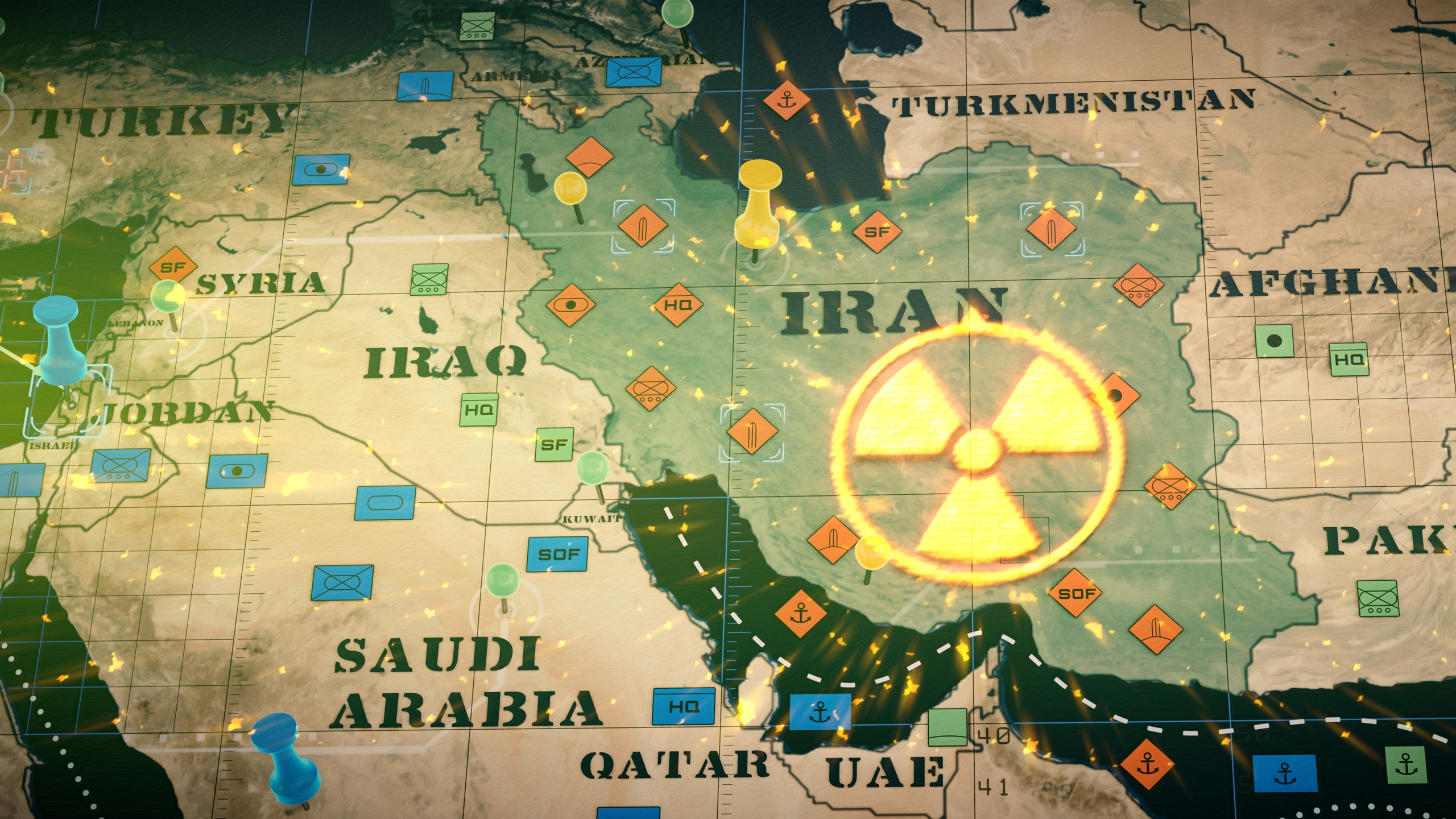
After 25 days of war with Iran, President Donald Trump introduced a new layer of uncertainty into the conflict by announcing what he described as “productive conversations” with Tehran and a temporary halt to attacks on energy infrastructure. The move, framed as an opportunity to test a diplomatic track, immediately raised questions about whether the war is approaching a negotiated turning point or drifting toward an outcome that leaves Iran’s core capabilities intact.

President Trump’s Truth Social post, March 23, 2026. (Screenshot: Truth Social)
If the war ends with enriched uranium still in Iranian hands and their missile program not limited and supervised, then everything we did was for nothing
In Israel, the announcement was met with uncertainty about what the pause might actually lead to. Israeli lawmaker Ram Ben Barak of Yesh Atid, who served as deputy director of the Mossad and director general of the Intelligence Services and Strategic Affairs ministries, said the real test will be the terms of any agreement that emerges from it. Speaking to The Media Line, he cautioned that ending the war while Iran still holds enriched uranium and continues to develop its missile program without meaningful limits would be a difficult outcome. “If the war ends with enriched uranium still in Iranian hands and their missile program not limited and supervised, then everything we did was for nothing,” he said. “It would be very, very disappointing.”
Those comments echo a wider concern in Israel that the gains made on the battlefield could be diluted if any agreement stops short of addressing Iran’s core capabilities. Ben Barak made clear he is not opposed to a deal in principle but stressed that its terms will be decisive. “In the end, every war has to end with an agreement; you don’t fight forever,” he said. “But the agreement has to reflect what we achieved up to now, and not give the Iranians something for nothing.”
Ben Barak said the move probably stems from ongoing contacts, not a sudden decision in Washington. That, he added, suggests some kind of negotiation may already be in play. He also said the timing may have surprised officials in Jerusalem, leaving open questions about what is actually being discussed and where it might lead.
Prof. Eytan Gilboa, an expert on US-Israel relations at Bar-Ilan University and Reichman University, said Gulf states have been trying to avoid escalation, especially when it comes to energy infrastructure. Speaking to The Media Line, he said President Donald Trump may be looking for a way to reduce the immediate risks without appearing to step back from his earlier position. “There has been enormous pressure applied on Trump by the Persian Gulf kingdoms,” Gilboa said. “He wanted a way to get out of the trap that he walked into.”
Conversations are perhaps the lowest level of talks
For Gilboa, the language used by the US president is itself revealing. The reference to “conversations” rather than “negotiations” suggests a lower level of commitment and leaves significant room for maneuver. “Conversations are perhaps the lowest level of talks,” Gilboa said. “Negotiations is a strong word, but conversations are somewhat less of a commitment to make concessions.”
Give the gift of hope
We practice what we preach:
accurate, fearless journalism. But we can't do it alone.
- On the ground in Gaza, Syria, Israel, Egypt, Pakistan, and more
- Our program trained more than 100 journalists
- Calling out fake news and reporting real facts
- On the ground in Gaza, Syria, Israel, Egypt, Pakistan, and more
- Our program trained more than 100 journalists
- Calling out fake news and reporting real facts
Join us.
Support The Media Line. Save democracy.
Gilboa said it does not look like a real push toward an agreement, but more like an effort to bring the temperature down, at least for now. That is especially relevant when it comes to energy sites and routes like the Strait of Hormuz. He said this also fits with what Gulf states have worried about for years: the risk of a wider conflict hitting their economies. Still, he was clear that even if those targets are left out, it does not solve the main issues behind the war.
For the regime, just to survive would mean a huge victory
At the same time, Gilboa cautioned that such a step does not resolve the core issues driving the war. While the United States and Israel have both expressed interest in sharply weakening Iran’s nuclear and military capabilities, Iran’s leadership may define success far more narrowly. “For the regime, just to survive would mean a huge victory,” he said.
That gap in objectives could lead Washington and Jerusalem to read the outcome of the war in very different ways. Gilboa pointed to what he described as shifting and sometimes inconsistent messaging from President Donald Trump and said that without a clear direction, it may be harder to turn military gains into something lasting on the political side. “Trump is trying perhaps to confuse the enemy,” he said, “but perhaps he is confusing himself as well.”
A key question now is who benefits from the pause. Janatan Sayeh, a research analyst at the Foundation for Defense of Democracies in Washington who focuses on Iran’s internal dynamics and regional influence, said the timing matters, especially if the war is reaching a more decisive stage. Born and raised in Tehran and having worked on US policy toward Iran, he warned that easing pressure without a clear plan for what comes next could backfire.
“Ending the interruption without a proper exit strategy would be more devastating in the long term,” Sayeh said. He noted that Israel and the United States have not pursued identical objectives, with Israel more focused on weakening the regime itself while Washington has concentrated on degrading military capabilities. “If you were to end this war too abruptly, it would definitely risk any prospects of regime change,” he said.
Sayeh also addressed reports that factions within Iran’s Islamic Revolutionary Guard Corps have expressed resistance to the diplomatic track. In his view, such divisions should not be interpreted as a sign of moderation. “It is inherently a paradox to assume there are pragmatic IRGC members,” he said. “The end goals are the same for them. It’s just the mechanism they use to get there.”
He argued that engagement with Tehran often serves as a tool for delaying pressure rather than resolving disputes. “That’s been the strategy for like half a century,” he said. “They negotiate by time, continue malign activities.”
For Sayeh, the likelihood of meaningful concessions at this stage remains low. “They never make concessions regardless,” he said. “They didn’t make any concessions under Biden. They didn’t make any concessions after the June war. Right now, they’re not going to make any concessions either.” Instead, he said, Iran is likely to use the pause to readjust and buy time while keeping its broader strategy unchanged.
Even the decision to pause strikes on energy infrastructure reflects a trade-off. Sayeh described such targets as both a source of leverage and a potential liability. While sustained attacks could increase internal pressure on the regime by disrupting essential services, they could also leave any future government with a severely damaged economic base. “You don’t want to hand over a country that has zero infrastructure,” he said.
Still, Sayeh’s assessment was clear. “Diplomatically engaging the regime, does it prolong the war? I mean, yes, it does,” he said. “Yes, it drags out the process longer than it has to.”
Back in Israel, there is still no clear picture of what President Donald Trump’s announcement means in practice, especially in terms of coordination with Washington. Ben Barak said that if the United States ends the war, Israel is unlikely to keep fighting on its own. He added that Hezbollah and other regional threats may still be handled differently, depending on the terms of any agreement.
He also pointed to one potential scenario that could dramatically alter Israel’s assessment of the situation. If the United States were to physically remove Iran’s enriched uranium stockpile, he said, the outcome would be fundamentally different. “If they go in and take it with their hands, then that is an extraordinary achievement,” he said.
Ultimately, what comes next will depend less on the pause itself than on whether it produces real commitments. President Donald Trump has pointed to “productive conversations,” but Tehran has publicly denied any talks, as previously reported by The Media Line, and the central questions—uranium, missiles, and regional activity—remain on the table. For Israeli officials and analysts, that leaves a narrow margin between a diplomatic opening and a premature end to the pressure that brought the war to this point.
