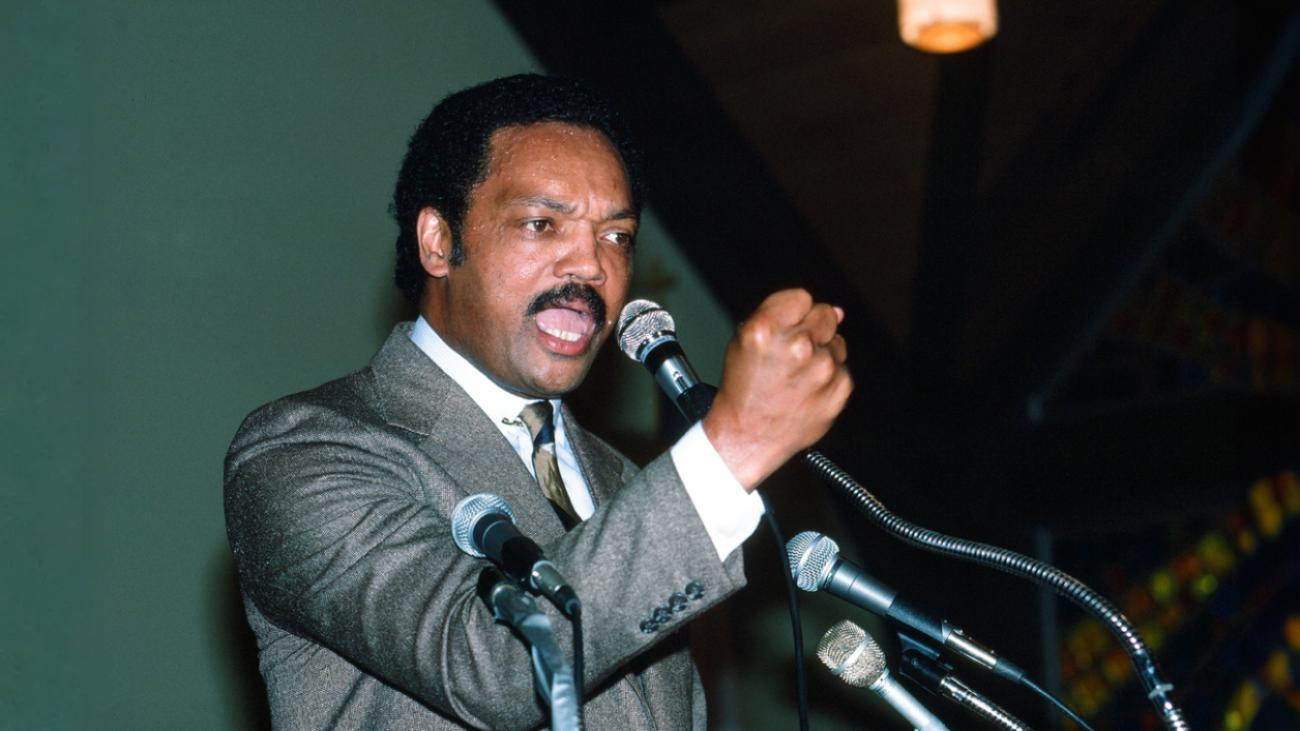
Rev. Jesse Jackson Dies at 84, Leaving a Civil Rights Legacy Shaped by Politics, Mideast Diplomacy, and Debate With Jewish Leaders
The Rev. Jesse Jackson, the influential US civil rights leader and two-time Democratic presidential candidate whose activism reached from American racial justice campaigns to Middle East diplomacy, died Tuesday at age 84, his family announced in a statement on social media. Jackson had faced years of declining health, including complications linked to progressive supranuclear palsy, a rare neurological disorder that gradually limited his mobility and public appearances.
Born in Greenville, South Carolina, Jackson rose to national prominence as a close associate of the Rev. Dr. Martin Luther King Jr., later founding Operation PUSH and the Rainbow PUSH Coalition. His presidential campaigns in 1984 and 1988 expanded Black political participation and helped reshape the Democratic Party’s coalition politics. Over decades, he combined domestic activism with a global human rights profile that often intersected with sensitive Middle East issues.
Give the gift of hope
We practice what we preach:
accurate, fearless journalism. But we can't do it alone.
- On the ground in Gaza, Syria, Israel, Egypt, Pakistan, and more
- Our program trained more than 100 journalists
- Calling out fake news and reporting real facts
- On the ground in Gaza, Syria, Israel, Egypt, Pakistan, and more
- Our program trained more than 100 journalists
- Calling out fake news and reporting real facts
Join us.
Support The Media Line. Save democracy.


That international role brought both praise and controversy. Jackson’s 1984 trip to Syria, where he helped secure the release of captured US Navy pilot Robert Goodman, was widely viewed as a diplomatic breakthrough. Yet his earlier engagement with Palestinian leadership sparked strong criticism from Jewish organizations and many US lawmakers. In 1979, Jackson met with Palestine Liberation Organization (PLO) Chairman Yasser Arafat, a move that drew backlash at a time when the PLO was widely viewed in Washington and Jerusalem as a terrorist organization. Supporters said Jackson sought dialogue and peace; critics argued the meeting legitimized a figure responsible for violence against Israelis. The episode marked one of the earliest turning points in his complicated relationship with the American Jewish community.
Tensions deepened during Jackson’s 1984 presidential campaign after he was recorded referring to New York as “Hymietown,” a remark he later apologized for, but which left a lasting imprint on Jewish political memory. Even so, Jackson maintained relationships with some Jewish leaders, reflecting the intertwined history of Black and Jewish activism dating back to the civil rights era. His outspoken criticism of Israeli policy toward Palestinians further fueled debate, with admirers describing him as a bridge-builder and detractors accusing him of amplifying anti-Israel rhetoric.
In recent years, Jackson’s public role shifted toward elder statesmanship as health challenges mounted. Family members said he spent much of the past decade reducing travel and delegating leadership responsibilities within the Rainbow PUSH Coalition. Chicago civic leaders and civil rights groups are expected to hold public memorial events, though final funeral arrangements were still being organized as of Wednesday.
Jackson leaves behind a legacy that defies easy categorization: a pioneering civil rights organizer, a national political figure who reshaped presidential politics, and an activist whose Middle East engagement drew both admiration and sharp criticism.
